|
|
|
|
|

|
|
|
Good morning!
|
In Nigeria, a judge denied bail to CBEX influencers. Meanwhile, Elon Musk’s Starlink is eyeing a R2 billion investment in South Africa, an infrastructure-heavy move that could help it bypass the country’s Black empowerment hurdles and expand across Southern Africa. And in the U.S., Mark Zuckerberg has unveiled Meta’s new “Superintelligence” Group.
|
Got a news tip or scoop? Share it with us. If you've got the inside scoop on something big happening, let us know. We're all ears.
|
|
|
|
|
If Africa doesn’t fix credit, poverty wins
|

|
Three things must happen to fix Africa’s credit problem, or she will die of poverty. That’s not alarmism. That’s clarity.
|
In a continent of over 1.5 billion people bursting with potential, capital is still the rarest currency.
|
Credit is how people go to school, buy tools, pay bills, start dreams. Without it, potential is just a pretty word. And no, the cavalry isn’t coming.
|
A painful example: up to 70% of the African Union’s operational budget is still funded by foreign partners, the European Union being the largest contributor.
|
So when African leaders whine about external influence, it rings hollow. Influence follows the money. If we’re still dependent at the top, why do we keep imagining that someone else will build a credit system for us especially when it’s the riskiest, most regulated, and most unforgiving segment of fintech?
|
Adedeji Olowe doesn’t think they will. And he’s not guessing. I mean, he’s been building in this space for years. From his lens, we don’t need more startups shouting about lending. We need rails. We need infrastructure that lets thousands of existing businesses lend safely and sustainably: cooperatives, landlords, supermarkets, schools.
|
That’s why platforms that facilitate lending exist: because doing credit at scale is brutal.
|
Onboarding, risk analysis, disbursement, collections, compliance, audits, it’s not plug-and-play. And until that hard work of infrastructure is done, credit will remain an elite luxury.
|
The second piece is data. Lending is a data game, and right now, Africa is playing blind. Without strong open banking execution, real APIs, working consent models, and stable integrations, we’ll keep guessing, and borrowers will keep defaulting.
|
The regulation is there in places like Nigeria, but the speed and seriousness of adoption is not. Open banking can’t stay in the group chat. It needs to work in the wild.
|
Finally, regulation. Not performative regulation. Real regulation. Because lenders aren’t running NGOs. They want their money back. And when they can’t get it through formal means, they either stop lending or go rogue.
|
We need courts that move, credit bureaus that function, and borrower protections that don’t double as lender handcuffs. No one’s asking regulators to play favourites, just to build a system where fairness, speed, and predictability exist.
|
This isn’t a pitch. It’s a warning. Africa doesn’t need more fintech hype. It needs hard, systemic fixes. If we don’t build the tools, unlock the data, and enforce the rules, we won’t just miss the credit revolution, we’ll die waiting for it.
|
|
|
|
|
|
|
Across Africa
|

|
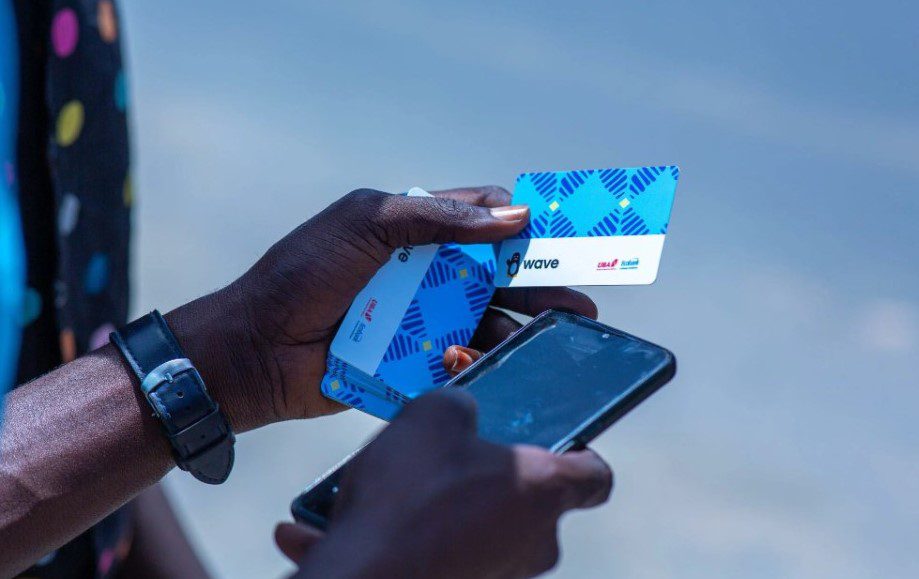
Wave surges ahead with $137M boost: Senegal-based fintech Wave is making waves again, this time with a massive $137 million debt funding led by RMB and top global DFIs like BII, Finnfund, and Norfund. Wave has over 29 million monthly users across eight West African countries, and has a mission to make mobile money cheaper and more accessible; which has now gotten a major tailwind. The funding will ramp up financial inclusion, especially for underserved communities, while CEO Drew Durbin says the focus remains on delivering the "best product at the lowest price." - Technext
|
Starlink’s Kenyan stall: Once a rising star in Kenya’s internet market, Elon Musk’s Starlink is now losing altitude. After a bold entrance in mid-2023 and rapid growth that saw its market share hit 1.1%, the satellite provider is now down to 0.9% as of March 2025. A subscription freeze in major regions like Nairobi cost the company over 2,000 users in just one quarter, halting its momentum and raising questions about its staying power in Africa’s evolving connectivity race. - Technext
|
Fintech fuels Nigeria’s stock market surge: Nigeria’s stock market is booming, driven by fintech platforms like Bamboo, Chaka, Trove, Risevest, and Cowrywise, which have drawn over 2 million users with accessible investing from $1 or ₦1,000. Featuring Bamboo’s 1 million downloads and Risevest’s $42 million payouts, these platforms target millennials and Gen Z, supporting a projected 11.95% annual market growth to US$14.34 billion by 2028. An expert praises their impact, though regulatory hurdles and limited data on total participation call for further study. - Technext
|
No bail for crypto scammers: A Federal High Court in Abuja has denied bail to three promoters of the defunct CBEX crypto scheme, accused of orchestrating a staggering $1 billion scam that targeted Nigerians. Despite pleas from their legal team over extended detention at the EFCC facility, Justice Emeka Nwite ruled against their release. - Nairametrics
|
Talenteo bags six-figure boost: Algerian HR-tech startup Talenteo has secured a six-figure investment from Tunisia’s 216 Capital to fuel its expansion into Francophone Africa. Talenteo already serves 150 companies and over 10,000 users with a SaaS platform tailored to African SMEs, blending AI, automation, and local compliance. The new funds will power its entry into Tunisia and supercharge the development of its AI-driven tools. - Disrupt Africa
|
South Sudan goes fibre first: South Sudan is investing $9 million to kick off the design phase of a national fibre optic project aimed at slashing communication costs and connecting hard-to-reach communities. The government’s steering group, under the Ministry of Information and Communication Technologies, greenlit the funding. Project coordinator Abraham Mach confirmed that contracts with selected firms to design and deploy the network will be signed in July. - ITWeb
|
Satellite reality check: South Africa’s mobile network giants are playing a risky game by resisting Starlink and other LEO satellite services, warns tech analyst Arthur Goldstuck. While operators like Vodacom and MTN publicly praise Starlink’s potential to boost digital inclusion, they’re still keeping it out, potentially setting themselves up for disruption if a rival embraces direct-to-cell satellite connectivity in underserved areas. The future is orbiting fast, and dragging feet may only ensure obsolescence. - MyBroadband
|
|
Starlink’s R2bn power play: Elon Musk’s Starlink is reportedly planning a R2 billion investment in South Africa as a clever route around the country’s Black empowerment rules to secure an operating licence. The satellite internet giant aims to pour funds into infrastructure that supports the broader Southern African region, while promising to partner with local firms for everything from land leases to fibre and security. Starlink is racing to seal the deal ahead of the G20 summit in Johannesburg this November. - MyBroadband
|
|
|
|
|
Global tech watch
|

|
|
|
|
|
|
Technext Daily Roundup is sent 5 days a week. Do you think your family, friends, or colleagues should know about us? Please forward this newsletter to them.
|
|
|
|
|
|
    
|

|
Become a Partner
To sponsor this publication, send an email to
|
|
    
|
|
|
|
|
|
|
|
|