



Thursday morning, BitMEX told its customers it was shutting down after eleven years pioneering perpetual futures and providing exchange services, thanking them, more or less, for the memories. By Thursday evening, the same day, two of those customers had filed a lawsuit against it in a Manhattan federal court, accusing the exchange of deliberately creating a system to profit from client liquidations.
The complaint comes from BKX Services, a defunct tokenisation project, and David Namdar, an independent trader, and was filed in the Southern District of New York. They are accusing BitMEX of designing a system built to retain customers’ collateral and funnel the surplus bitcoin into its own insurance fund, and claim an internal trading desk had access to private customer data and kept trading through server freezes that locked ordinary users out of their own positions.
According to the plaintiffs, “BitMEX deliberately developed a system that profited from the liquidations.”
Sit with that for a second: while regular traders were frozen out, unable to touch their own accounts, the allegation is that someone on the inside could see exactly what they were holding and kept going.
BitMEX let traders borrow up to 100 times their collateral, and the plaintiffs say their positions got liquidated while that collateral was still worth roughly double what they’d actually lost, with BitMEX keeping the rest. BKX Services claims it’s owed at least 305.81 BTC. Namdar says his losses top 316.85 BTC. Together, that’s 622.66 bitcoin, somewhere around $40.7 million at today’s prices.
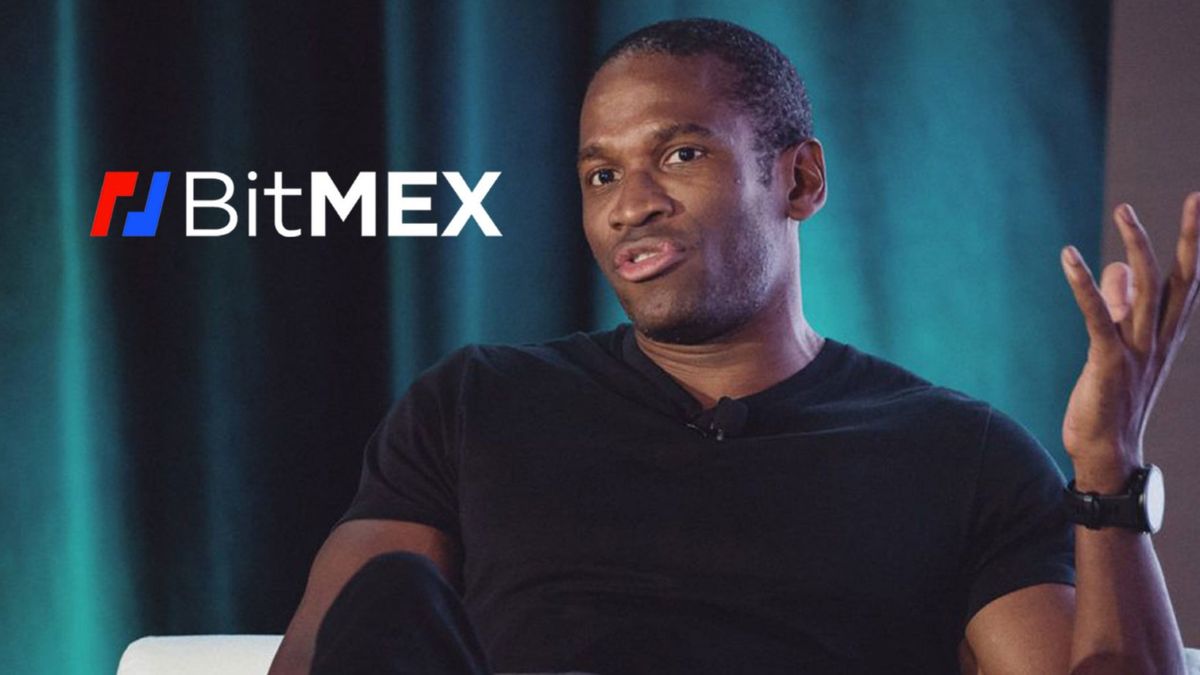
The complaint doesn’t stop at the company. It names parent entity HDR Global Trading and goes after all three co-founders by name: Arthur Hayes, Ben Delo and Samuel Reed. The proposed class covers every US customer who traded BitMEX’s bitcoin swaps since 23 July 2018, which, if a judge lets it proceed, would sweep in nearly the exchange’s entire active lifespan.
For now, none of it has been tested. A judge still has to rule on whether the case can even move forward as a class action, and BitMEX is yet to release a statement.
More of a pattern for BitMEX
Anyone who’s followed BitMEX for a while will recognise the shape of this. Back in 2020, trader Brett Messieh and a group of others filed a nearly identical class action, alleging the same kind of liquidation abuse under the Commodity Exchange Act. That case ran for five years and closed quietly in June 2025 without a judge ever ruling on the liquidation claims themselves.
Five years is a long stretch for an allegation that serious to just sit there. Long enough for plaintiffs to lose interest or run out of money, long enough for a company to simply outwait its accusers. It’s not clear from what’s public whether the Messieh case ended in a settlement or fizzled out on procedure, but either way, the pattern holds: this is the second time in six years someone has accused BitMEX’s liquidation system of being fixed, and the first time never got near a verdict.
And here’s the part that genuinely makes this bizarre. In October 2020, federal prosecutors charged Hayes, Delo, Reed and early employee Gregory Dwyer under the Bank Secrecy Act, accusing BitMEX of running as a de facto money-laundering platform, one that let people trade with essentially no identity checks. All four eventually pleaded guilty. Hayes drew six months of home confinement plus two years’ probation. Delo got 30 months, Reed 18. Each founder paid a $10 million personal fine, stacked on top of a separate $100 million the exchange itself paid to the CFTC and FinCEN in 2021, and yet another $100 million a federal judge ordered in January 2025 over related violations.
Then, in March 2025, Trump pardoned all four of them. Delo called it vindication, telling reporters the group had been “wrongfully targeted” under what he described as an obscure, antiquated law. That pardon landed roughly sixteen months before the same founders found themselves named, personally, in a fresh fraud complaint, this one alleging not a failure to screen who was trading but a deliberate scheme to control how those trades ended.

It’s a strange decade to compress into one company’s history. Criminal money-laundering charges, guilty pleas, a presidential pardon, and now a fraud suit filed the same day the exchange finally announced winding down its operations. Whatever a court eventually makes of the new allegations, it’s worth remembering the founders come into this having been cleared of an entirely separate set of federal charges by executive pardon, not by anyone actually ruling they’d done nothing wrong.
The mechanics of the shutdown
BitMEX confirmed on 23 July that it will cease operating entirely on 23 September and stopped accepting new account registrations immediately. The company said in its announcement that it was closing “with a very heavy heart”, following what it called a strategic review by HDR Global Trading, and told users to start closing positions and pulling funds right away.
From 26 August, the exchange will stop letting anyone open new positions, allowing only reduce-only orders, before force-closing whatever’s still open once the September deadline is reached. BitMEX itself has flagged that Bitcoin network congestion could slow everyone’s withdrawals right at the moment its entire user base is trying to leave simultaneously, though it says its proof of reserves shows customer assets are fully covered.
None of this came out of nowhere. Three weeks before the shutdown announcement, BitMEX had already lost its CEO, CFO and head of growth in one go, leaving general counsel Peter Wilkinson to step in as CEO. For years the exchange had been ceding ground as liquidity, market makers and bigger traders drifted toward faster rivals and decentralised platforms with deeper order books and fewer legal headaches. Which is a long way down for a platform that, at its 2019 peak, moved over $1 trillion a year and held roughly 57% of the global derivatives market.

There’s something almost tone-deaf about BitMEX’s farewell note leaning on its clean security record, proud that it never lost customer funds to a hack across eleven years. Fine, maybe true, but a hack isn’t the only way to lose customers’ money, and that’s rather the point of the lawsuit sitting on its desk right now.
BMEX, the exchange’s native token, had dropped roughly 90% within hours of the shutdown news as holders scrambled out, trading volume spiking more than 300% in the process. Changpeng Zhao, Binance’s co-founder, posted a long, almost wistful thread on X, recalling how BitMEX had pioneered 100x perpetual contracts back in 2014, when deposits were bitcoin only, withdrawals cleared through a multisig wallet once a day, and Friday delivery futures made for genuinely chaotic trading.
Whatever people end up remembering BitMEX for after this, CZ’s post was a fair reminder that most of today’s derivatives exchanges are running on plumbing BitMEX built first.
