




The Lagos State Government has revealed plans to install speed light cameras and 3,000 e-police facilities in the state. The project is structured toward strengthening traffic laws across the megacity.
The project was announced by the Director of the Lagos State Vehicle Inspection Service (VIS), Engr. Akin-George Fashola on Tuesday. Mr Fashola noted that some of the speed limit cameras have already been installed across various locations such as Alapere-Ogudu Road (80km/h inbound Alausa and 60km/h inbound Iyana Oworo), and Mobolaji Bank Anthony Way (60km/h).
The e-police cameras are also installed at Allen Junction and Nurudeen Olowopopo Road in Ikeja to check on red light running and other traffic violations. It would also caution motorists to take note of warning signs installed at these locations to ensure compliance.

The VIS Director explained that traffic violators of speed limits would be required to pay a fine of Fifty Thousand Naira (N50,000). He added that offenders who are convinced they did not violate the regulation have the provision to contest the fine with adequate proof.
Fashola also pointed out that commercial vehicles are not exempted from this enforcement initiative as an average of 50 commercial buses violate traffic regulations daily.
Taking note of another milestone, he noted that the state government has introduced an online roadworthiness recertification system where pre-existing vehicle owners can renew their roadworthiness certificates without visiting a VIS office.
In addition to this latest plan, the Lagos State VIS Director said that the agency now offers an auto verification service for individuals looking to purchase used vehicles. This service makes provision for a detailed history of the vehicle, thereby enabling buyers to make informed decisions. The director encouraged residents to visit the VIS website or any of its 45 centers across the state for more information and assistance.
Recent related developments in Lagos State
Lagos has been in the news recently for the major technology investments in the state. Last week, Open Access Data Centers (OADC), a subsidiary of WIOCC Group revealed plans to invest a $240 million fund to expand its data center in Lekki, Lagos, as part of a broader $500 million investment plan announced in 2021 to develop data center infrastructure across Africa.
The project will upgrade the data center to 24 megawatts by 2027 and serve as the landing station for Google’s Equiano subsea cable in Nigeria. The center currently operates about 1.5 megawatts (MW) of its planned capacity following its operational launch two months ago.
OADC said the project will be initiated in two stages, where the first 12 MW would be completed within 18 months, adding that projects like this typically take more than two years due to the complexity of design and execution. The company pointed out that further expansion in Nigeria and other African markets such as the Democratic Republic of Congo and South Africa are under consideration.
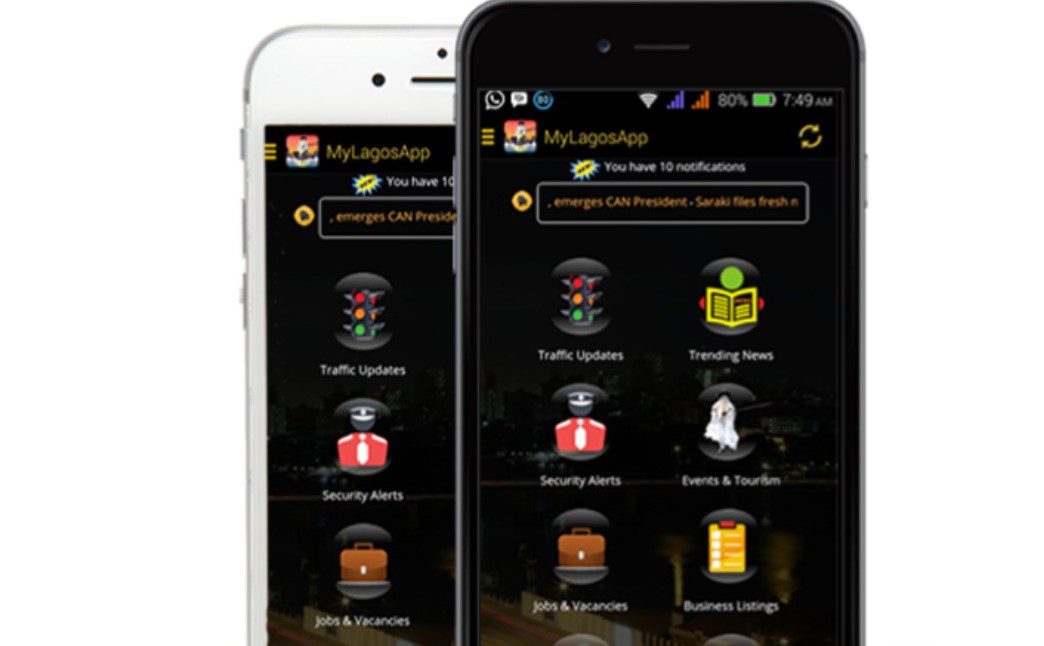
In another recent move on traffic navigations, the Lagos State Government launched the “MyLagos App” in partnership with leading Nigerian telecom provider, MTN Nigeria. The digital platform is designed to simplify city navigation and improve Lagosians’ experience.
According to the Lagos State Deputy Governor, Dr. Obafemi Hamzat, the newly launched App is a comprehensive digital solution, offering seamless access to essential city services such as real-time traffic updates, personalized navigation, emergency services, utility payments, business listings, and tourism information.
“Technology has evolved from being a luxury to a necessity. In our fast-paced world, effectively utilizing technology can significantly enhance governance, improve service delivery, and simplify the lives of every resident in this vibrant state. With the launch of the MyLagos App, Lagos State is poised to remain at the forefront of digital transformation, not just in Nigeria but across Africa,” he said.
However, the app’s existence has been questionable because ever since its launch on March 13, the “MyLagos App” still is not available for download on app stores and the Google PlayStore.
See Also: After launch, “MyLagos App” goes missing on Google Playstore.
