


Last weekend, the members of the Open Source Nigerian community converged in Lagos for OSCAFest 2023, a festival for coders, that featured a series of workshops, keynote speeches, Eden Life and banters about the killing that they’ve made since they forgo their fancy decrees took up their laptops and started coding.
As the world of coders, developers and all kinds of designers has grown without borders, with young Nigerians bragging about as much as $500000 at times in annual income, Open Source has presented itself as a new frontier for all those looking to break into the tech ecosystem.
With at least a 5000 naira gate fee, these cargo trousers, sneakerheads attendees at the OSCAFest didn’t mostly come to look for coding jobs. They were mostly gainfully employed.
When I asked a gentleman who had “cross border payment” plastered on his shirt if his company had virtual USD cards, he asked if I sold virtual USD cards, making me wonder why I wasn’t selling virtual USD cards.
When it started many years ago in the dotcom boom, apps and even websites seemed like a trend. But as the world has seen in the last two decades, businesses that have insisted on not building apps for their products continue to miss out on building a loyal fanbase. It’s one of the reasons why Open Source talent – manipulating already created computer software to make at best beautiful interfaces – has skyrocketed in the labour market.
Attendees at OSCAFest strapped on silent disco headsets, learnt how to use the Open Source software Novu to design stunning notifications, and saw the faces behind some of their favourite Twitter handles with DevOps planted in their bio.
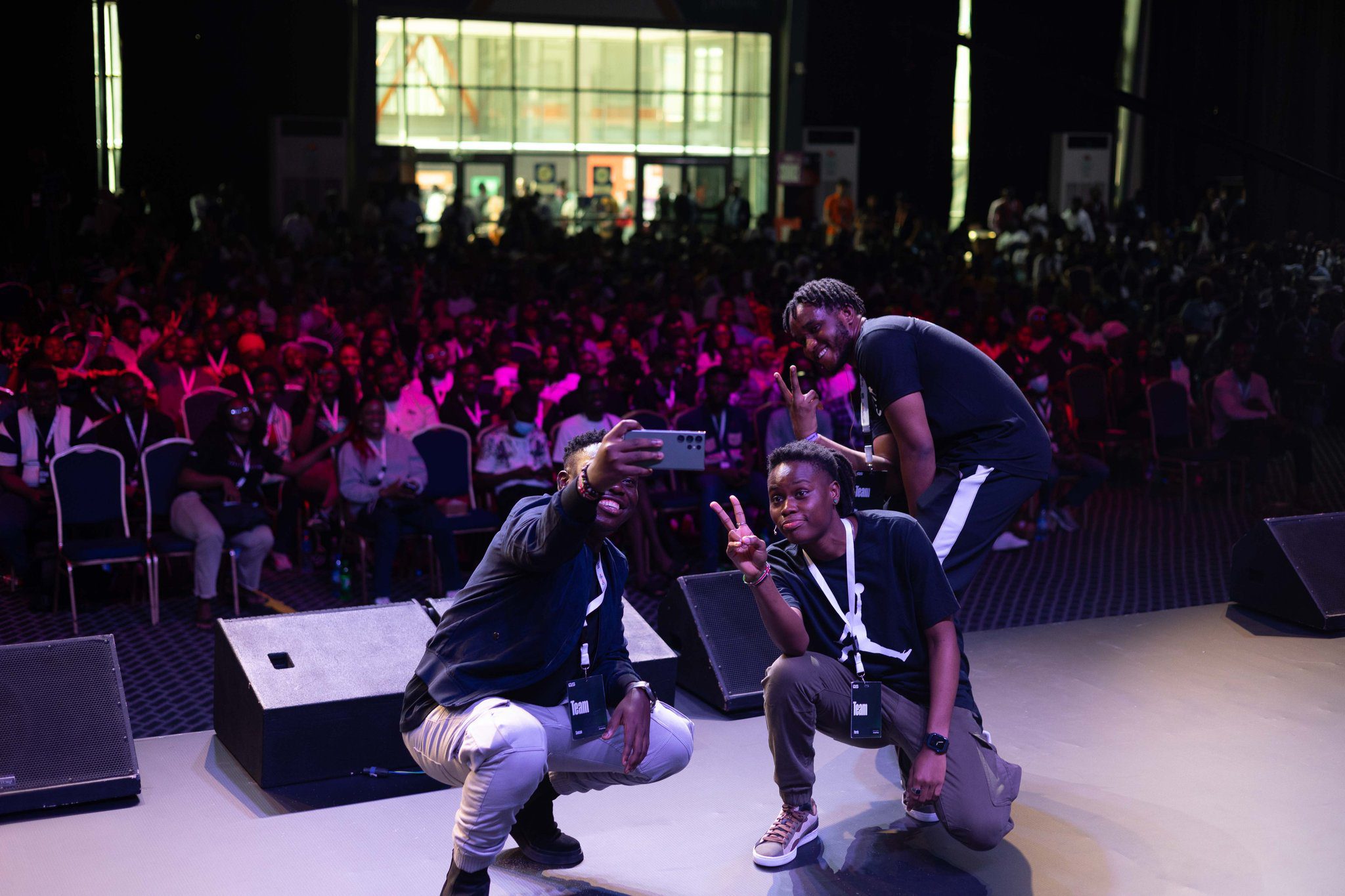
“Notifications are the bedrock of applications,” Prosper Otemuyiwa, the co-founder of Eden Life and a Senior Developer Advocate at Novu told Technext. “Every app has to inform users about everything; email, notifications, SMS, push notifications. Novu is a single API that allows you to connect multiple solutions and channels. It’s like a gateway.”
In his hands-on talk at OSCAFest 2023, “The Complete Guide for Building in-app Notification for Web Apps,” he took a packed hall of developers and aspiring developers on how to “in less than two hours integrate in-app notifications into their web apps. And also use Novu instead of writing a lot of code.”
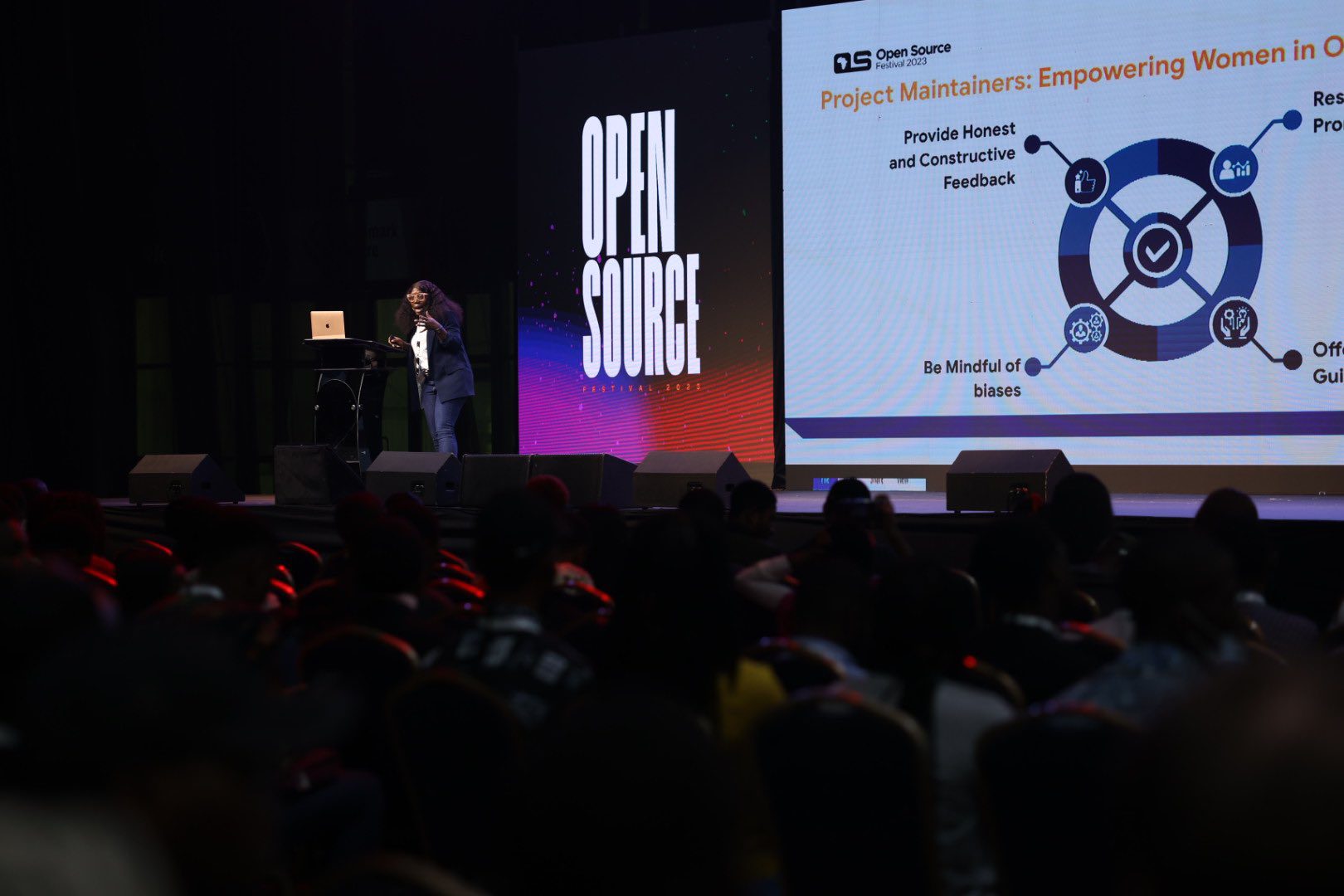
When she mounted the stage, Reniga Nkenchor, who delivered a keynote on “Overcoming Obstacles as a Woman Contributor to Open Source Projects,” seized the opportunity to address an issue that has plagued the Open Source world – closing its gender gap.
As vice president and a governing member of the board of directors at the GNOME Foundation, she leads the foundation’s diversity and inclusion work. Since she took on the role her focus has been on creating space for women in Open Source, while also working full-time as an engineer at the IKEA.
Read also: Here is a roundup of all that happened at Technext Coinference 2.0, #TNC2022
“Open Source is the co-creation of application software. Leaving out women when creating software is tantamount to creating a solution that is not inclusive and it’s a problem,” she told Technext after her speech. “Because of the way Open Source is, contribution has to come from both genders so that we can have a broader perspective, a more broader innovation of whatever solution you’re working on,” she said.
New data that shows that only 3 per cent of women in Open Source for her underscores why it’s important she takes it head-on. “We are about to create an environment that is going to be worse than what we had in tech. We will have a wider gap and the future is Open Source,” she said.
But she wants people to know that this is not just a women’s issue. Solutions that are not inclusive just don’t solve the problem it’s targeting.

She also doesn’t believe in the argument that women are pulling the ladder from other women. For her, it’s the direct result of a selfish person in a position of power. “If a man that is selfish comes into the Open Source space, there is a likelihood that he won’t give his colleagues opportunity in that space,” she said.
A huge swathe of women at the OSCAFest last weekend signals to Nkenchor that “there are curious minds, not knowing what to do, not knowing how to participate within Open Source. Discussing it here is the right avenue to get the attention of not just women, but men as well, so they know that they don’t stereotype any woman.”
Andreea Munteanu, who is originally from Romania, but works for Canonical, the parent company of Ubuntu, said that she was at the event to engage and connect with the community. The software, Ubuntu has become very popular among DevOps engineers.
“There is a lot going on in Africa. There is a thriving growing community in Ghana, Kenya and South Africa. It’s going to be a lot of contributions.” she said.
What do you think a successful community of coders on the continent will look like? “The success is now, look around,”
Andreea Munteanu
But even though the community is growing fast, the infrastructural problem – slow internet, expensive computers etc– still soldiers on.
“What I’ve seen is that we have a very booming tech community that supports each other,” Otemuyiwa, the Eden Life founder said. What in his view the community desperately needs are “tech policies that will directly support the tech community.”
