


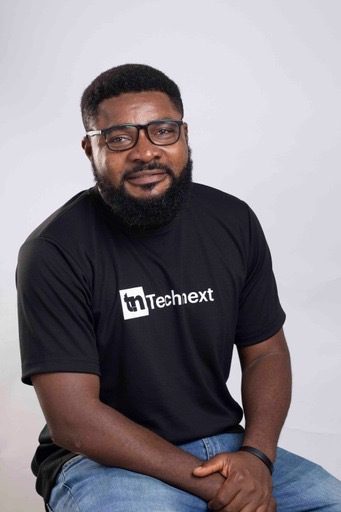
In a fintech ecosystem crowded with wallets, cards and dashboards, it’s rare to find someone who designs financial tools the way Muhammed Adepoju does. He is the Founding Designer at Purse Money, a multi-currency wallet built for freelancers, families and remote workers who earn globally but spend locally.
What makes him interesting isn’t just the products he has shaped but the way he thinks. He is reserved, empathetic and unusually practical for a designer. We sat with him for a conversation about design, money, culture and where it all began.
You didn’t start in tech. You started as a photo editor. How did that shape you?
My dad used to run a photo studio. It wasn’t much, but to me, it was magical.
I watched people react to photos — when an image made them smile and when something felt “off.” I didn’t have the vocabulary yet, but that was my first lesson in user behaviour.
My dad is incredibly creative and resourceful. Whenever clients came in with difficult requests, he would confidently tell them, “My son will fix it.” That trust forced me to learn quickly.
Those early experiences taught me to pay attention, solve problems with limited tools and understand how people react to what they see — the foundation of everything I do now.
Fast-forward to 2023. You’re the founding designer at Purse Money. What is Purse, in simple terms?
Purse Money is a multi-currency wallet and virtual card for people whose money doesn’t stay in one country.
When you think about the financial hurdle and chaos that comes with earning in one currency and living in another, then building a solution specifically for freelancers, remote workers and people sending money abroad home. We wanted to make that experience predictable. Users can keep different currencies, move money across their wallets within the app, get virtual cards and make payments without worrying about conversions and limits. My job was to make the entire experience feel understandable, especially for people who don’t consider themselves “financial experts.”
What was the hardest UX problem you had to solve at Purse Money?
I would say.. reducing anxiety. People are not afraid of money. They are afraid of not knowing where their money is. Every element ranging from the copy, screen, button and flow has to reduce uncertainty.
This for me, meant redesigning onboarding so people always knew what to expect, making virtual card requests feel simple for first-time users and fixing confusion around account types. We eventually differentiated them as Vaults and Wallets, which became a familiar language among early users.
KYC was also a challenge. Initially, we required full verification before onboarding, and people were dropping off. Switching to a tiered approach, where users could access the dashboard with limited functionality until verification was complete, drastically improved retention and completion rates.
How do you make design decisions? What does your process look like?
It starts the same way it did when I was learning to edit pictures — watching how people work.
Only now, instead of looking over someone’s shoulder, we use OpenReplay to watch real user sessions and Metabase to track behavioural data, drop-offs and usage pattern.
This combination is powerful. OpenReplay shows me where people hesitate. Metabase shows me the patterns behind those hesitations.
We also speak with customers directly to understand pain points and missing context.
I don’t rely on assumptions. I rely on evidence.
If I redesign onboarding and see fewer dead-clicks or shorter hesitation, I know it’s working. If I see a spike in drop-offs, that becomes my starting point for iteration. This data-driven approach helps me design flows that feel natural instead of forced.

You worked on AjoMoney before this. How did that influence your work at Purse?
Ah, AjoMoney! That project taught me everything about trust.
People don’t trust digital savings platforms easily — especially when money is involved. They trust what feels familiar, honest and predictable.
Even though Purse Money is more complex, the principle was the same:
To keep things human, to show people what’s happening and not to hide the details that matter.
That shaped how I designed wallet flows, card requests and transaction feedback inside Purse Money.
What would you say was your biggest impact at Purse Money as the founding designer?
A few things stand out, really.
There was a lot of back and forth after launch. Customer feedback revealed several friction points, mostly technical or clarity-related. But through multiple iterations, we were able to reduce onboarding and account request friction and help users complete transactions confidently without support. We also significantly reduce KYC-related errors by providing clearer guidance.
Another real impact was shaping the product language — the clarity, tone and structure that users now associate with Purse Money.
What inspires your work today, especially in a fast-moving fintech space?
I always joke that I’m lazy because I try to find the easiest way to solve the hardest problems. That’s why I gravitate toward simplicity. Finance shouldn’t feel like an exam. Good design should reduce cognitive load, not amplify it.
I’m also inspired by the shift happening in African fintech. People are not just building tools anymore — they’re building experiences. And that’s where design starts to matter.
I believe growth happens in three phases — Skill, Process and People.
I want to keep building products that help people feel in control of their money. I’m exploring more opportunities in design leadership because I want to shape process, structure and influence at a broader scale.
I also plan to keep mentoring new designers because I remember what it felt like to learn everything slowly and alone. If I can shorten that journey for someone else, why not?
There’s a lot happening, and I want to play a part in shaping what comes next.
From being a part-time photo editor in a small darkroom to designing multi-currency financial tools for global users, Muhammed Adepoju represents a new generation of product designers — grounded, observant and committed to making technology feel human.
And in a fintech ecosystem where clarity is turning into a competitive advantage, his perspective might be exactly what the industry needs next.
