


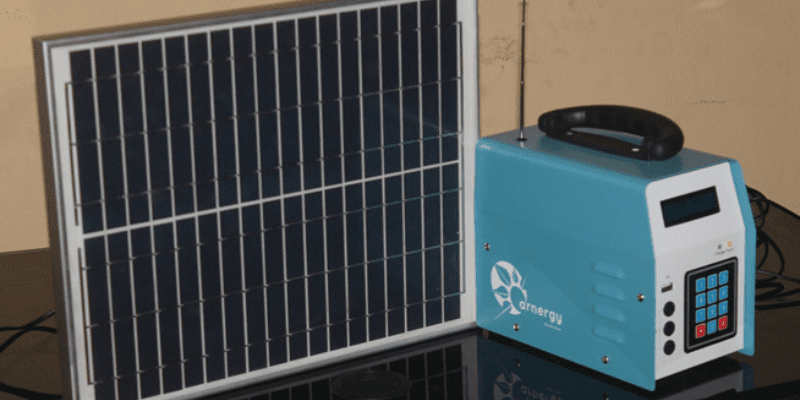
Nigerian clean technology startup, Arnergy, has secured a $3 million funding boost from All On to accelerate the adoption of its renewable energy products. This follows a $9 million Series A round in 2019, with plans for a Series B round this quarter to further expand operations and enhance its presence in Nigeria’s 36 states.
Founded in 2013, Arnergy has already installed over 2 megawatts of electricity for more than 2,000 customers with the aim of continuing its impact in the distributed renewable energy sector.
During an interview, CEO Adeyemo emphasized that Arnergy’s fundraising wasn’t merely about acquiring funds. The company rather looks out for specific triggers like the removal of fuel subsidies, approaching grid parity in terms of grid prices, and fluctuations in diesel prices. Having last raised funds in 2019, Adeyemo highlighted Arnergy’s commitment to capital efficiency. He also pointed out the rising demand for solar systems since 2019, a period when many Nigerians didn’t view them as economically viable.
Arnergy’s lease model amid global solar price drops and exchange rate challenges
Amidst global declines in solar panel and lithium battery prices, Arnergy’s CEO highlighted that these reductions would have been more pronounced in Nigeria if not for exchange rate fluctuations, with the Naira exceeding ₦1600 per $1.

The company, known for 75 per cent outright sales, is now expressing optimism towards leasing. Nigeria’s volatile grid, experiencing a 93.5 per cent power output drop in late 2023 leading to a blackout, has fueled interest in off-grid alternatives. Notably, Nigeria topped solar sales in Q2 2022 in West Africa, constituting 78 per cent of all sales, with solar product sales soaring by 450 per cent from 2017 to 2022.
Read More: Nigerian Energy Startup Arnergy Seals $9m Funding, to Power 35,000 Businesses by 2023
The ripple effects of frequent blackouts in Nigeria
Frequent blackouts in Nigeria have substantial economic implications, causing disruptions to industries, businesses, and commercial activities that heavily depend on a consistent power supply. The interruptions lead to financial losses, hinder manufacturing processes, and pose challenges for small and medium enterprises in maintaining operations and competitiveness.
Regular blackouts create obstacles in work environments, resulting in interruptions in office operations, hindering productivity, and diminishing overall efficiency. Educational institutions also face challenges, as maintaining consistent learning environments becomes difficult for students and teachers alike.
Healthcare facilities, reliant on continuous power for critical equipment, experience difficulties during frequent blackouts, compromising patient care and medical services. Additionally, the interruption in power supply poses a risk to public health, especially concerning the refrigeration of vaccines and medicines.
The reduced access to basic services such as lighting and refrigeration significantly affects the daily lives of citizens, impacting their overall well-being. Communication and connectivity are hindered, affecting social interactions and community engagement.
Frequent blackouts also act as a deterrent to both foreign and domestic investments, as businesses may perceive an unreliable energy infrastructure. Investors may be hesitant to establish or expand operations in an environment with an unstable power supply.
Unreliable power hampers technological advancements and innovation, limiting the growth of technology-driven sectors. Startups and tech industries may face challenges in maintaining continuous operations, hindering progress in these critical areas.
Citizens and businesses often resort to backup solutions like generators to cope with the frequent blackouts. This increased dependency on backup solutions not only raises operational costs but also contributes to environmental pollution. The cost of fuel for generators and maintenance further strains household and business budgets.
Read More: Dyque unveils cutting-edge solar technology that will influence the future of green energy in Africa
