




Nigeria telecommunications operators have proposed a 100 per cent tariff hike on voice, data, and digital offerings to the Nigerian Communications Commission (NCC).
While disclosing the plans yesterday, MTN Chief Executive Officer Karl Toriola expressed that the push for tariff hike approval is paramount for the sector’s sustainability and not for profitability. He pointed out that he doubted the 100 per cent tariff hike plan.
“This is not about profitability but the sustainability of the sector. I think the Federal Government was very supportive in 2024 with significant structural changes to support the industry, one of them was the Critical National Infrastructure (CNI) bill, which protects telecoms infrastructure as critical and gets all the security agencies behind it. The other is addressing the indebtedness of the entire sector, and we have been put to task on QoS obligations, and we shall put to task on that even more in 2025,” he said.
Toriola emphasized the need for sustainability, considering the telecommunications sector as a holding pillar of Nigeria’s economy. He added that the sector has experienced tough economic times owing to inflation and naira devaluation, just like every other sector.

“Sustainability is at the heart of what is driving the economy. If you don’t have a sustainable industry, the economy and well-being of the people will be affected. Yes, everyone in Nigeria has gone through difficult times in the last two years due to economic challenges: inflation, and naira depreciation among others. For us, we are not talking about profitability, but sustainability. Profitability will come on a long-term basis,” Toriola expressed.
The MTN Chief who doubted the 100 per cent hike approval stated that they are hopeful the regulators will show some consideration. He added that the realities of the economy are well established for everyone and that the right decisions will be made for the sustainability of the industry.
Additionally, Toriola noted that the cost of operation such as fuel price has reduced the financial profit accumulation with no thanks to naira depreciation and increasing cost of raw materials.
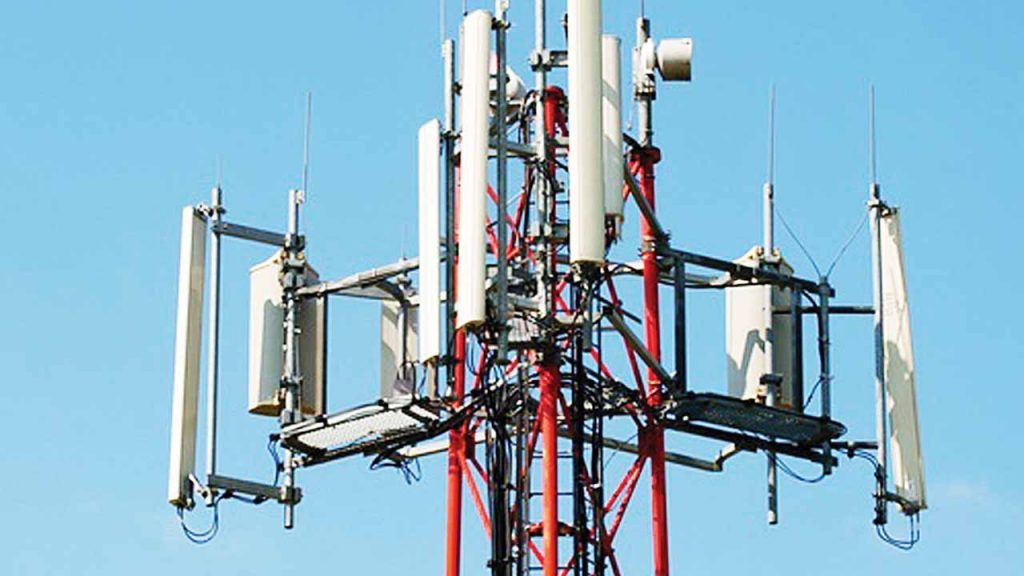
He likewise noted that operators bore several raw materials costs such as batteries, fibre cables, and base station towers. It also includes operating costs for software licensing fees which have been on a consistent increase.
“If you imagine a company that four or five years ago, earned N1 trillion and was making 10 per cent profit- N100 billion, looking at this, the total cost put together was N900 billion. Subsequently, two or three things happened like devaluation of the naira. Official exchange has gone up from about N420/$ or N450/$ to N1550/$ at the end of the year. So, that has driven our cost structures up drastically. Diesel has gone from pre-COVID-19 times of N200-N300/litre to N1000; petrol has gone up several fold. This is even as power generation and the cost of procuring materials have equally gone up,” he added.
While the moves for the increase are still on, reports revealed that the cost of a phone call is still between N6.40 and N50, while charges for SMS are pegged at N4 while the average price of a 1GB bundle is N1,000.
Amidst the push and call for tariff adjustments, telecommunications companies are cut within a red line of dealing with increasing operational costs. Hence, they are seeking approval for a 10% tariff increase. The telecom companies believe that this will help them meet up with the current economic realities.
Mixed reactions to the tariff hike
Meanwhile, the call for tariff hikes has met some rejections. The National Association of Telecoms Subscribers (NATCOMS) frowned at the proposed increase in telecommunication tariffs. They described the move as “insensitive” adding that it only seeks to place more financial burden on struggling Nigerians.
The association criticized the proposed plan in a statement signed by the National President, Adeolu Ogunbanjo, and National Secretary Barrister Bayo Omotubora.
NATCOMS argued that these increases would exacerbate financial strain and reduce access to vital communication services for many Nigerians.
While highlighting the excise duty introduced by the 2020 Finance Act which was suspended following public outcry and is currently the subject of a legal challenge, the association raised concerns about the rising impact of taxes on telecom services.

Although NATCOMS stressed its opposition to the tariff hike, the Association of Licensed Telecommunications Operators of Nigeria (ALTON) warned that service disruptions are imminent unless there’s an increase in tariffs. The association claimed that the hike is necessary for escalating operational costs.
In a statement issued on Monday by Chairman, Gbenga Adebayo ALTON said that the telecom sector had been financially crippled by rising operational costs which were caused by inflation, economic situation, volatile exchange rates, and rising energy prices.
The Chairman noted that despite the varying difficulties, tariffs have remained unchanged, leaving mobile operators in a challenging situation of managing quality and expanding their network. He then expressed that the sector is “under siege”.
Adebayo warned that the failure to grant an immediate tariff adjustment may lead to operators resorting to service shedding. This is a situation where there is limited availability of telecom services in certain areas.
Likewise, service shedding in telecommunications is the deliberate reduction or limitation of telecom services in specific areas or at certain times as a result of operational challenges faced by telecom companies.
“If nothing is done, we might begin to see in the new year grim consequences unfolding, such as service shedding. Operators may not be able to provide services in some areas and at some times of the day leaving millions disconnected, there will be significant economic fallout, because businesses will suffer from a lack of connectivity, stalling growth and innovation,” he said.
The push for tariff adjustment by ALTON and the Association of Telecommunications Companies of Nigeria was first made in April 2024. This was the first move for a tariff hike after it has witnessed stability for the past 11 years.
Read More: Tariff hike: Telecom operators hint at possible service disruptions, service shedding.
