



MTN Nigeria has raised the prices of several internet plans, following the 50% tariff increase approved by the Nigerian Communications Commission (NCC) in January. The price adjustments, which took effect on February 10, have sparked widespread concern among subscribers, many of whom are already grappling with Nigeria’s rising cost of living.
The telecom giant confirmed the price changes in response to a customer inquiry on X stating:
“Y’ello! Thanks for stopping by, We apologise for any inconvenience and delayed response. A price increase has been implemented to enhance our services and serve you better, which is why you are seeing the updated amount.”
How MTN data plans have changed
A review of MTN’s updated data pricing between January 20 and February 11 reveals that while some plans increased significantly, others remained unchanged or were even reduced.
Some plans that increased:
– 15GB Weekly Plan (7 days) → Increased from ₦2,000 to ₦6,000.
– 100GB bundle → Now ₦25,000 for 90GB, up from the previous ₦20,000 for 100GB.
– 600GB bundle → Now ₦120,000 for 480GB, up from ₦75,000 for 600GB.

Some plans that remained unchanged:
– 1.5GB + 10 Mins Weekly Plan (7 days) → Still ₦1,000.
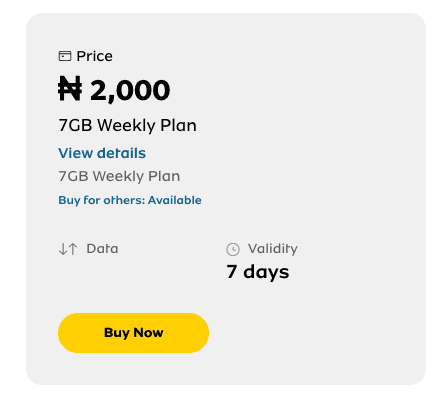
– 7GB Weekly Plan (7 days) → Still ₦2,000.
Some plans that decreased:
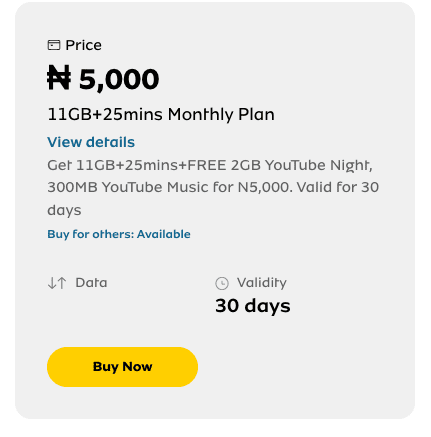
– 11GB + 25 mins Monthly Plan + FREE 2GB YouTube Night, 300MB YouTube Music (30 days) → Reduced to ₦5,000 from ₦5,500.
While some subscribers may find relief in the price reductions, the sharp increase in popular mid-range plans like the 15GB Weekly Plan has drawn significant backlash online.
The announcement comes after the NCC granted telecom operators permission to raise their tariffs, citing prevailing market conditions and industry sustainability concerns.
Reuben Mouka, spokesperson for the NCC, had previously announced the regulator’s decision, explaining that the approval aligns with the NCC’s regulatory powers under Section 108 of the Nigerian Communications Act, 2003.
According to Mouka, telecom operators had requested an increase of over 100%, but the commission approved a maximum 50% adjustment as a compromise.
The adjustment, capped at a maximum of 50% of current tariffs, though lower than the over 100% requested by some network operators, was arrived at taking into account ongoing industry reforms that will positively influence sustainability,”* Mouka stated.
Telecom companies, including MTN, Airtel, and Glo, have long argued that tariffs have remained static despite rising operational costs, currency devaluation, and inflation. However, critics argue that customers, already struggling with economic hardship, are being forced to bear the brunt of these cost adjustments.
Frustration, complaints, and calls for review
Across social media platforms, MTN subscribers have expressed frustration over the price changes. Many argue that the tariff increase contradicts the government’s push for digital inclusion, making internet access more expensive for millions of Nigerians.
A Twitter user, Sodiq, wrote:
How do we encourage digital inclusion when internet access is now a luxury? MTN just raised my data cost by 200% in one month!
Another user, Blessing, noted that the new pricing structure hurts students and small business owners the most.
“As a student, I rely on affordable data for online research. This increase is unfair to us,” she said.
Some users also pointed out that MTN’s service quality has not significantly improved, despite the price increase. Benson, a business owner in Lagos, wrote:
“MTN says they increased prices to improve services. Yet, I still struggle with poor network in many parts of Lagos. We need accountability, not just price hikes.”
The backlash highlights a growing frustration with telecom providers in Nigeria, particularly regarding service quality, transparency, and affordability.
What about other telecom operators?
As of February 11, 2025, MTN is the only major telecom operator to have implemented the new tariff structure.
– Spectranet has announced plans to increase its pricing but is currently offering promotional discounts before the new prices take effect.

– Airtel and Glo have not yet raised their prices, though industry analysts expect them to follow suit in the coming weeks.
While MTN has been the first mover in implementing NCC’s tariff approval, subscribers are closely watching to see if Airtel, Glo, and 9mobile will delay their price adjustments or introduce alternative pricing strategies to retain customers.
The bigger picture: Can Nigerians afford more expensive internet?
Nigeria remains Africa’s largest digital economy, but the rising cost of internet access threatens to slow digital adoption. The country’s unemployment rate, inflation, and declining purchasing power mean that many Nigerians simply cannot afford more expensive data plans.
With reports indicating that millions of Nigerians rely on mobile internet for education, business, and remote work, there are concerns that higher data costs could widen the digital divide, affecting low-income earners the most.
Consumer advocacy groups are calling on the NCC and telecom operators to find a middle ground—one that ensures industry sustainability without cutting off millions of Nigerians from essential digital services. The telecom subscribers association asks for 10% instead of the 50%.
For now, MTN subscribers must adjust to the new reality of higher internet costs, as the telecom sector grapples with balancing business sustainability and consumer affordability.
For now, customers have limited options—either pay the new prices, switch to alternative providers (if available), or rely on promotions and smaller data plans to stay connected.
