


Nigeria’s tax agency, the Federal Inland Revenue Service (FIRS) has started the trial of Binance in an alleged tax evasion case.
Recall that last June, the FIRS dropped tax evasion charges against two Binance Senior Executives Tigran Gambaryan and Nadeem Anjarwalla (who fled from detention) and filed a new lawsuit against Binance as the sole defendant.
Then, the tax agency amended its lawsuit, stating that Binance allegedly failed to collect and remit various categories of taxes to the federation, particularly the Value Added Tax (VAT) and Company Income Tax (CIT), as enshrined in Section 40 of the FIRS Establishment Act 2007 (amended).
In a new lawsuit filed by FIRS, the cryptocurrency exchange platform was accused of offering services such as cryptocurrency transactions and the remittance and transfer of those assets to Nigerians while failing to deduct the necessary VAT from those operations.
Following a notice from Binance about its appointment of a Nigerian representative, Ayodele Omotilewa, the trial process was initiated after the company’s representative denied the tax evasion allegations.

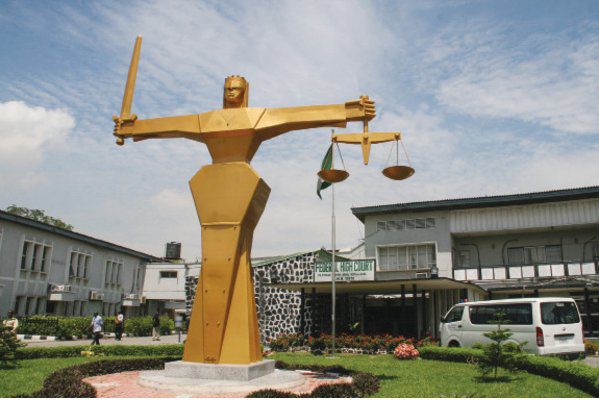
The Monday trial before Justice Emeka Nwite of the Federal High Court in Abuja saw the witness led in evidence by FIRS lawyer Moses Idehu, inform the court that the FIRS automated tax system, known as TaxPromax, is an electronic application that handles the core functions of the FIRS such as taxpayer registration, tax collection, and accounting.
“It is expected that such a taxpayer must be registered on the automated tax system. Once registration is done, the taxpayer is added to the pool of registered taxpayers in Nigeria. It is only then that the taxpayer may be able to meet their tax obligations in Nigeria,” he added.
Further clarifying his claim, the witness stated that the TaxPromax system was launched on June 7, 2021, at the peak of the COVID-19 pandemic and has been in operation ever since. He added that the application keeps records of all taxpayer’s transactions with Binance omission on the platform as proof of the company’s tax evasion.
“If one is not registered on the platform, such a person or institution will not be able to meet their tax obligations, which include filing tax returns, tax assessment, and payment of taxes,” the FIRS lawyer noted.
Binance’s lawyer, Chukwuka Ikwuazom (SAN), in defence against the allegation, asserted that every potential taxpayer who has a “significant economic presence” in Nigeria, either directly or indirectly, is expected to register for tax purposes in the country.
He also pointed out that if an entity is not liable to pay tax in Nigeria, such has no obligation to register.
“No. However, there are two types of taxpayers in Nigeria: Nigerian companies and non-Nigerian companies. All Nigerian companies are expected to register whether they are liable or not. However, non-Nigerian companies must register as long as they have a significant economic presence in Nigeria,” the Binance lawyer noted.
Furthermore, he clarified that a non-Nigerian company that does not have a significant economic presence in Nigeria is not required to file tax returns, subscribe for tax assessment, or make tax payments.
After his testimony, the court adjourned the trial to April 11, 2025.
Also Read: EFCC amends $35.4 million money laundering case against Binance.
More Insights on the charges against Binance
Following the sudden crash of the naira currency in May 2023, the Federal Government of Nigeria accused Binance of involvement in disrupting the currency. As a result, the Economic and Financial Crimes Commission (EFCC) and FIRS separately sued Binance over alleged tax evasion, money laundering, and foreign exchange violations.
On his visit to Nigeria, Gambaryan was detained after the cryptocurrency company was accused of being involved in cybercrimes to the tune of about $34 million.
Another executive, Nadeem Anjarwalla, was also held in custody alongside Gambaryan for several months. However, the former later escaped from detention.
After several back and forths surrounding his detention and push for release, Tigran Gambaryan, who has been held at the Kuje Correctional Center Abuja since April 2024 was released in October 2024 due to his deteriorating health status and other diplomatic interventions.

Binance CEO, Richard Teng, expressed during that period that despite the prolonged court trial and detention of its executives in Nigeria, the crypto company was eager to leave the past behind and continue to collaborate with regulators for a brighter future for the blockchain industry around the world.
“We are eager to put this episode behind us and continue working toward a brighter future for the blockchain industry around the world”, Teng said.
In another turn of events, Gambaryan, in a post published on Friday via X, recounted his experiences in the hands of some Nigerian lawmakers. He claimed that three lawmakers in mention of Peter Akpanke, Ginger Onwusibe, and Agbese, and a fourth person he couldn’t recall his name demanded a $150 million bribe in cryptocurrency payment into their wallets.
However, Agbese, who is the Deputy Spokesperson of the House of Representatives in a statement issued on Friday, said he was not a member of the committee and never demanded a bribe from Binance. He stressed that he was not a part of the meeting,
“I am outraged by the false allegations made by Tigran Gambaryan, an executive of the controversial crypto firm Binance, claiming that I was among those who demanded a $150 million bribe from him. These allegations are false. I was not part of any meeting with any Binance executive regarding money for any purpose,” he asserted
Gambaryan also accused the Federal Government of requesting data of opposition figures who were using the Binance platform, which is a breach of data privacy.
