


At the recent PiggyVest Finance Roundtable held on Wednesday, February 2025, industry leaders, financial experts, and business owners gathered to discuss Nigeria’s evolving financial landscape, using insights from the recently published PiggyVest Savings Report 2024.
The event served as a platform for deep conversations on finance habits, business growth, and shifting savings patterns in an economy struggling with inflation and unstable cash flow.
The PiggyVest Finance Roundtable underscored the complex financial realities of Nigerians. Between economic uncertainty, savings struggles, and gender-based financial disparities, the event shed light on the urgent need for financial education, better savings culture, and stronger financial inclusion policies.
Odunayo Eweniyi, Co-Founder and COO of PiggyVest, set the stage with a thought-provoking question: Is inflation the reason people start businesses in Nigeria?

The discussion quickly expanded beyond inflation to the deeper socio-economic realities influencing business decisions in the country. One key insight from the PiggyVest report was that more women in Nigeria are opening small businesses than men.
Eweniyi pointed out that economic necessity was not the only factor pushing women into entrepreneurship. One of the participants had an opinion: “There are claims that women also think of starting businesses because of an uncertain future—men moving mad against their female partners and their kids.”
This statement resonated with many in the room, highlighting the intersection of financial independence and social security for Nigerian women.
However, launching a business is one thing; keeping it afloat is another. Access to capital remains a major hurdle, as high interest rates deter many small business owners from seeking financial assistance.
The conversation turned to government-private sector partnerships as a crucial solution to improving Nigeria’s business environment.
Representatives from the Lagos State Employment Trust Fund (LSETF) revealed troubling statistics: over 20% of applicants have been denied loans due to low credit scores, while over 60% of potential applicants don’t even have bank accounts. This meant that the government and financial institutions lacked the data to understand their lifestyles, separate from their proposed businesses.
The big question arose: How do we close this gap?
The first panel of the day tackled closing the financial gender gap.
Yewande Akomolafe-Kalu of Flutterwave shared how her company has engaged over 400 secondary school students, teaching them the importance of financial literacy from a young age.
Bukky Akomolafe, Country Manager of Travelstart, pointed out that for many women, personal life choices—marriage, pregnancy, childcare—can slow down their financial growth. She explained that these factors, while personal, often became professional barriers that men in similar industries did not face.

Layo Ogunbanwo, co-founder of Splice, raised another challenge: societal biases. “One of the challenges is women being opinionated and assertive,” she said, adding that Nigeria’s deeply ingrained gender norms often discouraged women from demanding better financial opportunities.
Beyond gender disparities, the panellists examined why Nigeria’s savings culture remains weak. Participants at the roundtable outlined several factors contributing to low savings rates, including:
- A lack of clarity about savings goals. Many people don’t know what they are saving for.
- Distrust in financial institutions is fueled by frequent reports of fraud, hacked accounts, and missing funds.
- Inflation discourages people from keeping money in accounts where its value could diminish.
- Lack of financial education and discipline makes it difficult for people to maintain consistent savings habits.
- Family pressure, particularly the burden carried by first-born children, is often referred to as the “first-born disease” in Nigeria. Many are responsible for supporting siblings and extended family, making personal savings difficult.
A thought-provoking question arose from the audience: Why do men save? The discussion pointed out that women often save for personal needs—hair, clothing, children’s expenses—while men’s savings motives beyond marriage and family obligations remain less discussed.
Eweniyi weighed in, bringing the discussion back to a core reality: “Everything in Nigeria is done in cash, in bulk, and upfront.” This reliance on physical cash affects how Nigerians interact with money and savings.
“Savings is the bedrock of financial planning,” a participant added, and another person emphasised that individuals should see themselves as businesses and prioritise saving for themselves.
The conversation shifted to generational differences in financial freedom. Have financial habits changed between Boomers, Millennials, and Gen Zs? The PiggyVest report suggests that younger generations approach money differently, with Gen Zs focusing more on side hustles, quick returns, and mobility (Japa plans) rather than long-term investments.
After the roundtable, Odunayo Eweniyi sat down to reflect on the session’s impact and the broader goals of the PiggyVest Savings Report 2024.
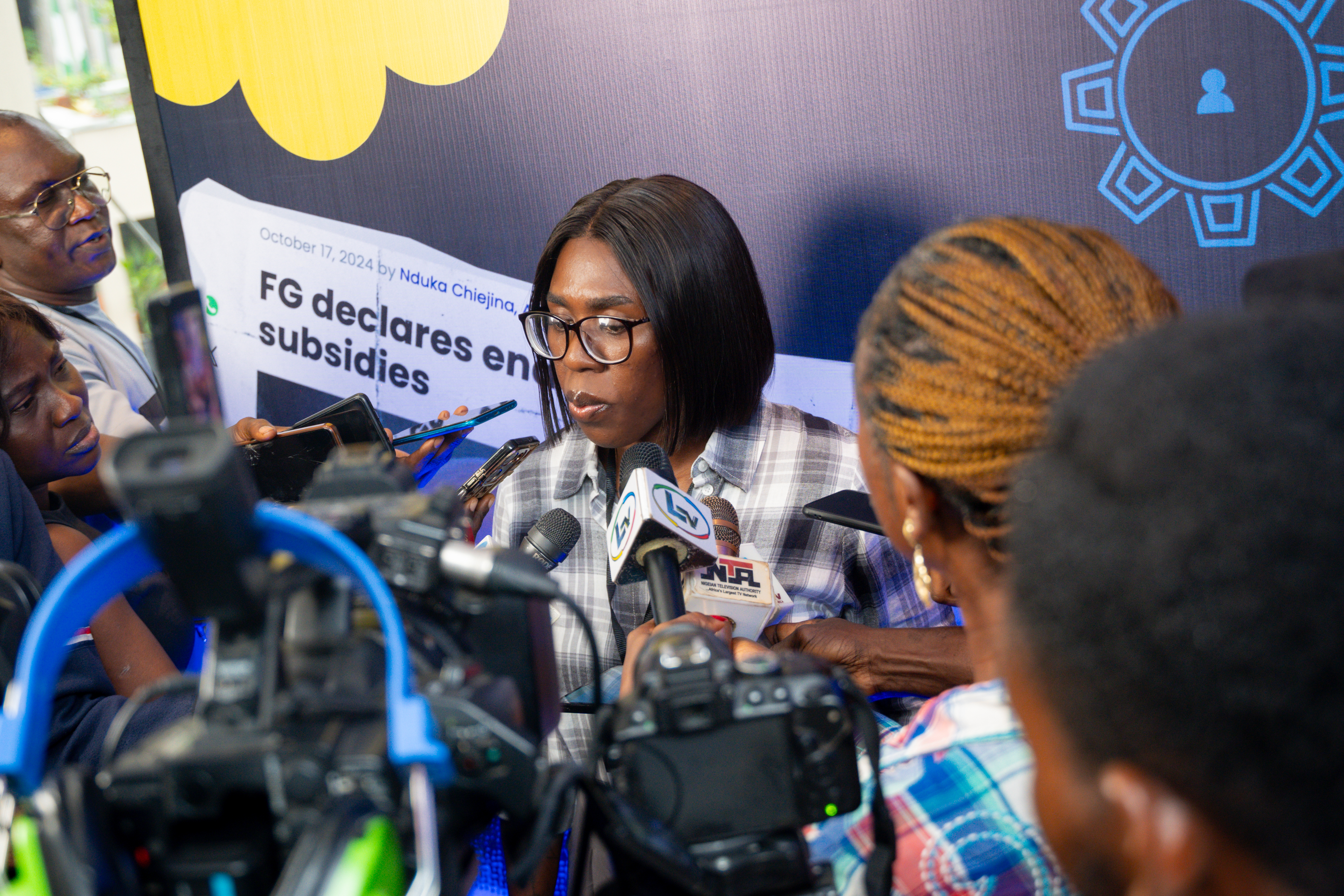
For her, the purpose of these discussions is clear: “Sensitisation and education,” she explained. “The deep dive that the report does every year into how Nigerians interact with money—across savings, spending, black tax, payments—is important. People need to remain conscious of just how difficult, or sometimes easy, it is for the average Nigerian.“
The insights from the report don’t just inform public discourse; they shape PiggyVest’s product development. “All the data always influences how we develop our products,” she said. A prime example was last year’s findings, which showed a spike in relocation savings (‘Japa’). In response, PiggyVest adjusted its target savings products to help users meet their travel goals.
But as economic conditions shift, so do people’s priorities. “Today, people are saving more for starting businesses and financial freedom,” she noted. This shift has led to an increase in SafeLock interest rates and the launch of PiggyVest Business, a platform designed to help users manage their business finances more efficiently. “People are focusing more on getting the best returns for their money,” she added.
Yet, financial inclusion in Nigeria remains a slow-moving challenge. Eweniyi acknowledged that while behavioural shifts take time, real change is happening. “Nine years ago, before PiggyVest, a product like this just didn’t exist,” she pointed out. “Now, everywhere you turn, someone is launching a new savings product.” This, to her, is proof that Nigerians can and do change—it just happens gradually.
She remains confident that this shift will scale over time. “When that change eventually happens, what you have is scaled companies, scaled products, and scaled behaviours,” she said, emphasising that PiggyVest’s role is to continue driving this momentum forward.
