



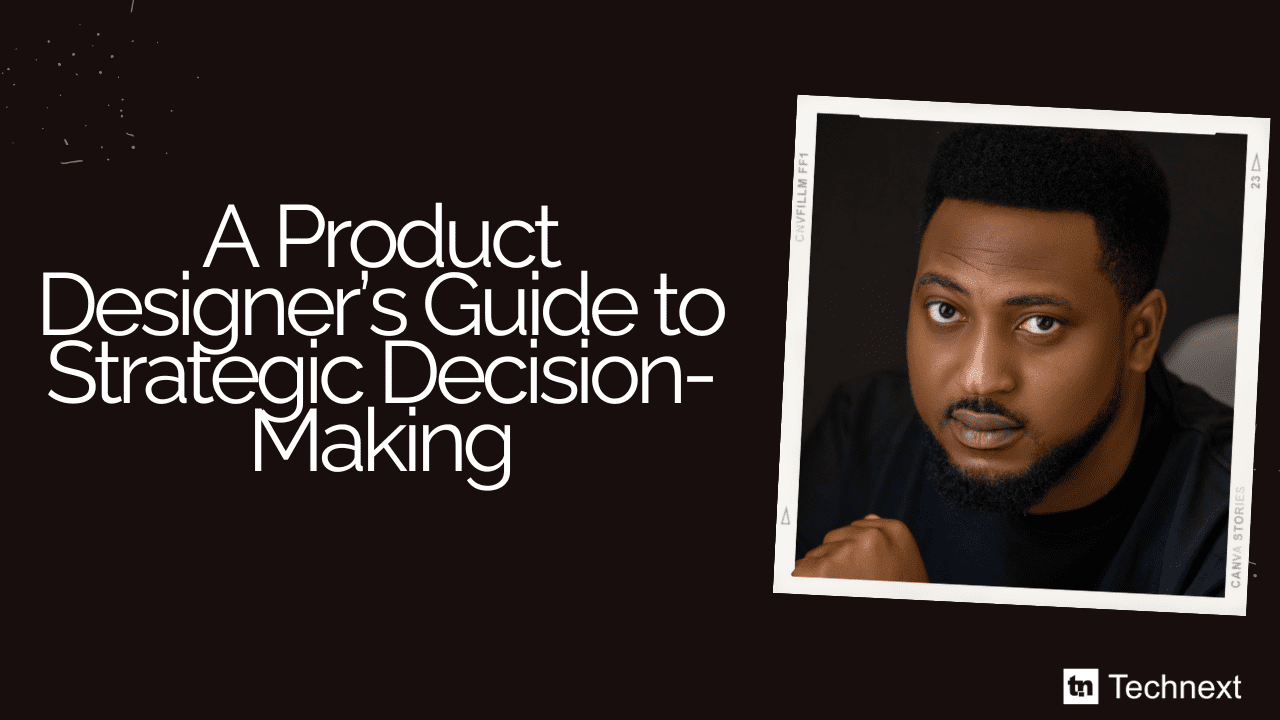
All the choices made by product designers often weigh heavily. From inception to launch, every decision from the designer needs to make choices from the user experience and the business outcome to the market. Yet, such decisions rarely follow a simple process. It is either creativity logic or even intuition; priority competition, resource constraints, and erratic user behaviour make it more complicated.
For the product designer, this is neither an art skill nor a necessity but it should be.
The strategic decision-making process begins with a clear understanding of the problem one seeks to solve in designing. All too often designers just try to jump into solutions without really understanding what the underlying issues are. In the end, one makes a beautifully crafted product that does not cater to real user needs. To avoid falling into this pitfall, it starts with asking the right questions. Who are your users?
What are their pain points? What goals are they trying to achieve? Thus, by grounding your decisions in a thorough understanding of that problem, your design solutions are relevant and impactful.
Aligning design goals with business objectives is also of great importance to strategic decision-making. Often, designers find themselves trying to understand user needs and business priorities and finding the right balance between the two can be challenging. A feature that users like may be too expensive to develop, or designing a way that maximizes revenue might compromise usability.
Designers should acquire an overall view that considers what is necessary for all user experiences but within the much wider business context. This means collaboration with every stakeholder for the organization, product manager, engineer, and marketer.
Data is an important factor in strategic decisions.
Quantitative data like analytic and user metrics help understand how users behave relative to their preferences. In reality, action relying on this kind of data tends to be reactive and narrow in approach to design. The strategic decisions must be backed up by qualitative insights as well: understanding where people come from, what they think, emotive forces driving people to act the way they do, and so forth.
Designers can combine data-driven insights with human-centred research to ensure they make more effective decisions.

Prioritization is another good strategy for strategic decision-making. Designers usually find themselves with a very long list of features, improvements, and ideas; however, they cannot implement all of it at once. Prioritization is to have a clear framework for evaluating options based on impact, feasibility, and alignment with strategic goals.
One such tool is the “impact-effort matrix,” which helps designers assess the potential value of a decision relative to the resources required to execute it. By focusing on high-impact, low-effort opportunities, designers can maximize their impact while minimizing wasted effort.
Communication is also vital to the strategic process of decision-making. A designer must place into perspective why certain things would be done over others to their stakeholders and to the team. This requires good storytelling abilities, coupled with the ability to communicate and package ideas in a meaningful and impactful way.
Instead of merely saying “This is what I want to design,” they can say “This is what the research, user feedback, and business rationale says to support my decision,” therefore cultivating trust within the team and aligning every stakeholder toward a shared vision.
Lastly, strategic decision-making also involves thinking long-term. There are contributions of various aspects from the designer that will bring to realization the present effect of one’s decisions and how it shall yield future consequences.
Today, for instance, the design might work well but perhaps not scale efficiently as the product is projected to grow, or a decision that prioritizes simply short-term gains may undermine long-term sustainability for the product.
To survive the test of time with their decisions, designers need to think beyond the present and foresee problems or needs, in the near future, might arise.

So how can product designers make better decisions strategically? This starts with understanding the problem within the context where it thrives and then closely working with stakeholders to align design goals with business objectives. Prioritize well, focus on high-impact opportunities, clearly and transparently communicate your decisions, and always keep the long-term implications of your choices in mind.
Strategic decision-making is not just about making the right decisions-it is about making the right decisions that will move the product, team, and organization forward. By adopting intention, empathy, and foresight-the critical ingredients in pure and effective design-into decisions, product designers will create solutions that work now and into the future.
In a world where the pace of change is accelerating, the ability to make strategic decisions is what sets great designers apart. It’s not just about designing products; it’s about designing the future.
About the author: Moses Amama
Moses Amama is a UX designer focused on creating delightful and accessible product experiences. He joined Thoughtbot in 2022 and has worked across various sectors and geographies, helping teams improve user experience and ship more efficiently.

Moses has also led design efforts to improve user experience for an indigenous hosting company reducing their customer support inquiries by 40% while also resolving a persistent checkout abandonment issue.
Beyond his professional work, Moses is building FutureFeat Labs and FutureFeat Foundation, initiatives focused on nurturing creativity and delivering learning to underserved communities.
Read also: 6 AI hacks helping Nigerian Gen Zs to hustle smarter, live better and stay ahead
