


Y Combinator-backed Nigerian food procurement startup Vendease is overhauling its business model and employee compensation in a bid to steer the company towards profitability. Following a second round of layoffs that shed roughly 44% of its employees, or 120 staff members, the five-year-old startup has switched from fixed wages to a performance-based compensation with an Equity Share Option Plan (ESOP) as a kicker.
Recently, Vendease introduced a five-phase salary recovery plan. In February, all staff members received an identical ₦140,000 (about $90), irrespective of their previous compensation. Salaries will be ramped up step by step within the next couple of months according to meeting performance targets, and compensation is supposed to be restored by December.
The unpaid components of wages within this recovery will be made into share options.
“We only spend what we earn, which keeps us consistently at break-even and focused on profitability,” a company representative explained.
The representative also said that restructuring became essential to be able to deal with higher costs and to be sustainable in the future.

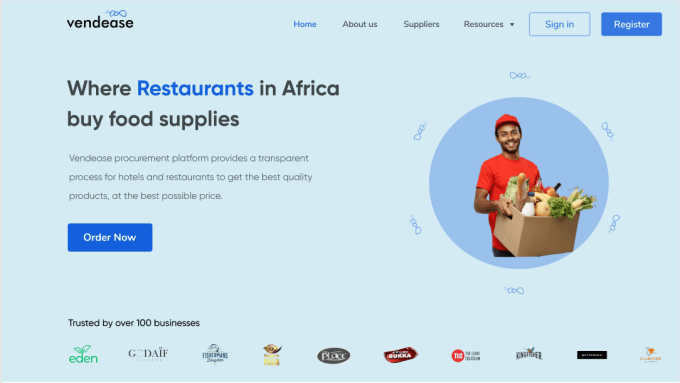
In a sudden switch in strategy, Vendease said that it would focus on software rather than the traditional capital-intensive logistics company.
“Vendease has restructured both its business and operations. We’re a software company, and we want to focus on facilitating OPEX-heavy operations with technology rather than handling them ourselves,” the spokesperson said.
The company is joining a larger pattern of Nigerian startups discarding asset-heavy models in favour of digital, technology-facilitated efficiency.
Why Vendease is betting on software over logistics
The logistics side of food purchasing has always been a costly endeavour in Nigeria. The country’s challenging infrastructure, characterized by poor roads and costly fuel, adds significantly to the cost of doing business in terms of transportation and warehousing. These have compelled Vendease to re-evaluate its approach.
By adopting a software-driven approach, the company aims to reduce overheads while leveraging technology to streamline procurement, sales, and payment processes. This shift is considered pivotal in an industry where a modest increase in fuel prices or an interruption due to road conditions can have a significant impact on profitability and efficiency.
One of the most important revenue streams for Vendease in the past year has been its Buy Now, Pay Later (BNPL) product. This has allowed food buyers to borrow funds even when traditional lenders have turned them away due to the unpredictable nature of the business.
The company, leveraging its long history of supply chain knowledge, has extended over $70 million of credit with a default rate below 1%, according to reports. Yet despite tweaking its BNPL model, this source of revenue by itself has not been enough to offset the rising cost of doing business.

When CFO, Mohamed Chaudry joined the company in January 2024, he saw BNPL as one of the primary pathways to profitability. His recruitment triggered the current restructuring with the management seeking to streamline financial control and extend the company’s cash runway.
Sources indicate that the funds available at Vendease can only last a couple of months before additional capital can be raised. The startup is thus currently negotiating a bridge round with both current and new investors. These funds, if they are raised, will be utilized primarily for enhancing technology capacity at the cost of sustaining costly logistics operations.
The shift away from directly managing warehousing and logistics is a reflection of broader industry trends in Nigeria, where most startups are reducing asset-heavy burdens for digital platforms. In Nigeria’s harsh business environment, marked by infrastructure deficiencies such as bad roads and increasing fuel costs, this is seen as a natural transformation.
Vendease, launched in 2019 by Olumide Fayankin, Tunde Kara, Gatumi Aliyu, and Wale Oyepeju, started with the intent to eliminate inefficiencies in food supply chains. By 2022, the company had supposedly moved 400,000 metric tonnes of food for over 2,000 clients at a cost which saved them millions of dollars on procurement costs.
Despite these early triumphs, the harsh economics—like crippling naira devaluation and inflation have narrowed margins, bringing about the latest drastic measures.
Meanwhile, there have been claims that Vendease might be considering a merger or acquisition with players in the HORECA (Hotels, Restaurants, and Catering) or FMCG sectors. However, the company has dismissed these speculations.
“It’s normal to get approached for M&A, especially when you’re a fast-growing business operating in a unique space like food. Yes, Vendease has been approached, but the founders are focused on scaling, not selling anytime soon,” the company spokesperson stated.
As the startup is placing its wager on a software- and digitally-driven future, its revised strategy is expected to simultaneously cut down on operational costs and build slimmer, more agile operations. The shift away from asset-heavy logistics into a technology-driven approach not only keeps pace with Nigeria’s notorious infrastructural challenges but also reads less like a reaction to the evolution of tech-driven growth in the startup environment.
Overall, Vendease’s restructuring and transition to technology-led operations reflect the growing tendency of Nigerian startups to adapt in the face of a hostile business climate. With its new focus on technology and efficiency, the company aims to outlast the strains of inflation and economic uncertainty, setting a new standard for food sourcing and digitalization in the industry.
