




The global cryptocurrency ecosystem is grappling with a severe downturn as prices of major digital assets, including Bitcoin and Ethereum, have plummeted in response to sweeping aggressive tariffs imposed by the Trump administration.
In the early hours of Monday, 7th April 2025, data from CoinGecko revealed a sharp decline in cryptocurrency values, with Bitcoin dropping below $78,000 and Ethereum falling under $1,500.
This market downturn, triggered by tariffs announced by the US government earlier this month, which the White House said was “aimed at addressing trade imbalances, has erased billions in value and heightened economic uncertainty, impacting both crypto and traditional financial markets.
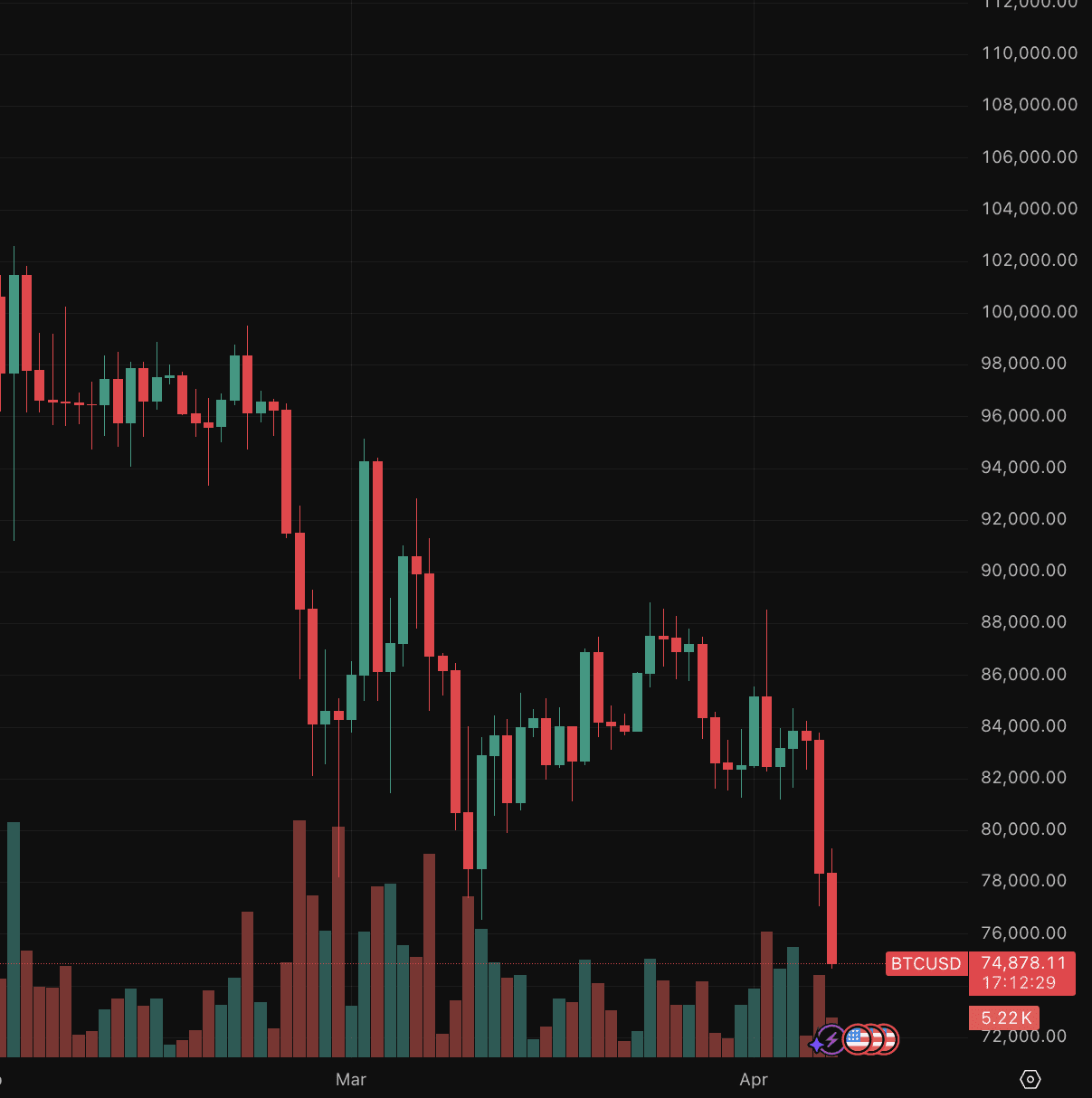
According to Watcher.Guru, Bitcoin, the world’s leading cryptocurrency by market capitalisation, fell below $78,000 on Sunday, trading at $77,825.61, down from a recent high of $83,200.
By the early hours of April 7, Cointelegraph noted a further decline below $75,000, reflecting about 10% drop from its $83,200 peak over the past few days
CoinGecko data corroborates this trend, showing Bitcoin at $78,500 after a slight recovery from a 6% drop in the last 24 hours, with trading volume reflecting heightened volatility.
Ethereum has faced an even steeper fall. On April 6, CoinGecko recorded Ethereum at BTC0.02159, with a 24-hour decline of 1.4% and a 7-day drop of 2.9%. However, X posts from Ashcryptoreal on April 7 reported Ethereum plunging below $1,500, the lowest since March 2020, marking a single-day decline exceeding 13%, highlighting the acute sensitivity of altcoins to macroeconomic shocks.
Broader market contraction
The global cryptocurrency market has not been spared, with its total market capitalisation dropping over 8% to $2.5 trillion, according to CoinGecko. Estimates based on historical trends and current data suggest a broader market decline of 15-20% over the past week, driven by the tariff fallout and $1 billion in crypto futures liquidations.
The crypto downturn mirrors a broader collapse in global financial markets. U.S. stock futures opened sharply lower on April 6, with S&P 500 futures plummeting nearly 4%, Nasdaq futures sliding, and Dow Jones Industrial Average futures sinking over 8%, according to Google Finance.
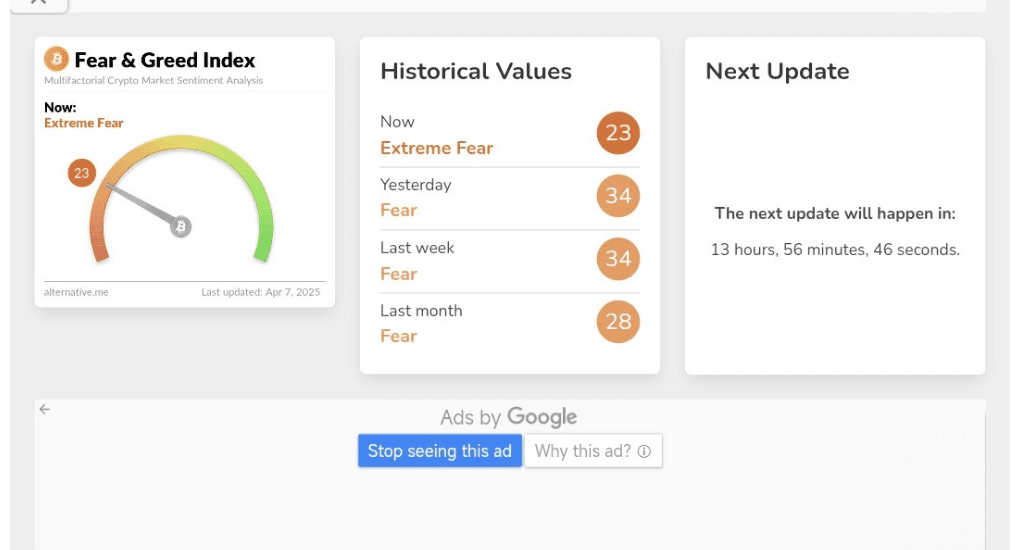
The Crypto Fear & Greed Index, a barometer of market sentiment, fell to 23 on April 7, signalling “extreme fear” among investors. Charlie Sherry, head of finance at BTC Markets, attributed the crypto drop’s severity to low liquidity on Sundays, noting that “a few large sell-offs can have a disproportionate impact.”
The primary driver of this bear market is the Trump administration’s aggressive tariff strategy, implemented on April 5 with a baseline 10% levy on all imports and higher rates for specific countries: 34% for China, 20% for the European Union, and 24% for Japan. Announced on April 2 and dubbed “Liberation Day”, these measures have sparked fears of a global trade war, rattling risk assets like cryptocurrencies.
Trump defended the tariffs on Truth Social, stating they would address “massive financial deficits” and bring “tens of billions” into the U.S. economy. Speaking to reporters aboard Air Force One, he acknowledged the market sell-off but framed it as necessary, saying, “Sometimes you have to take medicine to fix something.” National Economic Council Director Kevin Hassett noted that over 50 countries have sought trade negotiations, signalling global unease.
The crypto ecosystem continues to face an uncertain future. While Statista projects user growth to 861 million by year-end, the immediate outlook is grim, with ongoing volatility challenging investor confidence.

The Trump administration’s unwavering stance on tariffs suggests prolonged market pressure, though some traders remain optimistic about a potential Bitcoin rally due to Trump’s pro-crypto stance.
For now, the global financial market braces for further turbulence.
