






A remarkable 79% of Kenyans participate in online betting, cementing the country’s position as a key player in Sub-Saharan Africa’s gambling industry. This is according to a comprehensive survey conducted by GeoPoll in the first quarter of 2025. With Kenya’s population estimated at 55 million, about 43.45 million people are involved in betting activities, reflecting both significant economic potential and pressing social concerns.
The survey, which revisits betting behaviours across six African nations, highlights Kenya’s sustained prominence, driven by widespread internet access, mobile technology, and a youthful, tech-savvy demographic.
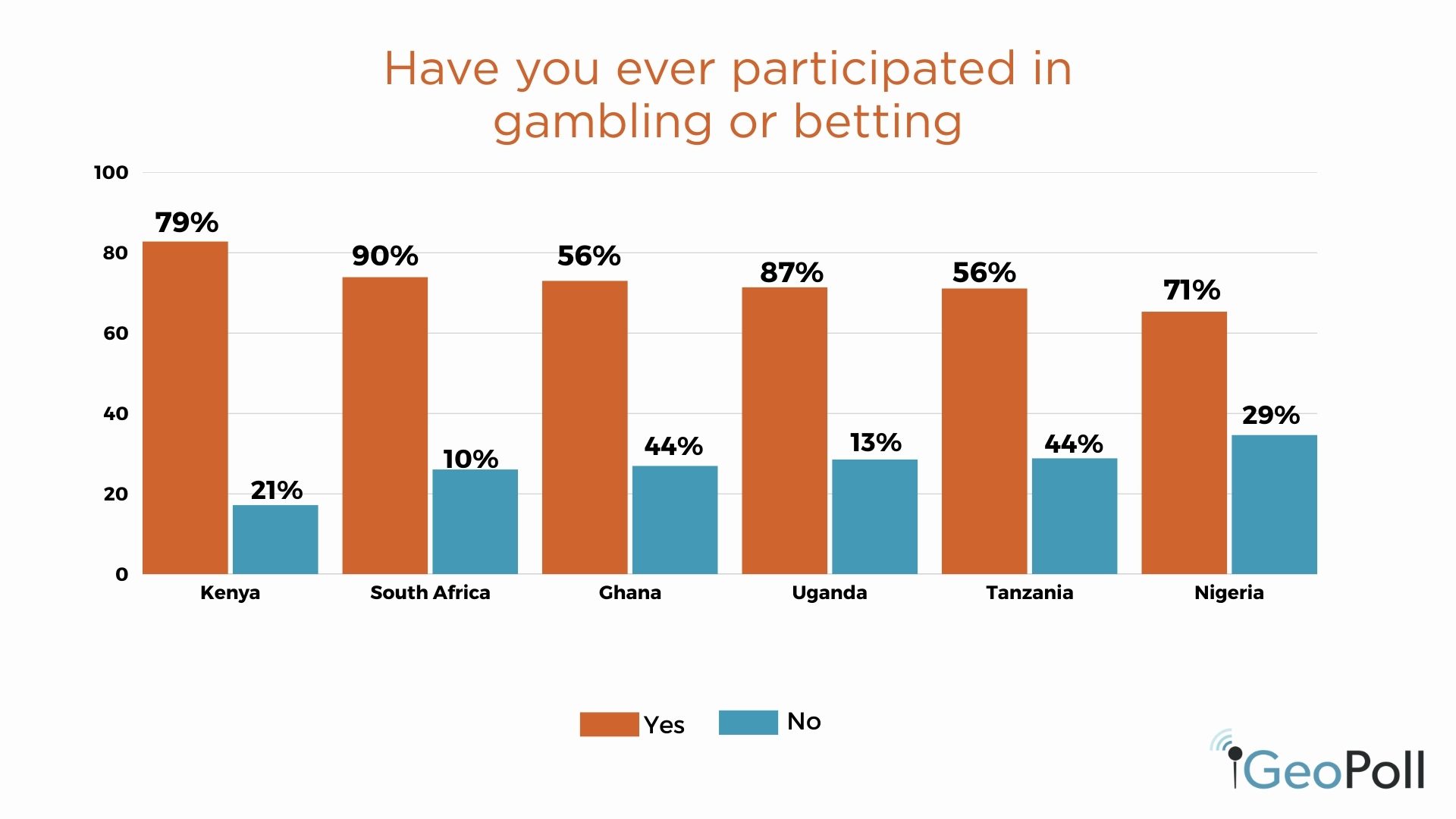
The 2025 GeoPoll survey builds on prior studies, including a 2024 report that recorded 80% of Kenyan adults engaging in betting, then the highest rate in Sub-Saharan Africa. This year’s slight decline to 79% places Kenya third regionally, behind South Africa (90%) and Uganda (87%), with Nigeria (71%), Ghana (56%), and Tanzania (56%) trailing.
Despite this shift, Kenya’s betting market remains robust, projected to have reached nearly $100 million in 2024, according to Slotegrator. The industry’s resilience is evident in its daily betting turnover, estimated at KSh 2.1 billion, translating to KSh 766 billion annually.
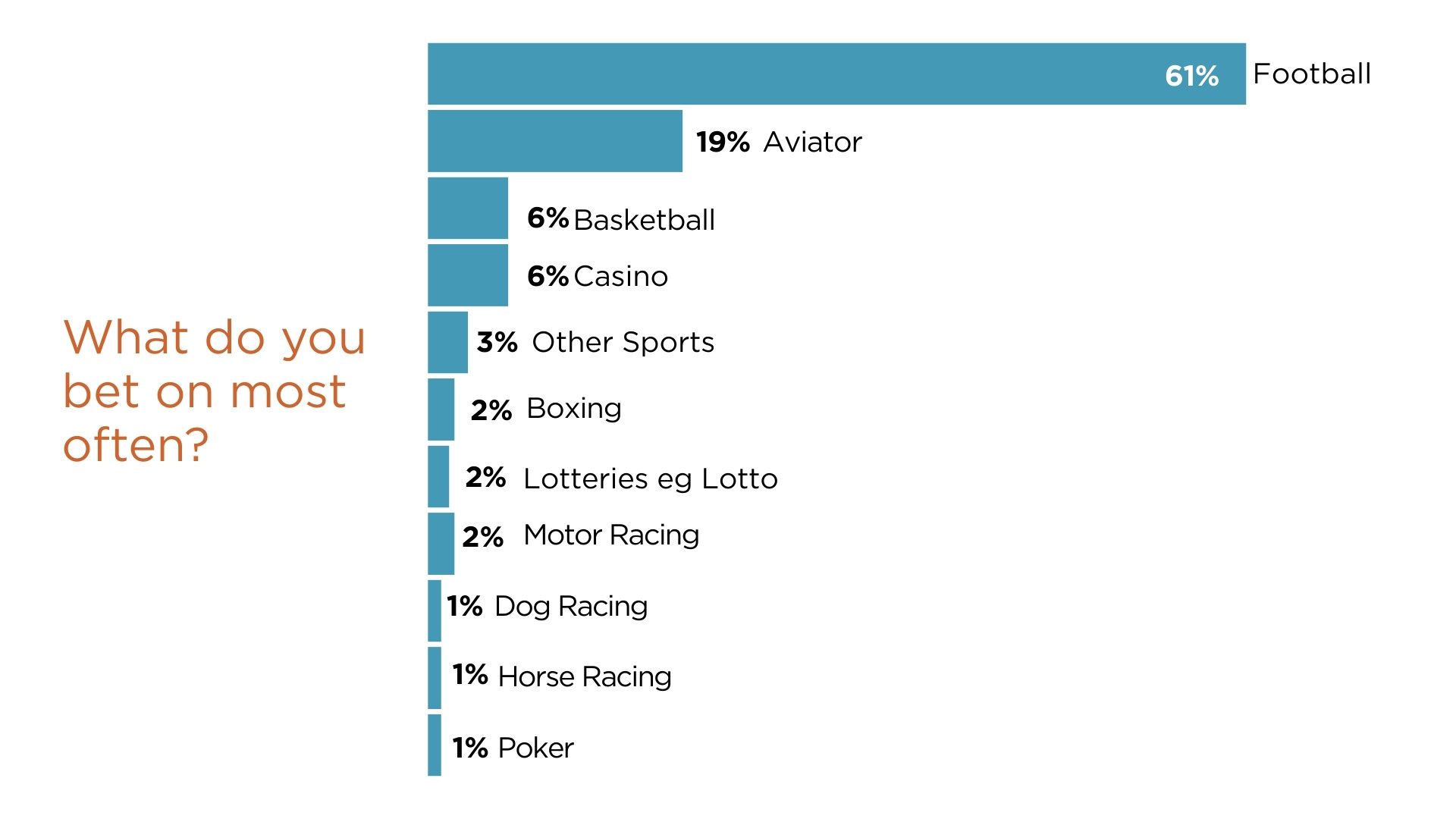
Football betting remains the cornerstone of Kenya’s gambling culture, with 61% of respondents primarily wagering on matches, particularly the English Premier League, UEFA Champions League, and local Kenyan leagues.
What online betting options are Kenyans opting for?
The survey notes a rising interest in Aviator, a fast-paced digital game, chosen by 19% of bettors, while basketball lags at 6%. The dominance of football underscores Kenya’s deep sports culture, amplified by mobile betting platforms like SportPesa, which holds accounts with 82% of Kenyan gamblers.
With 94.2% of mobile users on Android devices, bookmakers such as Helabet have optimised apps to cater to on-the-go betting, with 91% of African bettors using mobile phones as their primary platform.
Betting frequency in Kenya reveals varied engagement: 35% of respondents bet weekly, 22% monthly, 20% less than monthly, 14% daily, and 9% multiple times daily.
Spending patterns reflect a preference for low-stakes gambling, with 57% of Kenyan bettors spending less than KSh 1,300 ($10 USD) monthly. However, 28% spend between $10 and $25, 3% between $25 and $50, 6% between $50 and $100, 3% between $100 and $500, and 3% exceed $500, indicating a small but impactful group of high-stakes bettors driving significant revenue.
The demographic profile of Kenyan bettors skews young, with most under 35 and tech-savvy. The survey’s employment data across the six countries show 38% of respondents are formally employed, 29% self-employed, 18% unemployed, 14% students, and 1% unable to work.
In Kenya, economic pressures are notable, with a 2019 Ipsos-GeoPoll study indicating 28% of bettors are unemployed and 33% self-employed, suggesting betting as a potential income source for some. Kenya’s 40.8% internet penetration and mobile payment systems like M-Pesa and Airtel facilitate seamless transactions, with the Kenyan Shilling (KSh) dominant, though cryptocurrencies like Bitcoin and Ethereum are gaining traction for faster payouts.
The Betting Control and Licensing Board (BCLB) regulates the industry, but the proposed Kenya Gambling Control Bill 2023 seeks to establish a new Gambling Regulatory Authority to address addiction and underage gambling.

The 2019 suspension of betting firms, which cost KSh 14 billion in media advertising revenue, underscored regulatory vulnerabilities, yet 73% of aware Kenyans continued betting through alternative channels, per a GeoPoll-Ipsos report.
The GeoPoll survey, conducted among a randomised sample across Ghana, Kenya, Nigeria, South Africa, Tanzania, and Uganda, offers nuanced insights into betting trends.
As Kenya navigates its betting boom, stakeholders must balance economic gains with social responsibility. The industry’s growth provides entertainment and revenue, but experts advocate for responsible gambling to mitigate risks, ensuring Kenya’s betting culture evolves sustainably.
