






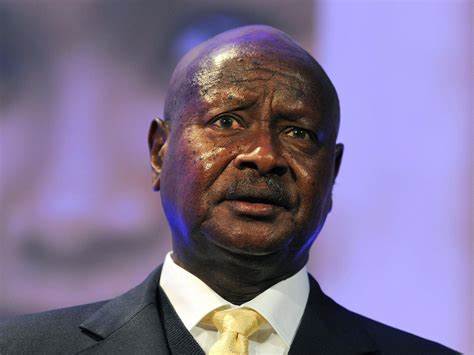
The entry of Elon Musk’s Starlink into Uganda has received a boost after President Yoweri Museveni shared that he had a productive meeting with representatives of the satellite internet provider. Starlink has been looking to launch in the East African country for a while.
While sharing the update on Tuesday, he expressed that SpaceX Starlink is welcome in the county and its low-cost service would be a plus to serving its population.
“I appreciate their commitment to providing low-cost internet in hard-to-reach areas and establishing a presence in Uganda. They are welcome,” Museveni said in an X post.
According to reports, the satellite company’s entry into the East African country is imminent after it recently applied for a license to offer its low-latency, high-speed satellite internet services in the East African nation.
For Ugandan consumers, the entry would be welcomed with open arms after a long period of complaints about the high cost and unreliability of domestic internet services, which some blame on the lack of sufficient competition in the market. Telecom giant, MTN Group, is currently the dominant player in the East African country’s data market and chiefly competes with a unit of India’s Bharti Airtel.
If finally launched, Starlink would be extending its ground in Africa to 21 countries. This comes amid its recent launch in Somalia and Lesotho earlier this month, and in Niger in February. It is also closing in on launching in India following a strategic meeting with Prime Minister Narendra Modi.
Also Read: Here is all you need to know about Starlink’s Gen 3 Kit hardware.
Starlink’s chances in Uganda
SpaceX Starlink’s potential entry into Uganda is part of its focus to provide fast and reliable internet access in remote and underserved regions around the world. While it leverages a constellation of low-Earth orbit (LEO) satellites, the company offers broadband internet with impressive speeds and reduced latency compared to traditional satellite services.
Starlink’s model is particularly suited for areas with limited infrastructure, where laying fibre optic cables is not feasible. With a population of 50.7 million as of January 2025, 27.7 per cent of Uganda’s population lived in urban areas while 72.3 per cent lived in rural areas, showing how impactful Starlink’s entry would be for the country.

According to Starlink’s service coverage map, it plans to provide internet access in several key Ugandan towns and cities, including Kampala, Lira, Mbarara, Masaka, Jinja, Soroti, Kasese, Gulu, Pader, Kitgum, Hoima, Masindi, Kotido, and Kaabong. This further spells Starlink’s intent to offer a wide coverage that includes both urban centres and rural areas.
Meanwhile, Uganda has made considerable progress in expanding internet access, but a significant rural-urban digital divide persists. According to the Uganda Bureau of Statistics (UBOS), rural internet penetration remains below 20 per cent, a barrier that hinders education, health services, agriculture, and economic inclusion.
Starlink’s entry into the market could be a strategic tool in closing this digital divide by spreading internet access across communities and providing quality connectivity when existing telecom services fail.
While Starlink is yet to receive official licensing from the Uganda Communications Commission (UCC), some users in Uganda have managed to access the service by subscribing from neighbouring countries where Starlink is approved and then using the equipment inside Uganda via a roaming setup. This method is also adopted by South Africans, where Starlink’s future is greatly uncertain.

As it’s highly expected of the UCC to grant the satellite company a license, Uganda would be joining the other 20 African countries that have embraced the adoption and positioned themselves for enhanced internet penetration.
The satellite company would also compete with MTN and Bharti Airtel for a market share of 14.2 million individuals using the internet in Uganda at the start of 2025, with online penetration at 28.0 per cent.
