




By Patricia Orji
When I chose to learn artificial intelligence, I thought I knew what I was getting myself into. I spend hours of time on coding, tutorials, and bug fixes. Personally, AI felt like an advanced level of programming.
The first thing is that it sounded very real. I had a pleasant time looking around and reading documentation and testing how to make models work.. However, shortly after, I faced another type of challenge, which could not be solved using a code.
Numerous AI jobs were not accompanied by clear instructions. Sometimes, I had data but wasn’t sure what the goal was, and other times I had a goal but wasn’t sure if the data was sufficient. I was frequently in a state of paralysis, not due to a lack of knowledge on how to write the code but because I simply did not grasp the issue I was attempting to solve.
It was indeed a life-altering moment. It turned out that the study of AI is not only the possibility to find the ideal solution, but also the ability to pose the right questions. I needed to feel comfortable breaking down issues into solvable bits, trying my ideas rather than simply guessing and accepting that uncertainty is part of the process.
The article is not a step-by-step tutorial to the construction of AI models and does not cover the topic without a strong background in Math or Machine learning. It discusses the problem-solving lessons I acquired during my study of AI and how they have impacted my attitude to problems in code writing and life.
The First Realization: Problems are not necessarily well defined.
Among the initial things that AI taught me is that real problems are usually messy and complex. In most tutorials, things are organized, the data is ready, the objective is clear, and the instructions are presented in a clear and concise manner. However, in real life, things tend to be much more complex and unpredictable.
You can have data, but maybe you are not certain of the precise question you are attempting to respond to. Or you might have a question but not sure of the data. At times, you may be both but are confused on how to gauge success. There is nothing to be concerned about–these are normal times and one can always find some sense.
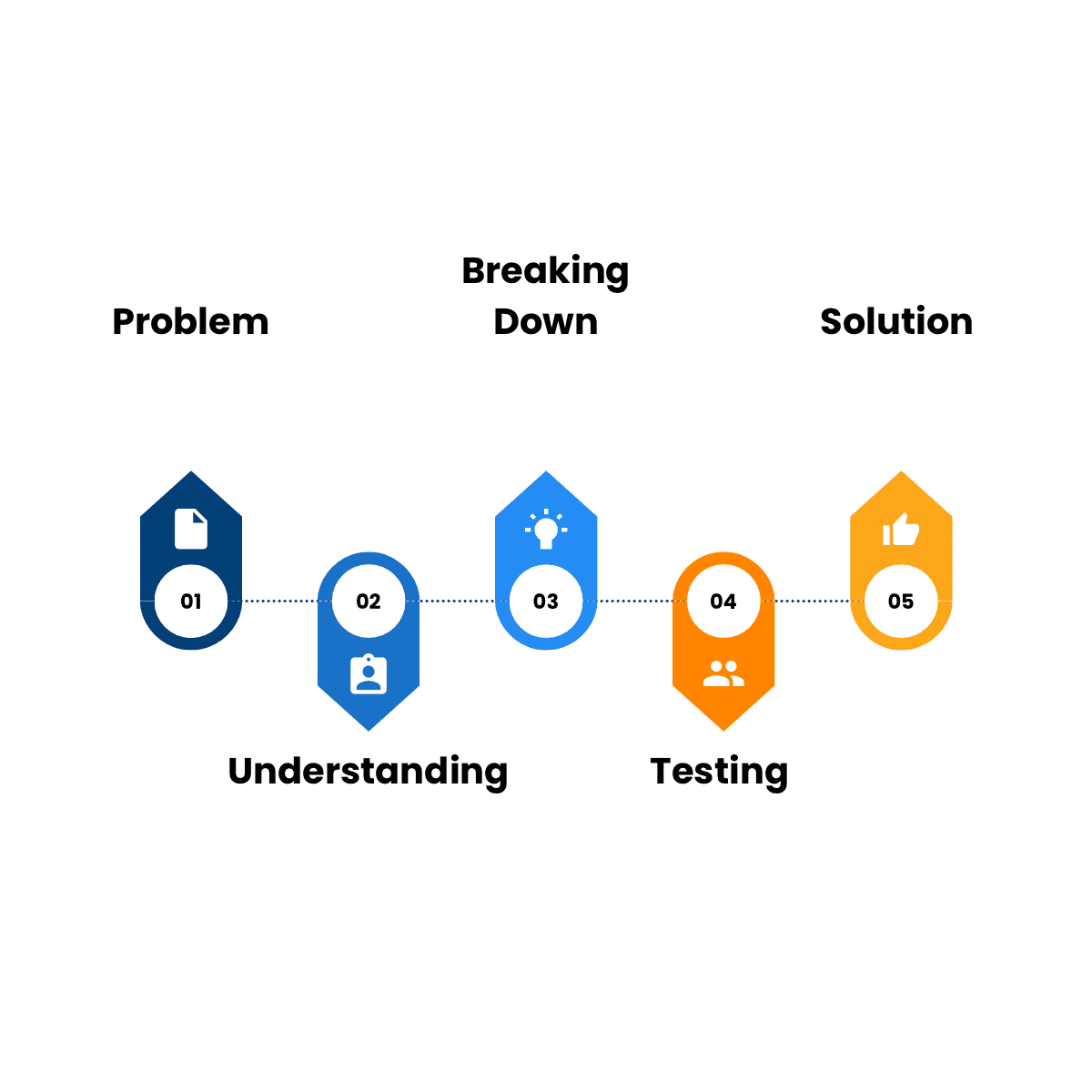
To start with, it was very frustrating because I was always looking to find the right way to start. But with time I also discovered that there is one thing that is very important, and that is, to find a solution, it is very important to first realize what the problem is.
This is done by posing some simple but important questions: What do I want to predict or better? What is success? What information do I currently have, and what might I still need?
Such attitude is not limited to AI. We are used to rushing in our day to day lives to correct something without necessarily understanding it. AI has challenged me to pause and to slow down and first define the problem.
Breaking Problems into smaller, testable parts.
After I had conceded that not all problems are obvious, the next obstacle that I encountered was deciding where to start.
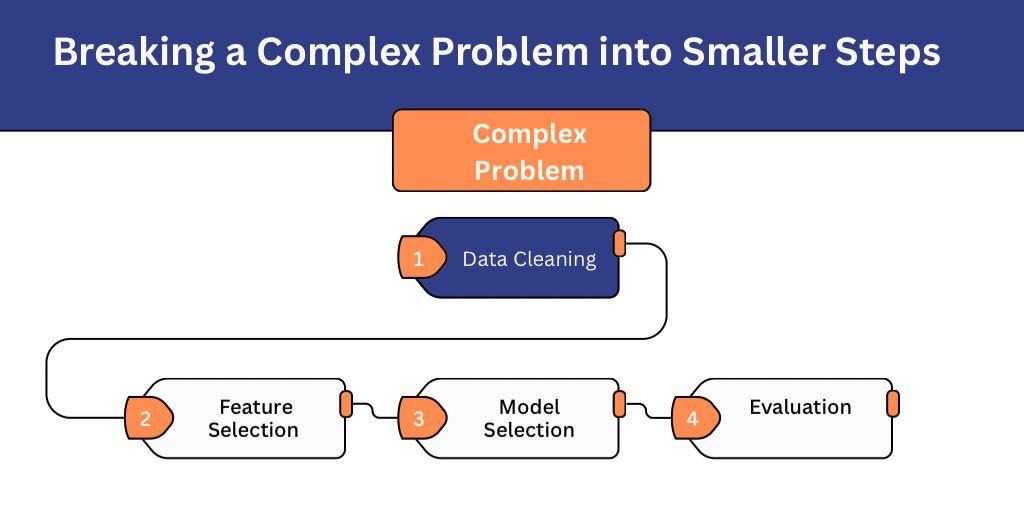
Large issues might appear to be daunting. It may sound simple to say Build a model but it is accompanied by numerous small steps:
– cleaning the data
– choosing useful features
– selecting a model
– evaluating results
Attempting to do everything simultaneously can be disorienting, yet AI has enabled me to learn to divide problems into small manageable bits. It makes tackling challenges much easier!
I began to use this mode of thinking outside of AI. It was either a work project or a personal goal, but I stopped to not attempt to solve everything at the same time. Rather, I focused on the next obvious action, and the process became less intimidating and overwhelming.
Why Guessing Doesn’t Work: How to Learn to Test Ideas.
I used intuition to a large extent prior to beginning to learn more about AI. I would reason out a problem and attempt to come up with what I felt was the best solution in my mind.
The news about AI soon revealed to me the narrowness of simply following my hunch. One can easily think that a model will work or be confident in what you are assuming but until you test it, you can never be sure.
Results are the real deal in AI and not opinions. You experiment with something, check of the result, and alter it according to what you notice. At times your idea may be brilliant and at other times it may miss the target. In any case, all the experiences are valuable learning opportunities.
This was a good lesson to me that good problem solving is not simply about being right but being willing to test your ideas with an open heart.
I like making little experiments now, rather than being caught up in overthinking. I take feedback positively, get to learn and apply it to develop and improve.
How Studying AI Changed My Approach to Everyday Problems
These lessons have not just been limited to my learning journey on AI. They have gradually begun to shape my attitudes to everyday challenges, both technical and non-technical.
What started as an easy method of learning about models and data slowly evolved to a useful method of comprehending decisions, problems, and ambiguity in our daily lives.
I become more at comfortable with Uncertainty.
Prior to getting into the field of AI, I would be very uncomfortable when I was not able to get specific answers. I am more inclined to situations in which everything appears to be simple and the outcomes are foreseeable. When there was no understanding, I tended to avoid it or wait until I was sure that I had everything figured out. Nonetheless, my view on AI changed upon learning about it.
Uncertainty is not necessarily a phase in an AI task; it is a natural part of the process. You constantly have incomplete information, vague objectives, and outcomes that are not guaranteed. And there is no stage at which you can just begin to understand everything perfectly. Keep in mind, it is all the exciting process!
This was very frustrating to me at first–I wanted to know everything, and to have a definite path. But as I continued I found that taking time to see that everything was just so clear was merely dragging me back instead of forward.
I have learned it is okay to proceed even when I have not fully comprehended. I begin with what I know however little it may be and I am willing to entertain the possibility that there are answers that I will only be able to see as I start digging. All that is the path of learning and growing.
This attitude has really changed the manner in which I approach mundane situations. I no longer wait until I see everything on the paper when it comes to beginning a new project, making a decision, or even trying something new. Rather, I simply start, watch, improvise, and continue. Fear of uncertainty is no longer there as it is just a normal step in the process.
I Began To Ask Better Questions Before Leaping into Solutions.
Prior to the study of AI, I tended to hurry up in solving problems. I was interested in a quick answer. I thought that speed equated to efficiency. However, AI made me go slow.
I started to realize that most of the issues I was having problems with were not challenging, but they were not defined. I was attempting to work out what I was not fully understanding.
The right questions are usually more important than the code in AI. Questions like:
• What exactly am I trying to predict?
• What does success in this situation look like?
• What are my assumptions regarding the data?
All that follows is determined by these questions.
I began to use this method in non-AI. I stop and query:
• What is the real problem here?
• What is causing this issue?
• What is the result that I really want?
This transition has helped me to save time and energy. It has minimized the unneeded labor and made me concentrate on what is really important. I have learnt that it is so much easier to be clear in the beginning and my confusion will be avoided in later.
I Learned to Experiment with Ideas rather than presuming they would work.
Among the most shocking things I learned to do was how frequently our assumptions might be misplaced. I have been quite intuitive before AI. When I had an idea that appeared correct in my mind, I thought that it would work in the real world. However, assumptions do not go very far with AI. Evidence is what matters.
It is human to trust in the possibilities of any model, however, at times the outcome may be unexpected. You may be extremely sure of your strategy, but the statistics may tell another tale. This understanding prompted me to experiment with a different mindset: rather than asking myself, Do I believe that this will work? I changed to, How can I test this? This habit of testing made me develop. I began to experiment, experimenting with little things, comparing methods, and viewing the outcomes with an open mind.
This attitude has been carried into the daily problem solving.
I have adopted a soothing, considerate style whenever I am to make a decision as opposed to simply following my heart. I experiment with small risky projects, pay attention to feedback, observe the outcome of the project, and make corrections. This has assisted me in making more considered and less guesswork-based decisions, which is very reassuring.
I focus on Progress and Not Perfection.
I would consider myself as trying to be perfect, yet I would be much slower than I realized. I usually had a temptation to make things right the first time and this could at times take time. I did not want to leave my work half-finished, with mistakes, and to rush. But this attitude gave indecision. It complicated the initiation and slowed the progress. Ai altered this view.
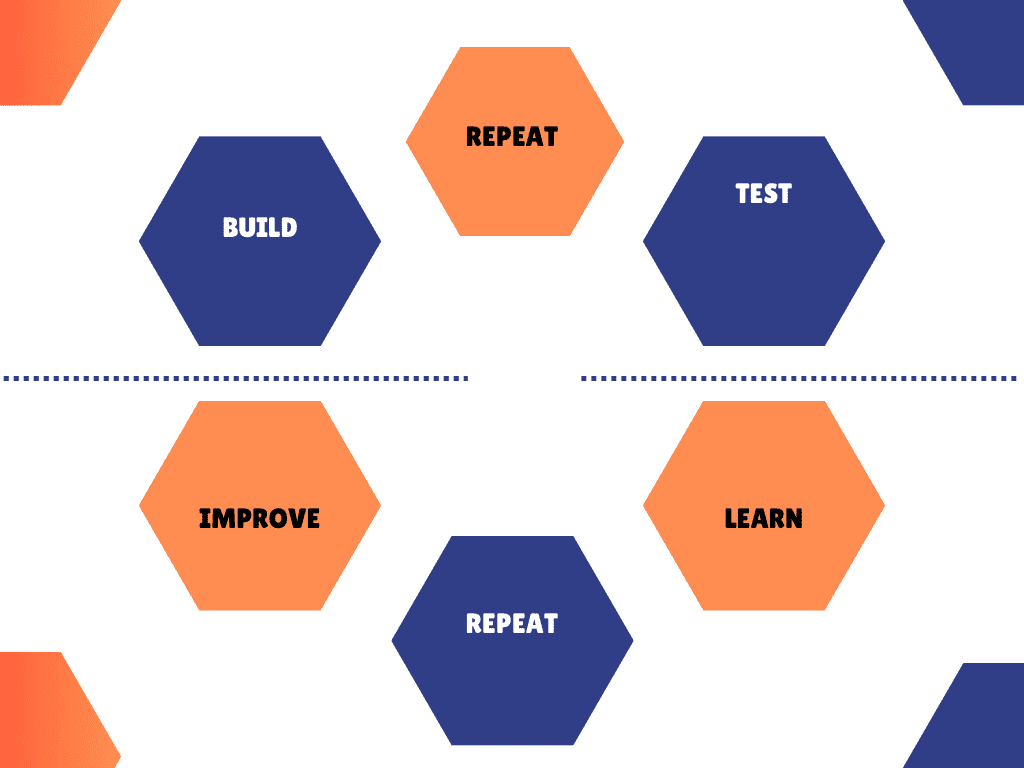
In AI, the process of improvement is slow, and models do not normally get everything right the first time around. You begin with something basic, pause and consider it and then increase it with small continuous steps. The version is a bit better than the previous version.
Perfection is not exactly a viable idea, as it is the progress that is in the true sense what counts, and enables us to reach outcomes.
I have begun to use this same line of thinking in other aspects of my life. I do not wait until I have the ideal idea, but I start with an ordinary one. I do not strive to achieve perfection in my work but make regular progress. And not to stumble, I view it as my road map to the next step. This strategy has helped me to be more productive and I am no longer worried about the results. The momentum of progress increases, and the easier it becomes to continue improving.
I Have Learned to Identify Problems as Processes and Not Obstacles.
The way I view problems has been one of the most significant transformations to me. Previously, I would envision issues as challenges, something to overcome as fast as possible, hindrances that were slowing me down.
Now, I see challenges a bit differently. Rather than merely finding quick solutions, I see them as a process to be waded through jointly. It has a beautiful flow: to know what is happening, to divide it into manageable bits, to experiment with various ideas, to learn through what occurs and then to find a way of doing it better.
Each of these steps is a significant step of the journey. This mindset has helped in making even the hardest issues to be easier. I do not hurry to find a quick solution and go step by step, it is not a rush and I make my steps slowly.
It’s also helped me become more patient. I don’t expect instant answers anymore. I prefer a gradual emerging of clarity, instead.
I have the same mindset whether it is a challenging technical project that I will work on, or a new thing that I am learning or a problem that is present in everyday life: I do not think of a problem as something that I must solve now, but rather as an opportunity to learn, explore, and develop over time.
Advice for beginners learning AI
If you’re new to AI, it’s common to want to dive into all the tools right away. You may feel that you have to acquire everything in a single day- Python today, and then TensorFlow, then PyTorch, and then a new framework you found on the internet. The feeling that more tools you have, the better you are can arise. I was like that initially.
Nothing has taught me more over time than this: that tools are as useful as you think of them. There may be a lot of libraries that you know, but still, it may be hard to solve problems when you cannot think clearly.
In my case, learning early the most important skill you can develop is not necessarily learning to wield tools. It involves learning how to think over issues.
These are some of the issues that are more important than any structure.
1. Learn How to State Problems Clearly.
The biggest mistake amateurs commit is to rush into solutions without a clear plan. You may view a dataset, open your notebook, and import libraries and begin coding immediately. But before long it can become confusing – you may not know what you are attempting to do and your achievements may not be very logical.
This normally occurs since the issue was not clearly stated at the beginning itself. Before you start writing code, pause and put yourself in the position of asking yourself:
What is it I am attempting to solve?
Is it a forecast, a label or otherwise?
What would an effective result be?
As an example, instead of stating, I want to create a model with this data, consider the following way of framing it: I want to predict whether a customer will churn using these features.
This kind of clarity can actually assist in functioning as a guideline to all your future decisions. Once you have a clear grasp of the issue at hand, you can avoid confusion, reduce the amount of extra work needed and make your educational process more fun and productive.
2. Divide complex Tasks to smaller saw
The first thing to note with AI is that it may appear daunting at first due to the sheer number of components: data, preprocessing, modeling, evaluation, tuning. It may be much to digest at a time, but you need not fear.
Try breaking it down into smaller, manageable steps: first, get to know your dataset; next, clean the data; then explore patterns; after that, try a simple model; and finally, evaluate what you’ve done. The steps lead to each other and allow you to remain focused and make consistent progress. In this manner, you will know more about each step and have an easier time debugging – when something is not working, you can easily know where.
It is important to keep in mind that you do not need to learn AI at once, but to step up and step down.
3. Try Your Ideas Not Guessing.
It is only natural that when working with AI first, you rely on your intuition. You may have a feeling of, this model should work better or this feature seems important or even this approach feels right.
But in the realm of AI, what is right might not necessarily work best. Guesses are not that useful as much as it is better to test various ideas. You can experiment with different solutions and compare their outcomes: alternate models, add or remove features, and tweak parameters and observe.
Even simple experiments may teach you a lot. As an example, you may discover that the simplest model can be more effective than the complex model, or that removing some features can provide better accuracy. At other times, your original assumptions may be completely misplaced and that is alright.
4. Have Patience with Failure.
There are numerous failures in learning AI, and that is not a problem! Your model may not be effective immediately and your results may not be high initially. That is only a portion of the voyage and that is how you learn and develop.
Every challenge provides you with helpful hints: your data may require some cleaning up, your features are not exactly what they should be, or your model is either too simple or too complex. All that matters is to interpret failure as constructive feedback. Instead of asking, ‘Why isn’t this working?’, try thinking, ‘What is this result telling me?’ Making this small change in perspective can really make a difference.
Keep in mind, it is all a matter of time – you cannot become better at AI immediately, and the results will be achieved slowly through countless attempts and minor adjustments.
5. Focus on Getting to know your Data.
Novices are inclined to pay much attention to models and algorithms. Nevertheless, it is equally vital-more so to listen to your data.
It can be a huge difference to take time to learn about your data prior to constructing any model:
What are the meanings of the features?
Do we have any missing values?
Do you see any patterns or trends?
Do you have any outliers that may affect your results?
Keep in mind that in case your data is sloppy, unfinished, or biased, your model will reflect these problems as well. This is why they say, garbage in, garbage out.
A familiarity with data makes you make smarter decisions, choose the most suitable approach, and better interpret your findings. Also, it develops valuable intuition that will be of great help to you as you go. Hurry, therefore, not to model, but to have a glimpse at your data before it, a step to enjoy.
6. Tools Will Change, Yet Thinking Remains.
It is understandable to be a little bit confused, following all these new tools and frameworks that emerge.
However, keep in mind that tools keep on changing- new libraries emerge, old ones disappear and trends shift. The one thing that remains constant is the value of clear thinking. By being able to define problems and divide them into manageable tasks, test your ideas, learn through failures and know your data, you will find it easier to adapt to any tool or technology. Finally, your effective problem-solving skills are what make you be effective, rather than the tools.
Conclusion
Thank you so much to you to have read this article till the end!
My initial objectives when I started researching AI were to learn how to construct models and advance my code. However, as I learned more, I found out that the most useful lessons were not related to tools and certain algorithms, but how to go about and solve problems in a fruitful way.
In this article, I mentioned some of the major changes in my mindset that happened during my study of AI. We have discussed the reasons why practical problems can be difficult to understand initially, the importance of dividing them into small manageable parts, and the fact that so many ideas can be tested, and it can result in so many better outcomes than simply assuming. I also discussed how failure is a good thing to embrace, how you should always strive to improve, and how you can really know your numbers to improve not only your technical projects but also your daily choices.
They are not complex methods, but simple ways of thinking, which are more helpful as time passes.
When you are just beginning, you should not worry that you know all the tools or structures in the first place. Rather, concentrate on defining what you want to know, making small, calculated actions, and learning with each. These are the skills that will come in handy, regardless of the changes that technology will have.
Also, when you study AI, it is not just to create intelligent systems but a way of thinking that will enable you to deal with challenges with greater confidence and clarity.
