


The Nigeria Customs Service (NCS) has revealed that the Unified Customs Management System, also known as B’Odogwu, facilitated a total of N230bn as revenue at the command since its commencement in October 2024. The agency described B’Odogwu as a Nigerian digital technology that has come to change the narrative in customs operations.
According to a statement on Sunday, the Area Controller of the Nigeria Customs Service, Ports & Terminal Multiservices Limited Command, Tenny Daniyan, during a courtesy visit by the Shipping Correspondents Association of Nigeria to the command, explained that the platforms’ operation since launch has been productive with evidence.
“B’Odogwu is working, and it’s working for us. We have realised over N230bn so far on the platform. If it’s not working with you, it means you are not doing the right thing,” he said.
B’Odogwu is a Unified Customs Management System (UCMS) introduced by the Nigeria Customs Service (NCS) to modernise customs operations and streamline trade. It is designed to address gaps in customs automation, improve efficiency, enhance compliance, and optimise revenue collection. The B’Odogwu platform is an indigenous technology implemented across several commands, including the Ports and Terminal Multiservices Limited (PTML) Command.
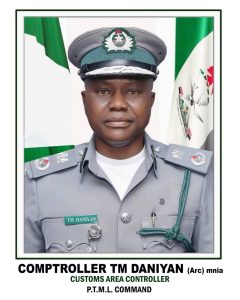
According to Daniyan, B’odogwu is a robust and secure platform with some AI features that can help properly classify things and provide some features that are not in the Nigerian Integrated Customs Information System (NICIS). Meanwhile, he explained that the platform encountered several challenges, but more than 90 per cent of the issues have been solved.
The Nigeria Customs commander also commended the Comptroller-General of Customs, Adewale Adeniyi, for the courage to implement the initiatives, which he described as the pride of Nigeria and Nigerians, mentioning that B’odogwu would save the Federal Government billions of naira that would have been the capital flight of NICIS.
“If you are a compliant trader, you don’t have issues; we give you one hour, not even two hours, to get your consignment. That is what we are working towards. But we can only achieve one-hour cargo clearance depending on who is making the declaration,” he said.
While commending the Nigeria Customs for helping Nigeria to raise and save money, he encouraged agents and importers to comply with directives and make honest declarations to be able to enjoy seamless cargo clearance.
Nigeria customs’ deployment of B’odogwu
Launched on October 23, 2024, at PTML Customs Command, B’Odogwu has been a major game-changer in Nigeria’s customs reform agenda. The initiative is a product of a Public-Private Partnership (PPP) between the NCS and Trade Modernisation Project Limited, backed by the Federal Executive Council’s approval in April 2023.
The name B’Odogwu, meaning “greatness” in Igbo, reflects Nigeria’s ambition to set a new standard in customs administration. Unlike previous systems, the platform incorporates sophisticated digital tools, including electronic cargo tracking, automated risk management, and non-intrusive scanners, ensuring a more secure and efficient trade environment.
For the Nigeria Customs, B’odogwu marked a significant step from the outdated NICIS II, positioning Nigeria at the forefront of customs modernisation in Africa. Structurally designed to tackle inefficiencies in trade clearance, eliminate bureaucratic bottlenecks, and align Nigeria’s customs operations with international best practices, B’odogwu was first deployed at the Port and Terminal Multi-services Limited (PTML) Area Command in Lagos, where it facilitates critical processes like Form M and the Pre-Arrival Assessment Report (PAAR).

In further recognition of its performance, the Governor of the Central Bank of Nigeria (CBN), Olayemi Cardoso, made a move to solidify the integration of B’Odogwu with financial institutions. The collaboration aims to enhance the efficiency of customs transactions, ensuring seamless trade documentation and duty payments.
Cardoso commended the Nigeria Customs Service for its innovative approach and pledged his support in ensuring the initiative’s success. He expressed his delight in the Nigerian Customs’ new directions, noting that collaboration is key, and the CBN will continue to work closely to ensure seamless integration. “Our commitment is to provide the necessary support so that the banking sector aligns with this transition,” he added.
Despite initial resistance from some Authorised Dealer Banks (ADBs), which delayed integration, the CBN has now intervened, instructing all financial institutions to comply with the new system. Governor Cardoso reassured the NCS of the CBN’s commitment to ensuring the success of B’Odogwu, recognising its potential to enhance financial transactions within the trade ecosystem
