


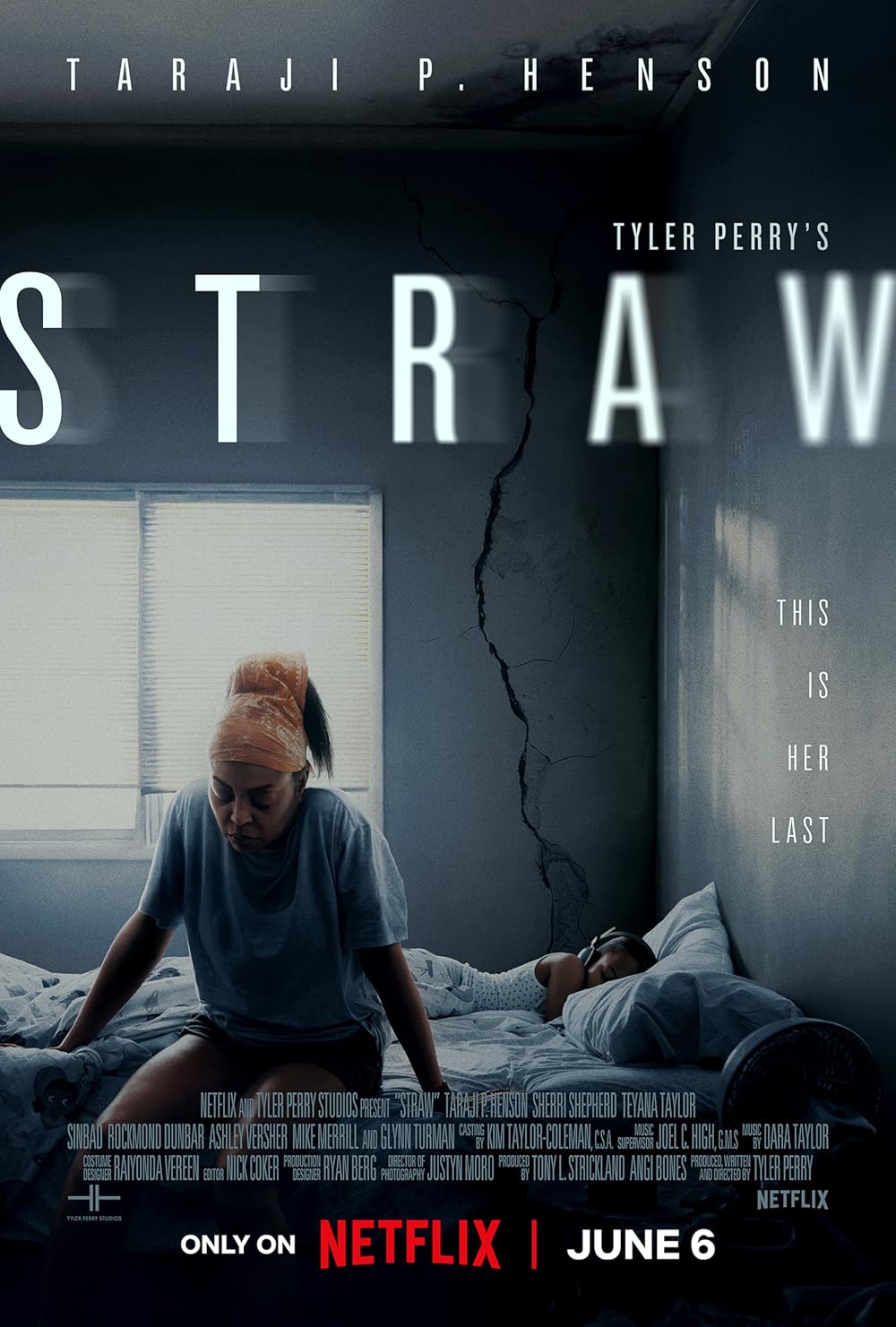
Tyler Perry’s “Straw”, released on Netflix on June 6, 2025, delivers a raw, emotional punch, weaving a narrative that captures the crushing weight of systemic struggles faced by single mothers, Black women, and the poor.
Taraji P. Henson stars as Janiyah Wiltkinson, a single mother whose life unravels in a single day through job loss, eviction, and the threat of losing her ill daughter, Aria, to Child Protective Services.
The film spirals into a tense bank heist and hostage crisis, born from Janiyah’s desperation, making it a compelling exploration of poverty, race, and resilience.

Yet, it also serves as a reminder to us of the consequences of taking the law into one’s own hands, a theme that resonates across borders but raises questions about plausibility in varying cultural contexts.
Janiyah’s story reflects the broader struggles of the Black community and impoverished people worldwide.
Perry, known for centring Black women in his work, uses Janiyah in “Straw” to embody the relentless challenges of single motherhood—financial instability, societal judgment, and the emotional toll of caring for a sick child.
Her character beams the essence of countless women who navigate these burdens daily.
Straw‘s early scenes, where Janiyah faces eviction and harassment from authorities, strike a universal chord. Poverty, regardless of race or geography, strips individuals of agency, pushing them to the brink.
Janiyah’s descent into a hallucinatory breakdown, imagining her deceased daughter’s presence, amplifies this. Though such extreme psychological unravelling might feel foreign to some audiences, like, you know, Nigerians.
In Nigeria, single motherhood carries its own weight. Women often face stigma, economic hardship, and limited support systems, much like Janiyah.
A Nigerian single mother might relate to Janiyah’s fight to provide for her child against overwhelming odds. However, the film’s pivot to Janiyah wielding a gun and holding hostages in a bank feels less relatable in a Nigerian context.
Read also: Lísàbí: A Legend is Born by Niyi Akinmolayan leaves the audience wanting more
Nigeria’s cultural and legal landscape, shaped by communal values and arguably ‘strict’ law enforcement, makes such an act seem far-fetched.
A Nigerian woman, harassed or destitute, might channel her frustration differently—perhaps through protest or community support, as exemplified in the 2020 #EndSARS movement.
Young Nigerians, fed up with police brutality, organised mass protests rather than resorting to individual acts of violence. For instance, blowing up a police station would spark chaos, not resolution, highlighting the cultural disconnect in Janiyah’s drastic actions.
In the U.S., “Straw” aligns more closely with real-world struggles.
Systemic inequality—job insecurity, housing instability, and biased policing—mirrors the lived experiences of many Black women and single mothers.
“Straw” draws parallels to stories like that of the film of a disabled soldier storming a bank to demand his benefits, a scenario rooted in desperation not unlike Janiyah’s.
Henson’s performance, raw and commanding, grounds these moments, making Janiyah’s pain palpable.
Her character’s arc, from a devoted mother to a woman pushed to lawlessness, reflects the breaking point many face under systemic pressure.
Yet, the plausibility of her actions, particularly the hallucination-driven hostage crisis, stretches belief.
Mental health crises are real, but the film’s rapid escalation from hardship to armed standoff feels more cinematic than credible in today’s world, where such acts would likely trigger swift, severe consequences.
Tyler Perry’s narrative underscores a critical lesson: no amount of suffering justifies breaking the law.
Janiyah’s decision to take hostages, however sympathetic her plight, invites chaos and endangers others. The film does not glorify her actions but portrays them as a tragic misstep.
This resonates universally—whether in Nigeria, where communal accountability often tempers individual outbursts, or in the U.S., where legal systems swiftly punish such transgressions.
The #EndSARS protests, though unrelated, exemplify a collective response to injustice, contrasting with Janiyah’s solitary, involuntary rebellion.
Her story asks what she should have done instead, a question left unanswered, forcing viewers to grapple with their coping mechanisms. Internal reflection, not violence, emerges as the film’s quiet call to action.
The twists in “Straw”—Janiyah’s hallucinations, the heist’s unintended escalation—lend a fictional sheen to real-world issues.
Fiction crafts a heightened reality, and Perry uses this to spotlight systemic failures. The bank heist, while dramatic, symbolises the desperation of those ignored by society.
However, the plot’s plausibility wanes in its frenetic pacing and melodramatic turns.
Critics praise Henson’s intensity and the film’s emotional core, with some calling it “bone-chilling,” while others decry its reliance on trauma tropes. This divide reflects the challenge of balancing raw truth with cinematic excess.

In Nigeria, the film’s themes of poverty and resilience ring true, but Janiyah’s extreme response feels alien.
Nigerian single mothers might see their struggles in her, yet their solutions—community support, protest, or endurance—diverge from her path.
In the U.S., the story’s roots in systemic racism and economic disparity hit closer to home, though the hallucination-driven heist strains credibility.
Ultimately, “Straw” succeeds as a visceral portrait of struggle but falters in its exaggerated resolution. It compels viewers to confront the cost of poverty and the limits of desperation, urging reflection over reaction.
Janiyah’s tragedy lies not in her pain but in her choices, a reminder that the right way, however elusive, remains the only path forward.
Recommended. And yes, you may cry. This writer did. Unless you have a strong head.
