




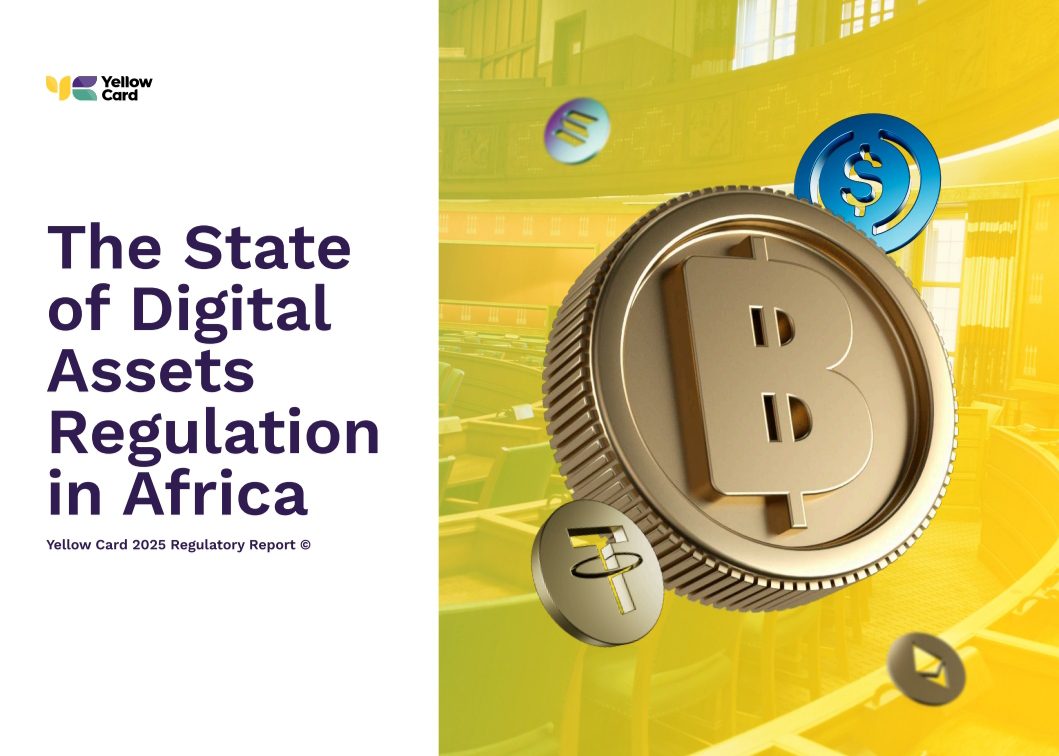
Africa is no longer a peripheral player in the global digital asset ecosystem; it is a laboratory of innovation and a proving ground for policy. This is the central theme of Yellow Card’s 2025 Report on the State of Digital Assets Regulation in Africa, the most comprehensive mapping to date of the continent’s evolving cryptocurrency regulations.
In an interview with Technext, Lasbery Oludimu, Vice President of Global Operations and Managing Director for Yellow Card Nigeria, emphasised the report’s scope:
“We examined over 30 African markets, categorising them based on the maturity of their digital asset regulatory frameworks. From outright bans to full licensing regimes, it’s a spectrum of policy experimentation”, she said.
At a time when Africa leads globally in stablecoin adoption, with over 54 million users, and countries from Nigeria to Botswana are rolling out sandbox programmes and licensing frameworks, Yellow Card’s report serves as a critical intervention in the continent’s crypto discourse.
Oludimu outlined two regulatory models in Africa: “Some markets have rolled out comprehensive regulations and licensing regimes, while others have started with guidelines or sandbox arrangements before formal licensing.”
The report categorises African countries into four key groups:
- Established regulatory regimes: Countries like Nigeria, Botswana, and South Africa have enacted substantive laws or guidelines for digital assets.
- Frameworks under development: Kenya and Rwanda are actively consulting with industry stakeholders on draft regulations. “Kenya has a bill before parliament, and Rwanda is inviting stakeholder inputs,” Oludimu noted.
- Pre-regulatory assessment stage: Markets like Malawi are conducting impact assessments and stakeholder consultations before initiating formal regulations.
- Outright bans: Egypt, Algeria, and Morocco have imposed a formal ban on cryptocurrency.
Botswana stands out as a model of decisiveness, bypassing the sandbox phase to implement a full licensing regime. “Botswana rolled out a licensing framework and invited businesses and individuals to apply,” Oludimu explained. In contrast, Nigeria adopted a more cautious, consultative approach through its sandbox programme.
Yellow Card became the first company licensed under Botswana’s Virtual Assets Act.
This divergence reflects a broader trend: while some African regulators embrace innovation, others take a measured, observational stance.
For instance, Zambia used Yellow Card as a “guinea pig” in its sandbox, leveraging the company’s operational data to inform its regulatory draft.
Oludimu sees value in both approaches: “There’s no one-size-fits-all. Sandboxes, like those in Nigeria and Zambia, allow testing before full regulation, while Botswana’s direct licensing model shows you can adjust later. South Africa also skipped a sandbox and has robust regulations.”

Sub-Saharan Africa leads globally in stablecoin adoption, according to Chainalysis, as it drives remittances, e-commerce, and inflation hedging. This grassroots crypto usage has sparked concerns among central banks about monetary sovereignty and dollarisation.
“Concerns around misuse are valid,” Oludimu said. “But the answer is regulation, not restriction. Without clear guidelines, bad actors thrive, and good use cases suffer.” Several African markets, including Nigeria, have integrated digital assets into anti-money laundering (AML) frameworks, signalling growing acceptance of stablecoins as mainstream financial tools.
While the report does not focus on Central Bank Digital Currencies (CBDCs), Oludimu addressed their potential: “CBDCs are localised, serving internal retail payments, while stablecoins enable cross-border, pan-African trade.
They can coexist.” She noted that Yellow Card may explore CBDCs in a future study.
Harmonising digital asset regulations across regional blocs
The African Continental Free Trade Area (AfCFTA) aims for economic integration, but digital asset regulation remains fragmented. The CEMAC region (Cameroon, Chad, Gabon, etc.) is an exception, with regional bodies like COSUMAF and BEAC discussing crypto-specific guidelines.
Oludimu remains cautious about regional regulation: “Issuing a regulation regionally is one thing; enforcing it across multiple countries is another.” Yellow Card supports regional standardisation but advocates for market-level regulations tailored to local realities.
The company collaborates with regulators, offering feedback, reviewing draft laws, and sharing operational data to enhance policymaking.
The report equally highlights that 39 African countries have data protection laws, but enforcement is uneven. Oludimu stressed that data protection is a critical pillar of the digital economy: “You can’t build trust without strong data protection. We undergo annual audits in Nigeria under the NDPC. That’s the rigour the sector needs continent-wide.”
As enforcement strengthens, crypto firms will face increased scrutiny on financial compliance, data handling, cybersecurity, and operational transparency.

Yellow Card’s regulatory philosophy
Yellow Card, operating in over 20 African countries and recently licensed as a Crypto Asset Service Provider (CASP) in South Africa, adopts a localised approach. “In every market, we register as a local entity, hire locally, pay taxes, and engage regulators,” Oludimu said. “We’re not fly-in-fly-out. We embed ourselves.”
This model differentiates Yellow Card from global exchanges that often lack local accountability. It also enables partnerships, such as its collaboration with Visa to scale stablecoin-powered cross-border payments.
“Our Visa partnership scaled an existing use case, cross-border payments, that regulators already understand,” Oludimu explained.
Policy priorities for the future
Yellow Card’s report outlines key policy imperatives for Africa’s digital asset ecosystem:
- Comprehensive national regulation: Countries in regulatory limbo must finalise draft laws and licensing regimes to foster investor confidence and consumer protection.
- Enhanced AML/KYC measures: Robust identity and transaction monitoring are essential to eliminate illicit actors. Some nations are already extending AML laws to digital assets.
- Stakeholder engagement: Collaborative approaches, like Kenya’s tax policy consultations and Zambia’s sandbox programmes, ensure effective policymaking. “Top-down policies don’t work in emerging tech,” Oludimu warned. “We need feedback loops.”
Africa’s crypto journey is no longer in its infancy. It’s a phase of experimentation, correction, and increasingly, institutionalisation. Yellow Card’s 2025 Report on the State of Digital Assets Regulation in Africa is both a barometer of progress and a guide for the future.

As adoption grows and regulatory momentum builds, the choices made in the next two years will determine whether Africa leads in crypto innovation or lags due to policy inertia.
“We believe this report benefits everyone: regulators, businesses, law enforcement, and consumers,” said Oludimu. “It’s not AI-generated. It’s built from real research, real data, and real conversations with stakeholders across the continent.”
With its localised model, regulatory advocacy, and continental reach, Yellow Card is not just a fintech player; it’s a catalyst in Africa’s digital financial transformation.
