




A drivers’ union in South Africa, the National e-hailing Federation of South Africa (NEFSA), has condemned the third-party sale of drivers’ operating licenses in the country, especially in the Western Cape region. This was disclosed in a chat with Technext by the National Convener of the federation, Comrade Elijah Lawrence Lekgowane.
This is coming days after the Western Cape Provincial Regulatory Entity (PRE) approved the issuance of 1,100 new operating licenses to drivers in the province, bringing the total number of approved e-hailing drivers in the province to 5,494.
While the licenses are supposed to be issued by the Provincial Regulatory Entity (PRE), the National Convener of NEFSA told Technext that certain consultants have hijacked the process and are selling the licenses for very exorbitant sums, a situation he described as irregular and unlawful.
“Despite the release of the current allocation of 1100, we fear that many of our members will still have difficulty in securing the much-needed Operating License, as the system appears undermined by the role of consultants. The recent announcement of the release of operating licenses and the lucrative business of selling operating licenses by consultants for as much as R30,000 to R40,000 in the Western Cape has come under close scrutiny, but remains unresolved in terms of clamping down on such irregular and unlawful activities and holding those who are exploiting the situation accountable,” he said.
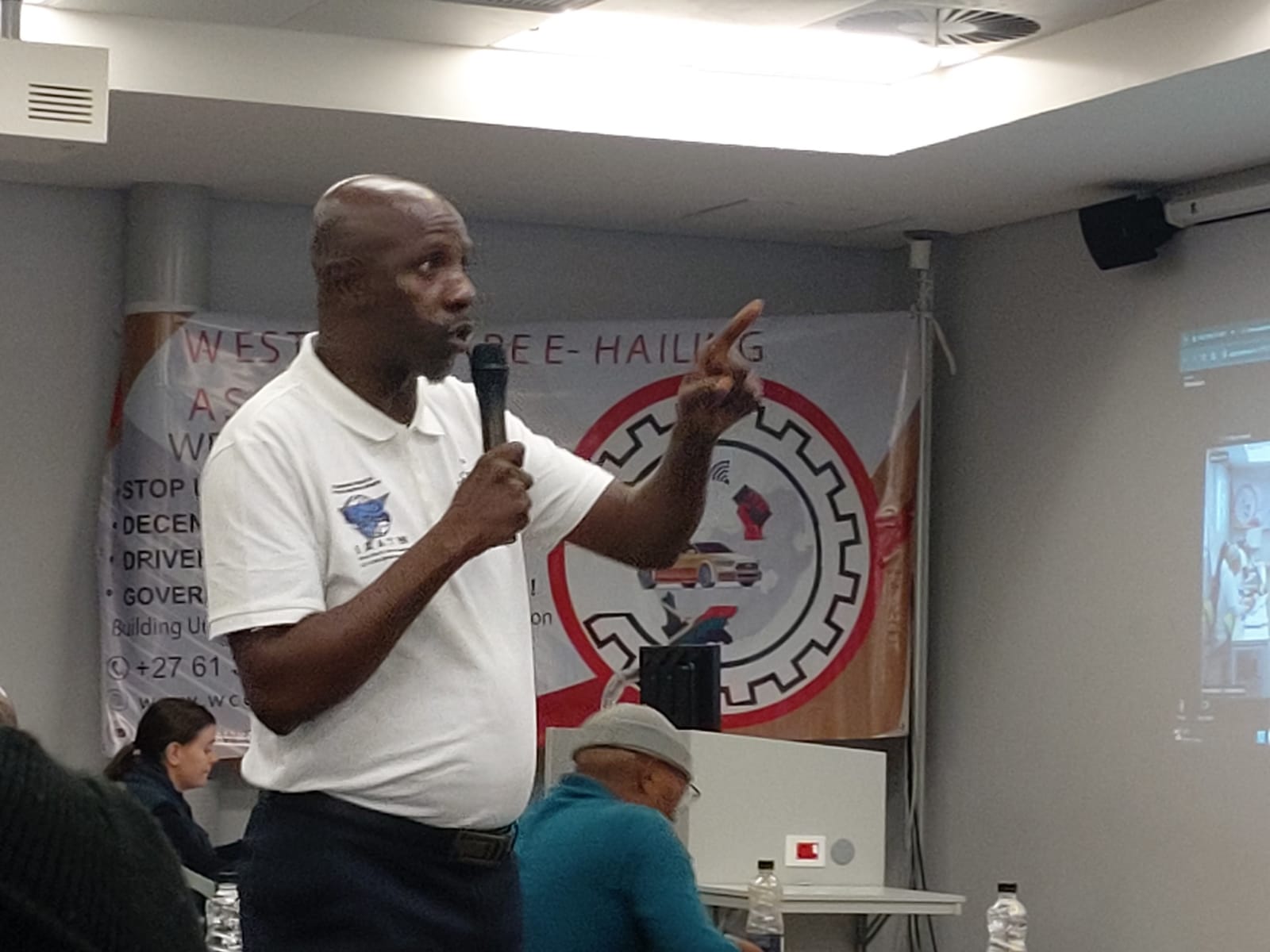
He disclosed that the consultants, some of whom are also serving on the City’s Intermodal Transport Planning Committee, had given themselves an unfair advantage in the acquisition of the licenses and are charging exorbitant amounts in administration fees. As such, they are exploiting vulnerable drivers who find themselves needing to bear these huge costs amid other financial burdens.
On his part, the Secretary of the Western Cape e-hailing Association (WCEA) and the National Coordinator of NEFSA, Comrade Omar Parker, broke down the consultancy system into two: those who offer application services and those who outrightly have up to five and sometimes more licenses, which they sell for as much as 40,000.
He noted that the statutory amount payable for applying for the operating license is about R600. However, the first set of consultants are charging additional amounts in the region of R1500 to R2500 for the services to help fill out the papers, submit to the intake office and all. As such, they have become unofficial and unregulated outlets for obtaining a license.
The other set of consultants are those who have multiple licenses and are selling them publicly for between 30,000 to 40,000 rands.
“The question is, how is it that some individuals are having so many permits and they are selling them to people who are struggling to get one permit? We are suspecting that there are people who have always had an unfair advantage in getting these permits, or there is a collusion between some of the consultants who have easy access to the intake office. One consultant was publicly boasting about having 14 permits, if not more, and selling them for 30,000 rand,” he said.

He further claimed that some of these consultants are sitting members of the Western Cape PRE intermodal planning committee, which represents a conflict of interest as they are appropriating priority service to themselves when they go to the intake office to submit the applications, while those who applied by themselves are not considered.
He further pointed out that of the 1100 new operating licenses, 260 are reserved for those who need to renew their expired licenses, while only 840 are for new applicants.
e-hailing union accuses Uber of unlawfully onboarding unlicensed drivers
Statutorily, operating licenses are meant to be issued to drivers before they are legally permitted to operate e-hailing and metered taxi services. But the e-hailing companies, especially Uber, have been accused of onboarding drivers who are yet to be licensed.
This situation, according to the NEFSA chief, has led to the impounding of many cars belonging to union members. The chief puts the blame on the government for failing to apply the law as it affects the onboarding of unlicensed drivers while defending the unlawful acts of Uber.
“The picture is further distorted by the fact that Uber has been allowed by the government to onboard and register drivers without operating licenses whilst vehicles are impounded indiscriminately. When our affiliate, the Western Cape E-hailing Association raised concerns about the selective application of the law, the MEC of Mobility in the Western Cape defended Uber for undermining the law stating that ‘it is not unlawful…… Uber is practising this internationally…’”

He also condemned the fact that app companies in South Africa still have a monopoly over data and are in control of algorithmic management. He pointed out that the City of Cape, as well as many other local government authorities, have been struggling for a considerable period of time to obtain the necessary data from the app companies, whilst impoundments have been weaponised against struggling drivers.
See also: How the data of Nigerian passport applicant got into the wrong hands
