




The year 2025 is shaping up to be a very successful year for venture funding in Africa after it emerged that startups on the continent have raised $1.4 billion in the first half of the year. This was according to the African venture funding analytics company, Africa the Big Deal.
Per the report, the over $1.4 billion raised in the first half of the year trumps the $800 million raised in the first half of 2024, representing a 78 per cent difference. However, the first half of 2024 is generally considered a poor half. Thus, compared to the second half of last year generally considered a fruitful one, there is literally nothing to separate them as startups raised $1.4 billion in that half.
“The H1 performance is very solid, and marks a significant improvement (+78%) compared to H1 2024 when ‘only’ $800m had been raised. H1 2025 is also on par with H2 2024 ($1.4b), with just a minor -1.5% decrease HoH,” the report reads.

While the first half of 2025 funding total remains impressive compared to the previous year, it still remains the second poorest first half since 2022 and the third slowest half out of the seven since then. Nonetheless, considering that the African startup funding space is generally considered to be undergoing an alignment, the numbers give more to celebrate.
The numbers are also quite impressive when we consider that more of it came in the form of equity versus debt. Of the $1.4 billion raised in the half, $950 million came in the form of equity, representing 68 per cent of the total. $400 million came in the form of debts, representing 28.5 per cent, while the rest (50 million) came in the form of grants, representing 3.5 per cent.
African startups raised $365 million in funding in June
The $1.4 billion venture funding raised in the first half of 2025 would not have been possible without the impact made by startups in the month of June, as they raised $365 million during the month. This makes it the strongest month of 2025 and the best in almost a year. The other month which came close was April 2025, when African startups raised $343 million.
Indeed, the year has been so good so far that aside from February, when startups raised $119 million and the abysmal month of March, when only $50 million was raised, other months have crossed the $250 million mark, with both June and April clearing the $300 million marks by far. Indeed, the monthly average funding for the first half stands at $237 million, far more than the $187 million in 2024 as a whole, and $133 million in H1 2024 specifically.
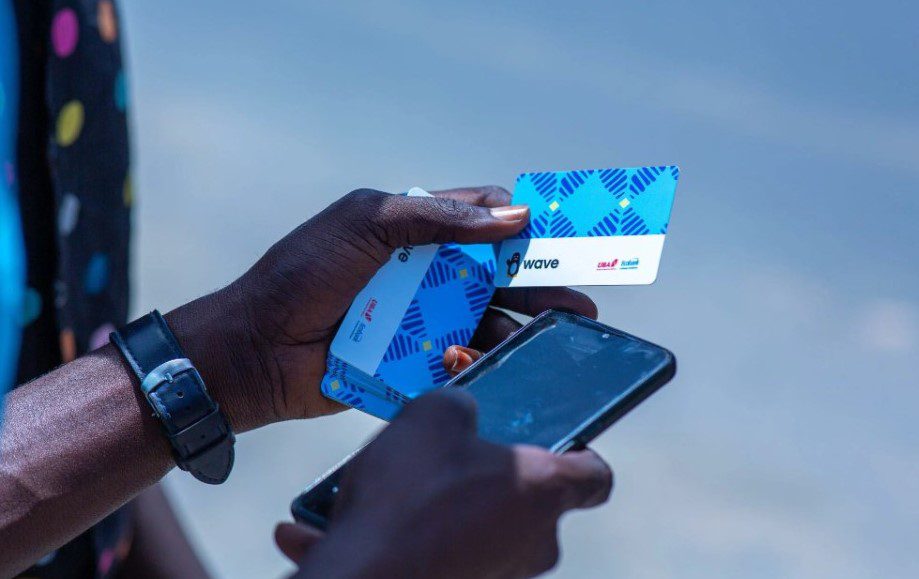
June’s total was bolstered by Wave, a Senegalese fintech which raised $137 million in debt financing led by Rand Merchant Bank (RMB). The funding was supported by a consortium of global development finance institutions, including British International Investment (BII), Finnfund, and Norfund.
According to the startup, the funding will be deployed to advance its mission of making financial services affordable and accessible to users. Wave’s debt funding brings the total debt funding in June to $227 million, making it the highest debt-funded month in more than two years.
Other startups that put up a strong showing in the first half of 2025 include South Africa’s hearX, a Pretoria-based healthtech that provides affordable access to hearing care through smart, digital health solutions, which secured $100m in April. The funding was secured through its merger with U.S.-based Eargo, a bold cross-continent move that signals major ambition in disrupting the hearing health market.

In May, Egypt-based property technology company, Nawy, raised $75 million in a record-breaking deal. That round is by far the largest proptech deal on the continent. Back in January, Nigerian cross-border payment startup LemFi also raised $53 million in a Series B round to expand its remittance offerings into Europe and Asia.
The second-largest deal in January was Kenya-based PowerGen which secured $50 million to develop a 120MW portfolio of commercial and industrial (C&I) and off/metro-grid renewable power projects, with an initial focus on projects in Nigeria, Sierra Leone and the Democratic Republic of the Congo.
