




Africa’s digital landscape is evolving rapidly. The continent faces unique challenges in delivering internet access to its 1.4 billion people. Vast rural areas, low population density, and limited infrastructure make connectivity a complex puzzle. The “last mile,” the final step of delivering the internet to end users, is the toughest hurdle. Three technologies dominate this race: satellite, fibre-optic cables, and mobile masts. Each has strengths and weaknesses. Who will come out on top?
Africa has the lowest internet usage rate, with just 38 per cent of the population online in 2024, compared to a global average of 68 per cent, according to data from the International Telecommunications Union (ITU). Over 200 million people lack even basic 3G coverage. Rural communities, where less than 3 per cent have access to traditional phone lines, are especially disconnected.
Urban areas fare better, but even there, connectivity can be slow and costly. The last mile is critical because it determines whether individuals, businesses, or schools can access the digital world.
Infrastructure is the bottleneck. Laying cables across Africa’s vast terrain is expensive and logistically daunting. Power outages, vandalism, and harsh weather further complicate matters. Yet, demand for data is skyrocketing. From e-commerce to education, Africans are eager to join the global digital economy. The race to solve the last-mile problem is heating up, with satellite, fibre, and masts vying for dominance of the internet space.
Satellite internet has long been a go-to solution for Africa’s remote regions. Traditional satellites, operating in geostationary orbits, have served telecoms and broadcasters for decades. However, they come with high costs and significant latency, often over 600 milliseconds. This makes them unsuitable for real-time applications like gaming or video calls.

Enter low Earth orbit (LEO) satellites, led by companies like Starlink, Eutelsat, and OneWeb. LEO satellites orbit closer to Earth, reducing latency to as low as 40–50 milliseconds. Starlink, for instance, promises speeds up to 500 Mbps, rivalling high-end fibre. In 2022, Starlink began rolling out in Nigeria and Mozambique and is currently live in 24 countries across the continent.
Satellites excel in coverage. They can reach remote villages where laying fibre or building masts is uneconomical. For example, Liquid Intelligent Technologies partnered with Eutelsat to deliver broadband to landlocked, underserved areas. This makes satellites a lifeline for rural communities.
But there are downsides. Satellite internet is expensive. Starlink’s high upfront costs for terminals and monthly fees put it out of reach for many Africans. Traditional satellite services, like Hughes’s YahClick, are also pricier than fibre or LTE options in South Africa. Additionally, heavy rainfall can disrupt signals, especially in C-band satellite systems.
Fibre: The gold standard for speed and reliability
Fibre-optic cables are the backbone of the modern internet. They offer unmatched speed, reliability, and low latency. In Africa, fibre networks are expanding rapidly. By June 2024, the continent had over 2.1 million kilometres of terrestrial fibre, with 1.3 million in active use. Submarine cables, like SEACOM and 2Africa, connect coastal cities to global networks.
Fibre-to-the-home (FTTH) is the holy grail, delivering high-speed internet directly to users. In Nigeria, providers like MTN Nigeria, through its FiberX, offer uncapped FTTH at speeds as low as 50 Mbps for just ₦25,000 per month. In North Africa, Algeria’s FTTH market grew 14-fold between 2020 and 2023, reaching 1 million subscribers.
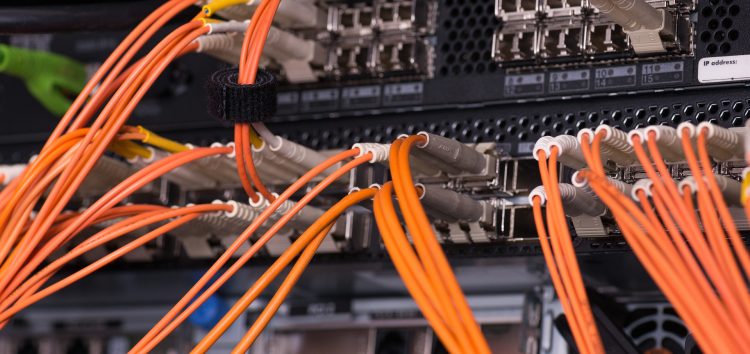
However, fibre faces significant challenges in Africa. Laying cables in rural areas is costly and impractical due to low population density. Even in urban areas, fibre-to-the-curb (FTTC) often relies on copper for the last mile, which reduces performance. Subsea cables are also vulnerable. In 2009, damage to the SAT-3 cable disrupted 70% of Nigeria’s internet capacity.
Despite these hurdles, fibre is the preferred choice in cities. Its cost-benefit ratio in densely populated areas is compelling. Companies like MainOne and Tizeti are investing heavily in fibre backbones to support urban demand.
Mobile Masts: The Wireless Workhorse
Mobile masts, powering 4G and 5G networks, are Africa’s primary internet delivery method. They handle up to 99% of voice and data traffic in some markets. Operators like MTN, Vodacom, and Airtel have aggressively expanded 4G coverage, even in areas lacking compatible devices.
Masts are versatile. They can be deployed faster than fibre and cover wider areas than fixed-line solutions. In Uganda, Bayobab completed a 260-km fibre route to connect masts to submarine cables, boosting rural connectivity. Fixed wireless access (FWA), using 4G or 5G, is also gaining traction in North Africa.

Yet, masts have limitations. Many rely on satellite or microwave backhaul, which cannot match fibre’s capacity. Fair usage policies (FUPs) often throttle speeds after a data cap, frustrating users. Moreover, building masts in remote areas remains costly, and coverage in sparsely populated regions is patchy.
Stakeholder perspectives
Industry leaders see a mixed future. Guy Zibi, managing director of Xalam Analytics, underscores the enduring dominance of fibre in urban settings, stating, “Fibre remains king in urban areas due to its unmatched capacity and reliability.”
However, he cautions that fibre’s high deployment costs and logistical challenges make it less viable in rural regions, where low-earth orbit (LEO) satellites are emerging as a transformative solution. Zibi notes, “In rural and remote areas, LEO satellites shine, offering connectivity where terrestrial infrastructure is impractical.”
On his part, Kendall Osunrinde, CEO of Tizeti, introduces the concept of “coopetition” as a critical strategy for achieving digital inclusion across Africa. He argues that collaboration among competitors, combining resources, sharing infrastructure, and aligning goals can accelerate connectivity goals more effectively than cutthroat competition.
Osunrinde explains, “Coopetition allows us to leverage each other’s strengths to deliver affordable, widespread internet access, especially in underserved regions.” By fostering partnerships, such as those between satellite providers and terrestrial operators, the industry can address coverage gaps while optimising costs, ensuring that even remote communities gain access to reliable internet services.
Michael Joseph, former CEO of Safaricom, on his part, emphasises the complementary role of satellite technology, particularly as a safeguard against fibre’s vulnerabilities. He points out that fibre networks, while robust, are susceptible to disruptions from natural disasters, construction mishaps, or sabotage.
He asserts, “Satellites will always have a role as a backup for fibre’s vulnerabilities, ensuring continuity when terrestrial systems fail.” This perspective positions satellites not as a replacement for fibre but as a critical component of a resilient telecommunications ecosystem, capable of maintaining connectivity during crises or in areas where fibre deployment is unfeasible.
No single technology will dominate Africa’s last-mile race. Fibre excels in urban centres, offering unmatched speed and affordability. Satellites, especially LEO systems, are ideal for remote areas but face cost barriers. Mobile masts provide widespread coverage and flexibility but struggle with capacity and throttling.

The future lies in hybrid solutions. Operators are blending fibre, satellite, and wireless technologies to maximise reach and efficiency. For example, Tizeti uses fibre backbones and solar-powered masts to combat Nigeria’s power challenges. In Uganda, NITA-U’s fibre expansion targets schools and hospitals, complementing mobile networks.
Cost and accessibility remain critical. Fibre and LTE are more affordable but limited by geography. Satellites cover vast areas but need cheaper pricing models to scale. Governments and companies must prioritise inclusive policies to bridge the digital divide, especially for rural and low-income communities.
Africa’s last-mile internet race is not a zero-sum game. Fibre, satellites, and masts each play a vital role. Fibre will dominate cities, satellites will connect the unconnected, and masts will bridge the gap. Collaboration, innovation, and investment will determine how quickly Africa closes its digital divide. The continent’s future is digital, and the race is on to make it inclusive for all.
