




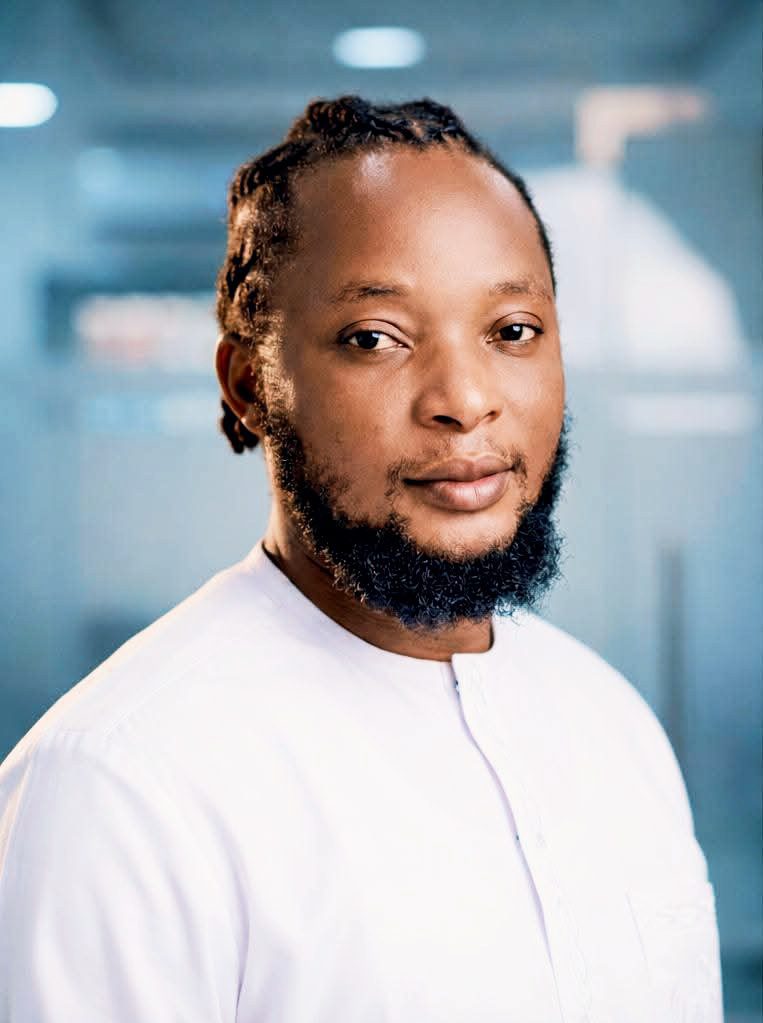

Microsoft has announced a major leadership change in its West Africa operations. Abideen Yusuf has been appointed as the new General Manager (GM) of Microsoft Nigeria and Ghana within the newly established Multi-Country Clusters (MCC) region.
This follows former GM, Olatomiwa Williams’ promotion to Chief Growth & AI Officer for Microsoft’s Middle East and Africa (MEA) Growth Markets. The reshuffle aligns with Microsoft’s strategy to drive digital transformation and AI adoption across the region.
Yusuf, who is succeeding Olatomiwa Williams, has been a long-time Microsoft leader and instrumental in the company’s success in West Africa.
In a LinkedIn post announcing his appointment, Yusuf expressed excitement and gratitude for the opportunity:
“I am deeply honoured to step into the role of Country General Manager for Microsoft Nigeria and Ghana,” he wrote. “This is a remarkable opportunity to build on our achievements and drive innovation in one of Africa’s most dynamic markets.”

His appointment comes at a critical juncture for Nigeria’s tech sector. The country is gaining recognition as a hub for AI and mobile financial services. Yusuf is expected to advance the company’s initiatives, including digital skills training and cloud infrastructure expansion.
He will focus on strengthening partnerships with governments, businesses, and communities to foster inclusive growth.
Olatomiwa Williams is Microsoft’s new Chief Growth & AI Officer for MEA
Olatomiwa Williams is now Microsoft’s Chief Growth & AI Officer for MEA Growth Markets. During her four-year tenure as Country General Manager, Williams drove significant growth within Nigeria’s tech ecosystem.
She led initiatives like the Microsoft AI Tour and a $1 million investment to train one million Nigerians in AI skills by 2027.
In her farewell message, Williams recalled her time as GM as “profoundly rewarding.” She credited her team’s dedication for the company’s success in the region. “I’m thrilled to take on new challenges in driving AI adoption across MEA,” she added.
Williams’ new role emphasises the tech giant’s focus on AI-driven innovation. She will oversee growth strategies and AI integration in high-potential markets across the Middle East and Africa.

The leadership changes are part of its broader realignment in the MEA region. The company aims to enhance its focus on digital transformation and AI.
Other recent appointments include Lillian Barnard as Chief of Enterprise Partner Solutions and Naim Yazbeck as President for Microsoft MEA. These moves reflect the company’s efforts to create an agile structure amid rapid technological advancements.
Nigeria remains a key market for Microsoft. The country ranks seventh in Africa for AI readiness, according to the 2024 Oxford Insights AI Readiness Index. Its $200 million Africa Development Centre (ADC) in Lagos has trained thousands of engineers and spurred innovation
Yusuf’s leadership will likely build on these efforts, focusing on scalable solutions for Nigeria’s tech ecosystem.
The company’s focus on Nigeria aligns with its continental strategy. It has committed to expanding cloud and AI infrastructure across Africa. In South Africa, Microsoft announced a ZAR 5.4 billion investment to enhance Azure services by 2027.
In Kenya, a $1 billion partnership with G42 will build a geothermal-powered data centre. Yusuf’s role will be pivotal in scaling similar initiatives in Nigeria, particularly in fintech, healthcare, and agriculture.

Nigeria’s fintech sector, a global leader in financial inclusion, presents unique opportunities. “Nigeria is poised to lead Africa’s tech revolution,” Williams said earlier this year. “Public-private partnerships are key to building scalable infrastructure.” Yusuf echoed this sentiment in his LinkedIn post, pledging to “collaborate with stakeholders to unlock Nigeria’s potential.”
As Yusuf takes charge, his leadership will shape the company’s trajectory in West Africa. His LinkedIn announcement highlighted a commitment to innovation and inclusivity. “Together, we will empower communities and drive sustainable growth,” he wrote. Meanwhile, Williams’ regional role signals Microsoft’s ambition to make AI a transformative force across MEA.
The leadership transition underscores Microsoft’s confidence in Nigeria’s tech potential. With Yusuf at the helm and Williams driving AI strategy, the company is well-positioned to advance digital transformation in West Africa.
