


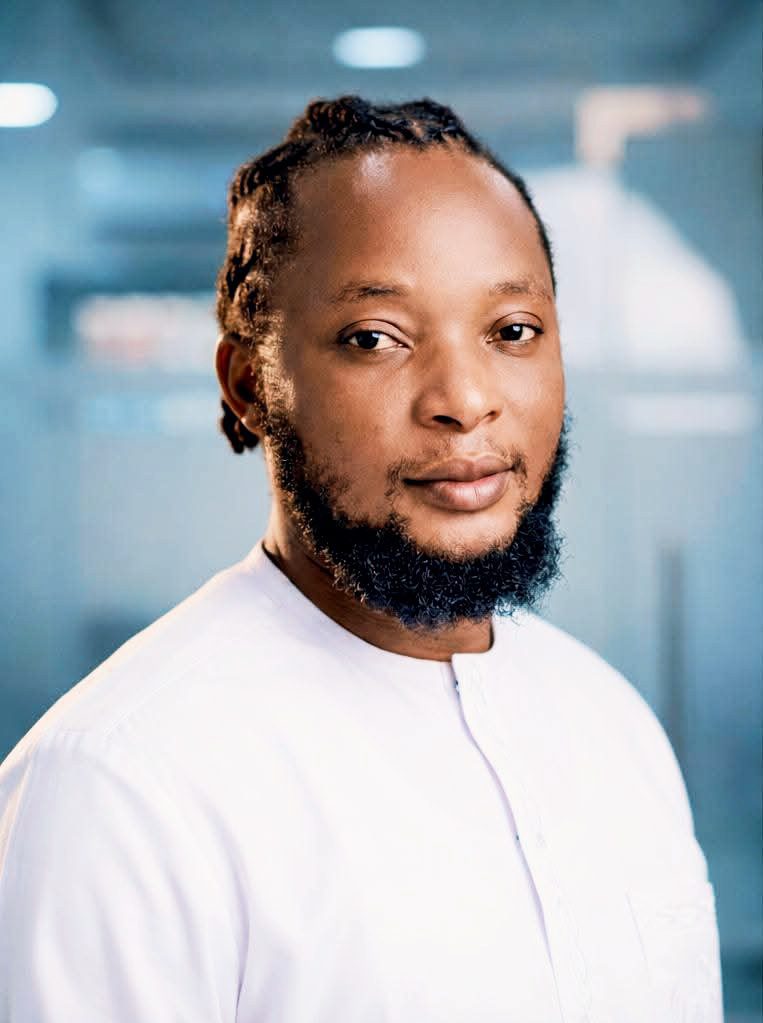

In 2019, Philips Olajide-Philips stood at a crossroads familiar to many aspiring African artists. A trained musician skilled in piano, drums, and keyboard, he had a clear vision for his debut album: a sound that was polished, professional, and distinctly African.
But the barriers were steep: studio time was prohibitively expensive, and the resources to hire instrumentalists or producers were out of reach. “I had the sound in my head,” Philips recalls, “but I did not have the money to make it happen. It was frustrating,” he tells me.
That frustration became the spark for KorinAI, a startup poised to redefine music creation across Africa. Philips, a music professional and software developer, partnered. with Solomon Ogunbowale, a mobile developer, to create KorinAI in 2024.
It is an AI-powered platform that allows artists, filmmakers, content creators, and marketers to generate high-quality, royalty-free music in minutes with a few text prompts. With a focus on African languages, genres, and cultural authenticity, KorinAI is not just a tool but a movement to democratise music production and amplify African voices on a global stage.

Philips’ journey to KorinAI began at an IBM event in 2019, where he first encountered the concept of generative AI, technology capable of creating new content, like music or text, from simple inputs.
The idea captivated him.
“I was fascinated that with the right training, AI could replicate or even create entirely new sounds,” he says. But it was not until 2024, when copyright issues derailed another music project, that he decided to act.
“I could not find the sound I wanted without infringing on someone else’s rights,” Philips explains. “I thought, why are we still facing these same challenges?”
Drawing on his experience with music production tools like Cubase and Fruity Loops, he dove into the AI ecosystem, particularly open-source tools. On June 24, 2024, he successfully developed a proof of concept for KorinAI. Through the FirstFounders network, he tested it by generating jingles for startups, proving that AI could deliver professional-grade music quickly and affordably.
That proof of concept evolved into KorinAI, a platform designed to address the unique challenges African creators face: limited funding, scarce access to studios, and a lack of representation in mainstream AI models.
“African sounds and languages were not part of the conversation when global AI models were built,” Philips says. “If we do not create our own, we will be left behind.”
KorinAI is a studio in your pocket
KorinAI’s interface is as intuitive as it is powerful. Users sign up, input a song title and lyrics, select a genre (Afrobeats, Afropop, Afro-jazz, Amapiano, gospel, or more), and choose a vocal style (male, female, or duet)
Within two minutes, the AI delivers a fully mixed and mastered track, ready for commercial use. “Even if you have never stepped into a studio, you can create a song that sounds like it came out of one,” Philips says.
What sets KorinAI apart is its focus on African authenticity. The platform is trained on diverse African vocal data, supporting languages like Pidgin English, Yoruba, Hausa, and standard English, with plans to add Igbo and others.

“Afrobeats is topping global charts on Spotify and Apple Music,” Philips notes. “But we need tools that reflect our languages and genres.” By blending traditional African sounds with modern production aesthetics, KorinAI enables creators to produce music that feels both culturally rooted and globally competitive.
Across Africa, music production is a costly and complex endeavour. Studio sessions, instrumentalists, and sound engineers can cost thousands of dollars, often an insurmountable hurdle for upcoming artists.
Philips experienced this firsthand in 2019, and he is not alone. “You need money, musicians, studio access… It is not easy for someone just starting,” he says.
KorinAI dismantles these barriers.
For about $10 (₦15,000–₦16,000) per month, users can generate 100–130 songs with full commercial rights. A free trial offers limited credits for testing, but only paid subscribers own the music they create.
“If you are on the free plan, you do not own the song; we do,” Philips explains. “But with a subscription, it is 100% yours. You can upload it to Spotify, use it in a film, or monetise it however you want.”
Ethics at the core of KorinAI
As AI reshapes the music industry, concerns about copyright, authenticity, and artist credit are growing. KorinAI addresses these head-on with an ethical approach to data sourcing.
Unlike some platforms that scrape audio from the internet, KorinAI works directly with African producers and vocalists, paying them or securing explicit permission to use their work. “We are not out here stealing sounds,” Philips says. “We go to studios, we record, we license, we pay.”

To prevent misuse, such as impersonating famous artists, KorinAI employs backend verification systems.
If a user uploads a vocal that resembles a known celebrity’s voice, the platform flags or blocks it. This commitment to ethical practices not only protects creators but also builds trust in a technology often criticised for its lack of transparency.
Creativity enhanced, not replaced
The rise of AI tools like KorinAI has sparked debate about the future of human musicians. If one person can now produce a song that once required a team of writers, producers, and instrumentalists, what happens to traditional roles?
Philips is unfazed. “AI is not replacing creativity; it is enhancing it,” he says. “Think about how digital drums replaced live ones or how recording tech streamlined production. AI is just the next step.”
Also read: How Precious Eboh Okiya is redefining Nollywood filmmaking with AI
By lowering the barriers to entry, KorinAI is opening music creation to a broader audience—people who love music but lack formal training or resources.
“Everyone’s going to try it,” Philips admits. “The market might get saturated. But only those with real creativity and consistency will stand out.” For Philips, AI is a tool to amplify human expression, not replace it. “You still need to perform, connect with audiences, and tell stories. AI cannot do that for you.”
Afrobeats’ global dominance is undeniable, but Philips believes AI can take African music even further. “With KorinAI, someone can write a song in Igbo or Yoruba and have it sound professional and global-ready,” he says. The platform also allows creators to revive old works, poems, scripts, or ideas and transform them into modern tracks, expanding the reach of African storytelling.

Looking ahead, KorinAI is building a creator marketplace where vocalists can license their voice models for jingles, ads, or songs, creating new income streams for African talent.
“Imagine someone in Nairobi or Accra licensing their voice and getting paid every time it’s used,” Philips says. Additional features in development include music reels for social media, support for more African languages, and tools tailored for marketing agencies and filmmakers.
