


Popular messaging platform WhatsApp is set to introduce new features to help users detect scams on both group and individual chats. The safety overview feature is an attempt by the Meta-owned company to crack down on scammers and keep people safe on the platform.
According to a statement seen by Technext on Tuesday, WhatsApp explained that the feature is part of its coordinated response to the widespread use of scammers who play on people’s innocence with ‘too-good-to-be-true’ offers and pyramid schemes to earn quick money.
According to the company, the new anti-scam tools will be deployed on users’ individual and group chats. It added that these updates will put people in control of their safety and vet who or not to chat with.
Regarding group chats, the platform said the safety overview feature will be shown when a user gets added to a group by another user who isn’t in their contacts or a group they might not recognise. The notification will also display key information about the group and tips to stay safe.
“From there, you can exit the group without ever having to look at the chat. And if you think you might recognise the group after seeing the safety overview, you can choose to see the chat for more context,” it said.
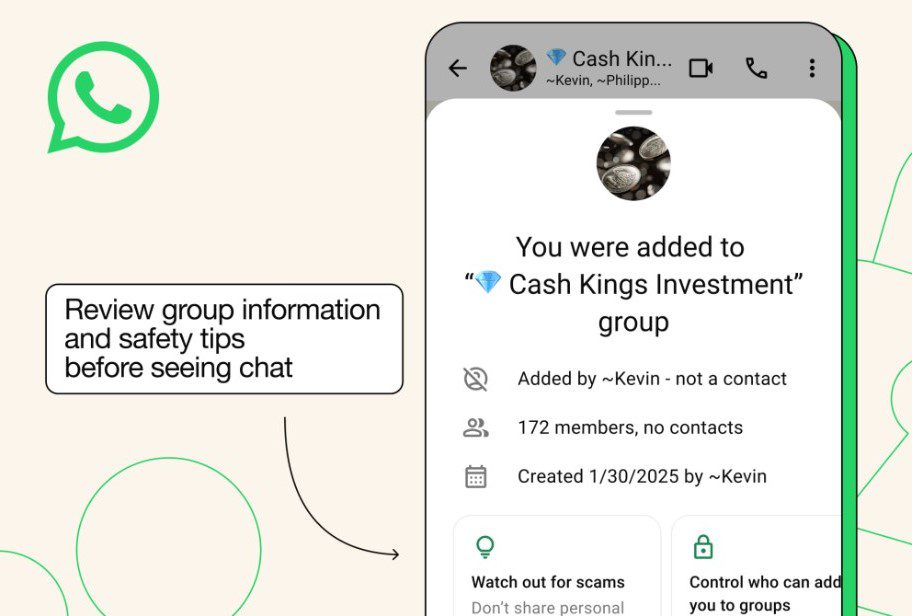
Whether users stay in the group or not, notifications from the chat will be muted until they mark the safety icon.
For individual chats, WhatsApp acknowledged that scammers might try to start conversations with users outside the platform before asking to message on applications like WhatsApp. However, the company explained that it is testing new tools to alert people before they start talking to someone who isn’t in their contacts.
“We’re exploring ways to caution you when you start a chat with someone not in your contacts by showing you additional context about who you’re messaging so you can make an informed decision,” the Meta-owned platform said.
Also Read: Meta agrees to share WhatsApp data of accounts violating schoolchildren in South Africa.
WhatsApp’s prospective scam detection feature comes at a time when perpetrators are using various tricks to lure people into financial scams or even hijack their social media accounts after getting their personal information through malicious means.

WhatsApp cracks down on scammers
In its move to curb fraudulent activities on the platform, WhatsApp announced that it had taken down over 6.8 million WhatsApp accounts during the first half of the year.
In its explanation, the messaging platform said that these accounts are linked to criminal scam centres targeting people around the world. With the use of its enforcement mechanisms, the company took down accounts before scam centres were able to operationalise them.
WhatsApp explained that scams can start with a text message or on a dating app, then move to social media, private messaging apps and ultimately payment or crypto platforms. In addition, these scammers try to move across various platforms without creating a peculiar pattern, making it more challenging to detect them.
Most importantly, a red flag for everyone is that scammers always ask people to pay upfront to get promised returns or earnings. WhatsApp says users can protect themselves from scams by taking time before responding to think about whether the message reads like a legitimate task.
“These scam centres typically run many scam campaigns at once – from cryptocurrency investments to pyramid schemes,” it added.

In the statement, WhatsApp also shared information about how it worked alongside OpenAI to disrupt scam efforts that were traced back to a scam centre in Cambodia. It highlighted that the attempts ranged from offering payments for fake likes to enlisting others into a rent-a-scooter pyramid scheme, or luring people to invest in cryptocurrency.
“In OpenAI’s report, the scammers used ChatGPT to generate the initial text message containing a link to a WhatsApp chat, and then quickly directed the target to Telegram, where they were assigned a task of liking videos on TikTok,” the post reads.
It added that scammers attempted to build trust in their scheme by sharing how much the target has already ‘earned’ in theory, before asking people to deposit money into a crypto account as the next task.
