



Growing up in Oyo, Temidayo Oniosun’s passion for climate action was sparked by a problem he noticed early on during his undergraduate studies in Meteorology at the Federal University of Technology, Akure (FUTA).
“I have been involved in climate science since 2011, but my primary interest is space science and technology. One of the major problems of climate studies in Africa has always been the lack of adequate data. This was evident during my studies, and the problem is still there today. Since no one has addressed this over the last decades, I decided to build a practical solution that solves this,” Temidayo said.
That solution became Climate in Africa, a company tackling Nigeria’s and Africa’s climate challenges by addressing the most fundamental gap: accurate and accessible ground data.
Nigeria faces a wide range of climate-related problems, from the recurring floods that swamp Lagos to the creeping desertification in the North. The founder, Temidayo Oniosun’s approach is straightforward: “Without data, you cannot plan, monitor, assess or make informed policies and decisions that will help solve climate challenges.
“For a long time, we have relied on satellite data to fix this data gap, but that is not very accurate in this part of the world due to limited ground data. You need ground data to properly calibrate satellite data, and Africa does not have enough ground data.”

Read also: How health and climate teams across Africa use Google’s Open Buildings data to improve society
Across the continent, the numbers are stark. Devices for climate monitoring are expensive and often inaccessible. Air quality monitoring is a striking example. Most African countries lack functioning monitoring devices, and Africa as a whole has fewer than 2,000 working automatic weather stations.
That reality is against the fact that Africa needs over 11,000 to properly serve its population and landmass. Climate in Africa is building the hardware devices needed for ground monitoring, manufacturing them locally in Lagos.
Partnership with the Lagos State Government
One of the company’s most impactful partnerships has been with the Lagos State Environmental Protection Agency (LASEPA).
“We are working closely with LASEPA to deploy our air quality monitoring devices across Lagos for proper monitoring. With LASEPA properly monitoring air quality across Lagos, this will enable them to carry out proper enforcement and make Lagos cleaner and better for everyone,” Temidayo explained.
He credited Dr Babatunde Ajayi, Director General of LASEPA, and the Commissioner for Environment and Water Resources, Hon. Adetokunbo Wahab, for their leadership. “This partnership is evidence of the government’s commitment to make Lagos pollution-free and conducive for all residents, one where the air is clean.”
To ensure everyday Nigerians benefit from this technology, Climate in Africa works directly with agencies that have a mandate for environmental sustainability.
LASEPA, for example, publishes the air quality data daily on its social media pages, making the information available to the public while also using it for policy enforcement. “They have access to the data, which they share with everyone, and also leverage the data for policy formulation and enforcement,” he said.
The journey of building a climate-focused company in Africa’s tech ecosystem has not been without hurdles.
“The usual problem is always an enabling environment. However, this has been made easier with a lot of effort from the Lagos State government. We design, engineer, and manufacture all our devices in Lagos, and the government has been very supportive of this — even becoming our first customer.”
Read also: African climate tech startups contributed $900k of $4.8bn raised globally in Q3 2024
His work is informed by a career that spans media, analytics, and tech.
“There is a story behind everything I build. The story for Climate in Africa is that of a first bride who is being revisited. My undergraduate was in Meteorology and Climate science, my Master’s was in Satellite Applications, and my PhD was in Geography. So while I have not publicly done a lot of things in the climate space for a while, I have been trained in this. In fact, in 2017, I led a project that capitalised on mapping for SDG in Akure.”
The company’s current focus is on building a wide network of ground infrastructure before integrating it with satellite data for a more comprehensive climate solution.
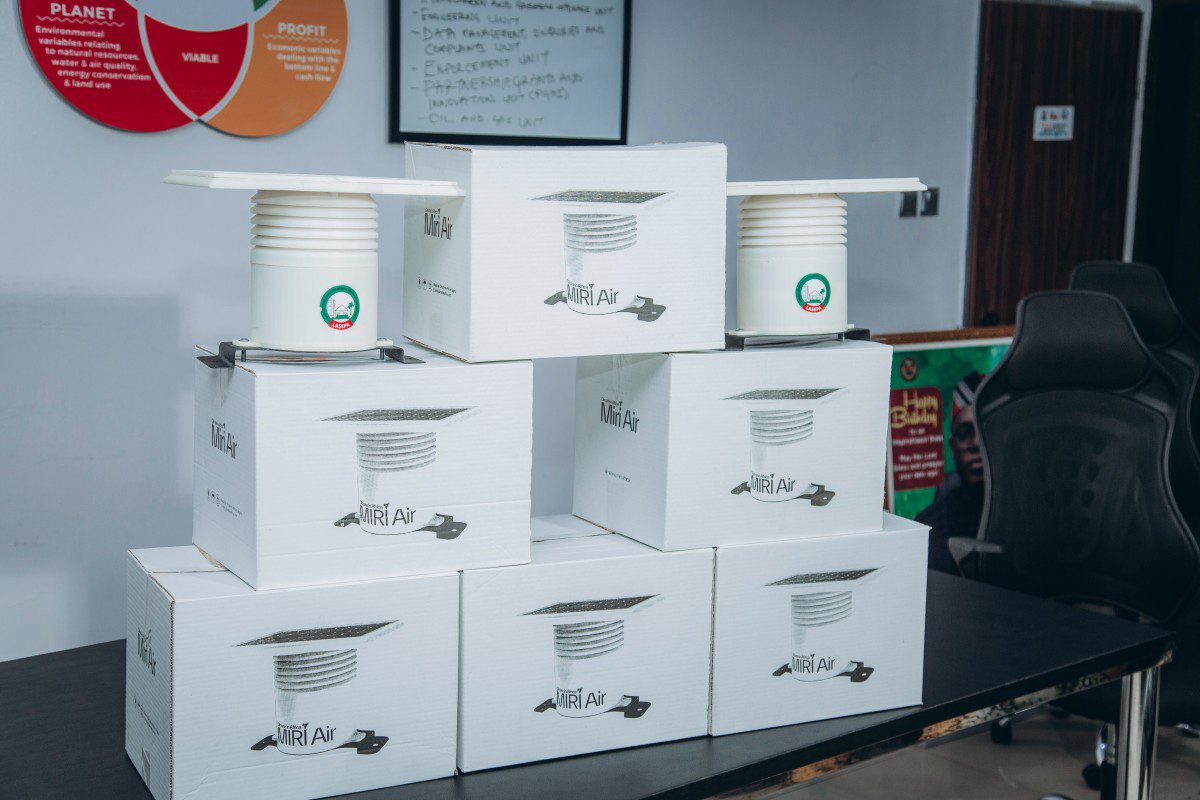
“This is phase 2 of our product development. Our core aim right now is to build a wide network of ground infrastructures. When we are done with this, we will then combine this with satellite data for the most comprehensive climate solution you’ve ever seen. We would leverage this to build platforms across multiple sectors addressing several issues around agriculture, deforestation, urban planning and disaster management.”
As an advocate for African-led climate solutions, Temidayo Oniosun has clear advice for policymakers:
“The government should invest more in building data pipelines — this is critical for policy formulation and enforcement.”
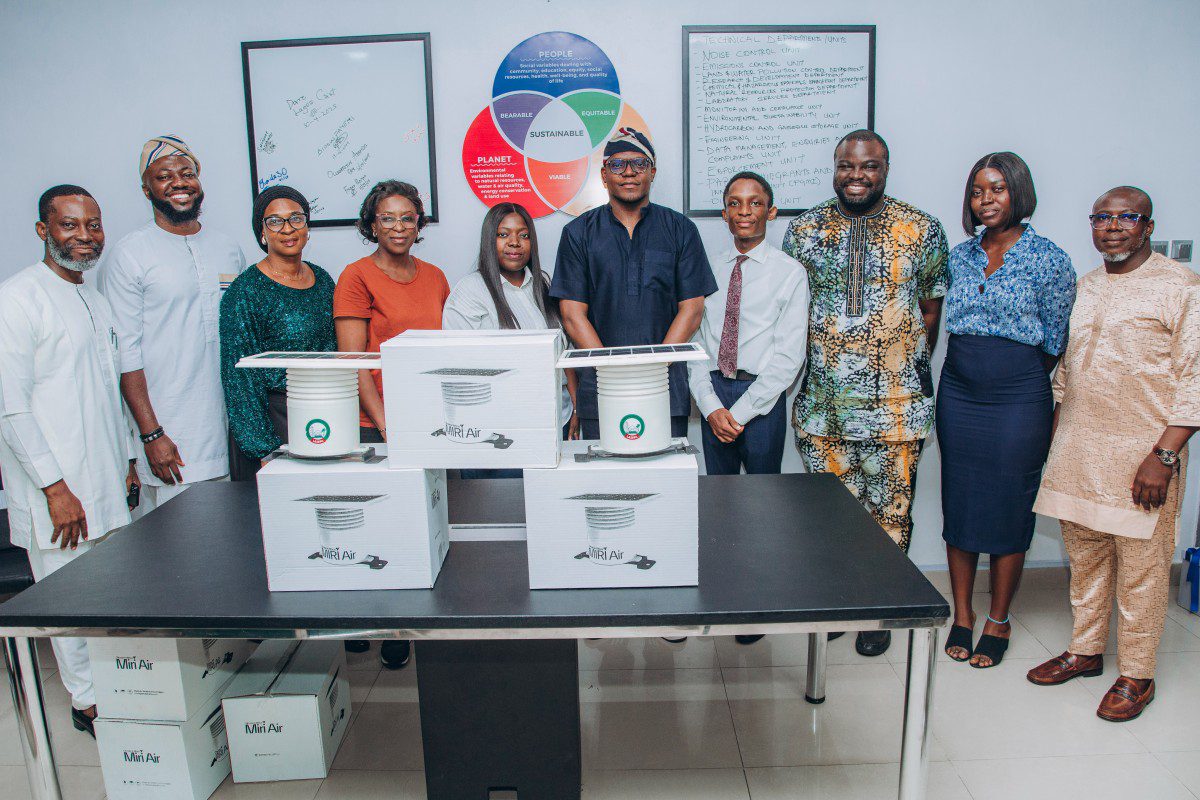
The company’s ambition for the next five years is bold. “We want to run the widest network of air quality and weather stations across Africa and be the singular source for climate-related data. We are targeting 11,000 devices across the continent by 2030.”
