





Internet connectivity and digital transformation in Kenya have seen significant growth, driven by the growing demand for high-speed internet across homes and business operations.
With the rise in data usage, there’s a shift in broadband subscriptions, especially fibre.
Between 2019 and 2025, fixed fibre-optic subscriptions increased by 373%, from 268,753 to 1.27 million. Explicitly, subscriptions more than tripled from 268,753 to over 1 million between 2019 and 2014, a growth attributed to remote work and entertainment.
The latest Communications Authority (CA) figures for the July-September 2025 period show that the figure has reached 1.27 million subscriptions, driven by the fibre-to-the-home (FTTH) services.
In a conversation with Technext, Emmanuel Kiptoo, a Kenyan-based telecoms engineer, attributed the surge to post-COVID readjustments, an increase in remote work, and an increase in competition among telcos, especially internet service providers (ISPs).
While stressing the demand for more data, Emmanuel noted that most Kenyans have shifted to consumer online services. He mentioned that “increased demand in online shopping, content creation, and digital marketing has also led to increased subscriptions.”

With more reach comes the expansion of fibre optic rollout. Kenya’s fibre network has grown rapidly from about 22,486 km in 2022 to over 30,454 km in 2025, reflecting how the country is responding to growing demand for broadband internet services.
Ruto’s administration added nearly 8,000 kilometres with transitions to e-governance and the digital economy. Adding to this, Emmanuel noted that the government plans to ensure that each of the 47 counties has access to the internet via the massive fibre rollout countrywide.
With the plan, the government wants to deploy fibre optic cables across the country to improve internet connectivity, speed, and coverage, especially in underserved areas. Schools and hospitals were also included in its plan to improve digital literacy among learners in all 47 counties.
Also Read: Court bars Kenyan telcos from recycling phone numbers without owners’ consent.
The drivers of Kenyan fibre rollout
Prominent providers driving the fibre market include Safaricom Home Fibre, Faiba (Jamii Telecommunications Ltd), Zuku, Poa Internet, Mawingu Networks, and Liquid Intelligent Technologies.
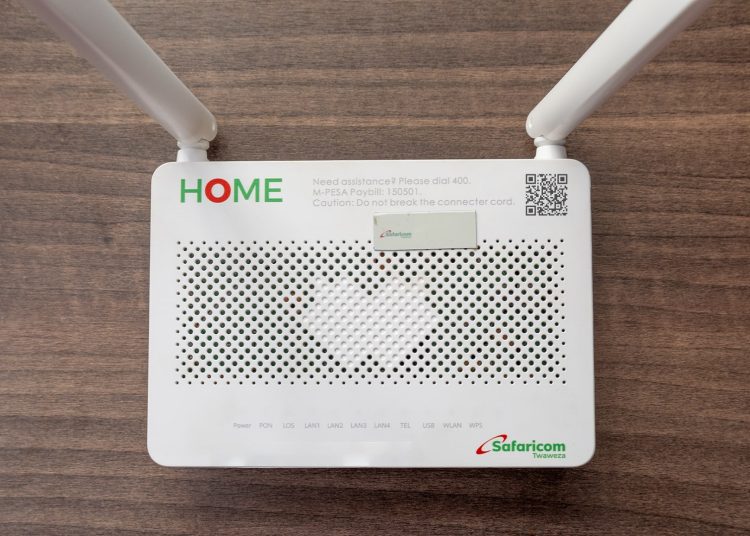
Safaricom remains the market leader with an additional 80,000 subscriptions to cement its position with 815,037 home internet customers. Fueled by its home fibre product, it commands a 35.6% market share.
Jamii Telecommunications Ltd (JTL) is in second place with 466,458 subscribers (20.4%), while Wananchi Group (including its Simbanet and Wananchi Telecom brands) is the third largest with 270,320 connections.
Yet, competition exists among mid-tier players as Poa Internet and Ahadi Wireless reported 265,729 and 181,719 subscribers, respectively.
Niche wireless internet service providers (WISPs) such as Vilcom Networks and Mawingu Networks posted significant numbers of 107,763 and 84,099 subscribers, respectively.
Compared to traditional options, fibre optic technology offers faster speeds, lower latency, and greater reliability, making it the backbone of Kenya’s digital economy. The push comes at a time when internet users demand a network that can download and upload large files in lesser times.
The diversifying competitive landscape in fibre shows how Kenya is rapidly embracing connectivity as a driver of innovation, inclusion, and the digital economy.
“Through their implementation in almost all major towns in Kenya, it led to mass enlightenment on the need for internet access, which translated to an increase in the number of connections,” Emmanuel said.
Specifically, ISPs like Zuku and Faiba are exploring options such as affordable prices and special offers to fit into the Kenyan fibre competitive market. For instance, Zuku offers extras in addition to internet (like TV services), where a client has the option of selecting internet only or internet plus channels.
They are also expanding their fibre deployment, showing responsiveness in terms of fibre outage restoration. Credit compensations are also in place in cases of missed days of internet service. This is always factored into the next payment phase, whereby the client will pay less depending on the number of days missed.

In addition, Zuku provides affordable internet subscriptions for students by specifically offering packaged internet in student residences that are affordable and flexible payment of a one-off for 3months.
Emmanuel maintains that these are major drivers of Kenyan broadband expansion and the recent push for increased fibre rollouts.
Yet, some issues persist
Despite the progress, rural penetration remains extremely low with a series of bottlenecks preventing telcos from going all out in remote areas.
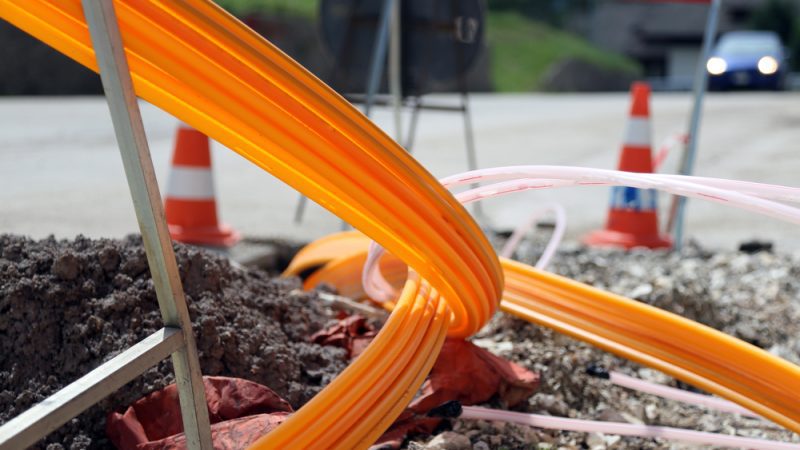
One. It’s expensive for telcos to implement FTTH in areas where there is no existing fibre infrastructure and an enabling environment.
Emmanuel referenced areas like the Northern part of Kenya, which experiences frequent insecurity issues. He noted that this had led to losses incurred by ISPs, where their infrastructure is usually the first target of destruction.
“Most ISPs target urban areas because of high population, unlike rural setups, where the population is scarce, which will translate to fewer people subscribing to the services, making ISPs incur losses,” he added.
There’s also the aspect of targeted customers/market. Some telcos, in consideration of profitability and sustainability, target the middle class who can afford the services. This, on the negative end, makes low-income households unable to access the service.
Other issues faced in fibre deployment are highway leave fees, Right of Way (RoW), lengthy approval time, corruption and regulatory inconsistencies. Emmanuel noted that in Kenya, the fees are expensive, which discourages the deployment of fibre infrastructure in new areas.
Also Read: Airtel and Starlink satellite-to-phone service under scrutiny in Kenya.
Mission 100,000 km of fibre
From the current 30,454 km fibre layout, Kenya has a target of 100,000 km of fibre by 2027.
In light of the difficulties and market bottlenecks, Emmanuel noted that the target is achievable through government and private partnership, and allows telcos to ride on the already existing infrastructure.
“The government needs to ensure they waive the fees, engage the counties to avoid any delays in terms of deployment, improve security in areas with cases of vandalism and destruction of ISPs’ infrastructure, ” he admonished.
The future of fibre in Kenya depends on how authorities alleviate these threats, expand coverage and train the masses on internet literacy.
