



We’ve all been there. It’s a Saturday morning, and your kitchen pipe suddenly bursts, sending water pooling on the floor. Instead of finding a quick, reliable fix, you’re forced into a notoriously frustrating routine. Navigating the unreliable referral network, you call an uncle, who calls a friend. That friend knows a plumber who promises to arrive “now now”. Days pass, and the plumber never shows up.
Heavy reliance on informal, word-of-mouth referrals is a shared frustration across Nigeria. It’s a cultural norm born out of necessity, not efficiency, and exactly the kind of systemic friction Arden Elegbe wants to eradicate.
Growing up between Nigeria and the United Kingdom, Elegbe noticed a stark contrast in how services are accessed. Abroad, finding a service provider was a simple web search away, with trust built into the platforms. In Nigeria, the default instinct was to ask around, relying entirely on inherited trust.
Recognising this massive digital and economic gap, he founded Zenfinder. The startup is on an ambitious mission to unlock what Elegbe describes as “Africa’s invisible workforce”.
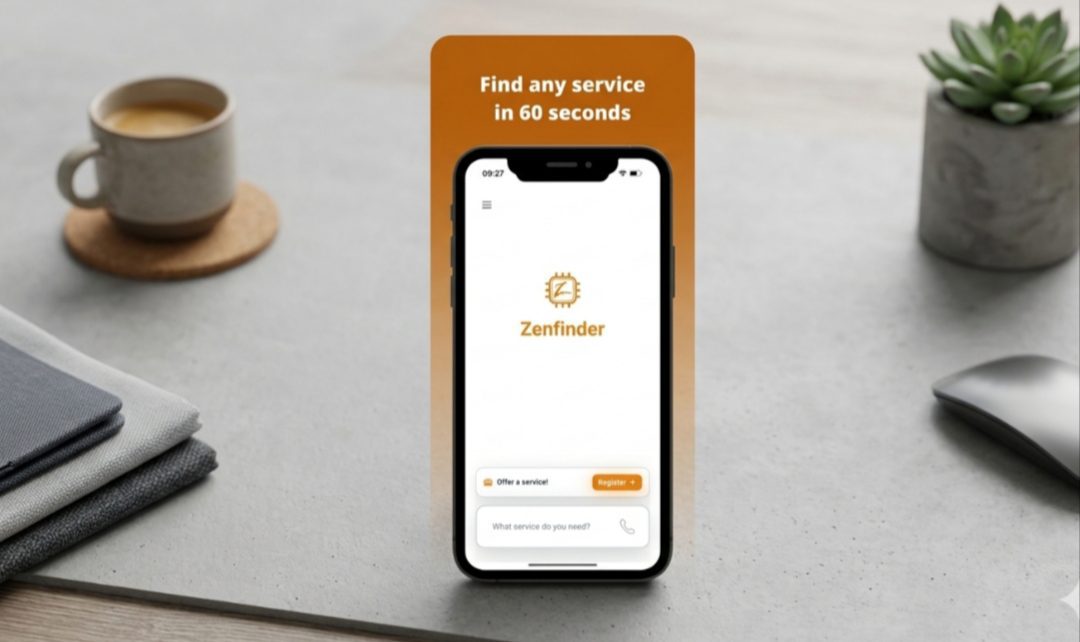
The premise is straightforward but powerful: Zenfinder connects users to verified service providers in just 60 seconds.
However, Zenfinder isn’t just another bloated super-app trying to do everything at once. It’s distinctly a voice-first marketplace, a deliberate choice tailored for the African consumer.
The hidden cost of informal searches
Relying on inherited trust for basic services is more than just a personal annoyance for households; it’s a massive, often unquantified drain on the broader African economy.
When informal searches drag on, business stalls. Imagine a local catering service waiting three days for an oven repair, that’s three days of lost revenue. Elegbe likens this frustration to trying to run a modern economy without roads.
“If you have to wait five days or one week to get the best person to do a job, that is wasting economic productivity,” he explains. This disconnect affects millions of micro, small, and medium enterprises across the continent.
For the artisans themselves, the current system is equally challenging.
A carpenter might have three jobs one week and zero the next. Because these service providers don’t know when their next gig will come, survival instincts kick in, and they often overcharge for the few jobs they manage to secure.
Zenfinder aims to fix this broken cycle by providing a steady, reliable stream of customers. When artisans receive consistent work, the desperate need to overprice a single job disappears.
Elegbe points out that this consistency will organically drive down the cost of services across the board. It mirrors the way ride-hailing platforms eventually lowered transport costs by simply increasing the volume of trips for drivers.

In a technology ecosystem obsessed with building the next all-encompassing super-app, launching a voice-based platform sounds almost counter-intuitive. However, it’s a calculated masterstroke for the African market.
Zenfinder launched in mid-2025 as a chat-based, AI-driven platform, but the initial reception was lukewarm. It quickly became clear that text-based chat wasn’t native to how average Nigerians prefer to do business.
Elegbe paid attention to the data and pivoted to voice, and almost immediately, engagement skyrocketed.
Recognising that the race for the next big fintech or super-app is already crowded, Elegbe admits, “I don’t like to fight a losing battle.” Voice, however, remains a largely untapped frontier in African tech.
More importantly, a phone call instantly bridges the trust deficit that plagues online transactions. “Voice is very key in Africa,” he notes. “When they get to speak on the phone with someone, that reduces the barrier; they build trust.” You can hear a person’s tone and gauge their sincerity.
It also sidesteps the digital divide. You don’t need to navigate a complex user interface with a hundred different buttons. If you can make a standard phone call, you can use Zenfinder. A user simply states what they need, such as a plumber or an electrician, and within 60 seconds, they’re speaking directly to a verified professional in their immediate vicinity.
The platform now boasts over 50,000 users and thousands of signed-up service providers.
Also read: PewBeam: All you should know about Dara Sobaloju’s scripture rendering AI app
Zenfinder empowers the artisan economy without exploitation
Building a two-sided marketplace always comes with infrastructure hurdles. For Zenfinder, operating cloud-based voice tech in a region where servers are often hosted in Europe presents real latency challenges.
Yet, the business model remains agile, proving radically different from typical gig economy platforms.

Most global marketplaces take a hefty percentage cut of the final job, often anywhere from 10% to 20%. Elegbe recognised a fundamental truth about the African informal sector: if you charge a percentage, people will inevitably find a way to cut the middleman out to save on fees.
Instead, Zenfinder operates strictly on a high-volume, flat-fee model. Customers use the service entirely for free, while service providers are charged a minimal fee merely for lead generation.
“It will be in the 100 Naira range,” Elegbe shares, comparing the cost to standard telecom airtime charges.
Artisans treat this tiny fee as a basic cost of doing business. Even if a few leads don’t convert into paid jobs, a single successful gig easily covers the cost of tiple calls. This removes the friction of payment and keeps the ecosystem moving quickly.
Also read: From founder to fixer: How Amanda Etuk of Cascador is rethinking startup growth
To maintain quality, the platform relies on a strict review system, much like Uber or Bolt. Service providers must maintain high ratings to keep their profiles active and continue receiving calls, ensuring bad actors are swiftly filtered out.
Looking ahead to the next five years, Elegbe envisions a transformed informal labour market. The goal is ambitious but increasingly tangible; he believes getting a reliable plumber or electrician on demand will soon become as normal as booking a ride-hailing car on your smartphone.
