





The National Information Technology Development Agency (NITDA) Director-General, Kashifu Inuwa, said that 95% of all digital breaches are caused by human error, not technical failures.
Speaking at the 2026 GITEX Africa summit in Marrakech, he added that artificial intelligence is making those breaches harder to detect and more damaging when they occur, raising the stakes for Nigeria and every other country trying to protect its digital economy.
“The most sophisticated technology cannot protect us if the human element is overlooked,” Inuwa said during a panel session on cyber resilience.
“Cybersecurity is no longer just a technical issue. It is a strategic imperative for national development. We must think beyond technology alone and build resilience through people, processes, regulations, and infrastructure,” he added.
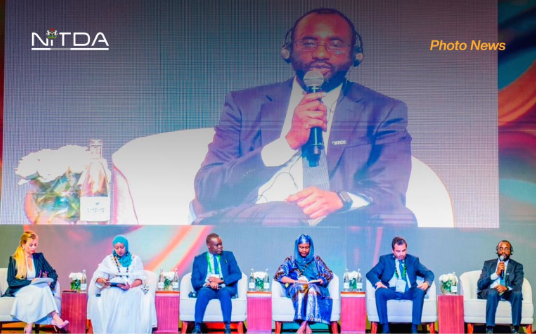
Inuwa described the current digital environment as a “critical turning point,” where emerging technologies are not only transforming economies but also reshaping the nature of cyber threats. The old approach, treating cybersecurity as an IT issue, relying on software upgrades and antivirus updates, is no longer enough.
Nigeria’s answer to these breaches: turn every citizen into a human firewall
The government’s response to these breaches is what Inuwa described as a ‘total resilience’ strategy.” The idea is that cyber defence cannot live only in server rooms. It must also live in schools, offices, businesses, and homes, because that is where most attacks begin.
As part of that shift, Nigeria has launched a National Digital Literacy Programme targeting 95% digital literacy by 2030, with an interim goal of 70% by 2027. The programme focuses specifically on digital safety and cybersecurity awareness, equipping ordinary Nigerians with enough knowledge to avoid simple mistakes that open the door to most attacks online.
NITDA is also running the “3 Million Tech Talent” programme, aimed at developing Nigerian expertise across cybersecurity, data science, and artificial intelligence.

The agency is using hackathons, innovation challenges, and mentorship schemes to push young people toward building solutions rather than exploiting vulnerabilities.
Read also: Nigeria targets 95% digital literacy by 2030 – NITDA DG, Kashifu Inuwa
On the legal side, Nigeria is reviewing the Cybercrime Act of 2015 to keep it current with the pace of new threats and breaches. The country also runs a 24-hour cybersecurity operations centre that monitors threats, issues advisories, and provides real-time support to government institutions, businesses, and citizens.
The centre is deploying dark web monitoring and AI-enabled threat detection to improve response times.

Inuwa was also direct about Nigeria’s recurring reputation in global cybercrime rankings. “Countries with the most advanced digital economies also rank high in cybercrime because of the scale of their online activity,” he said.
No country or organisation can protect itself on its own. Cyber resilience is a team effort. By combining people, technology, and regulations, we can create a safe and competitive digital economy around the world.
