





Across Africa’s rapidly evolving fintech ecosystem, most of the innovation people experience on the surface is powered by complex infrastructure quietly running behind the scenes. Payments moving across countries, lending systems assessing risk in milliseconds, and financial institutions integrating with each other all rely on backend systems designed to operate reliably under constant pressure.
Engineers like Chigozie Madubuko are part of the group building that infrastructure.
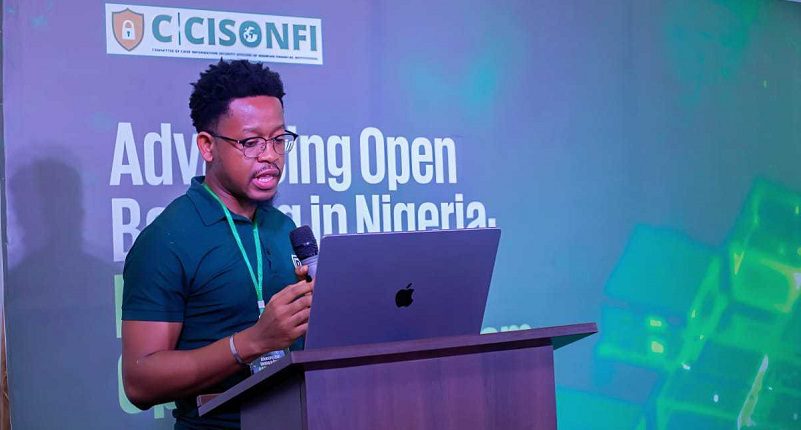
With over seven years of experience across companies like Lendsqr and Kora, and through contributions to initiatives such as Open Banking Nigeria, his work has focused on building systems that support credit platforms, payment networks, and financial interoperability across markets.
In this interview, he shares insights on designing systems at scale, navigating the realities of financial infrastructure in emerging markets, and where the future of fintech systems in Africa may be headed.
On Getting Into Fintech and Software Engineering
Can you tell us about your journey into software engineering and what drew you to fintech?
My journey into software engineering started shortly after I graduated, when I was trying to figure out where I could apply and hone my technical skills in a meaningful way. To be honest, I wasn’t particularly interested in a specific sector, I just wanted to write code and build things.
I started my career at Lendsqr as an intern after getting somewhat “adopted” by Adedeji Olowe. And I mean that almost literally. For about a year, I lived in the boys’ quarters of his house while working at Lendsqr. So technically my introduction to fintech involved software engineering by day and a very unconventional housing arrangement by night. It was one of those rare opportunities where someone simply decided to take a chance on you, and that chance changed the trajectory of my career.
My original goal was simple: learn from experienced engineers and understand how complex systems are built and make Deji happy. Ironically, I joined as one of the early engineers, so there weren’t many people ahead of me to learn from. Luckily, I still had engineers like Sodiq Fagbola, who—interestingly enough—I’ve never met physically to this day, but whose guidance was foundational to my growth and journey into my career as a software engineer.
On Scaling Lending Infrastructure
What were some of the challenges you encountered while building systems at Lendsqr?
One of the biggest challenges at Lendsqr was designing infrastructure that could support multiple lenders with very different operating models.
Each lender has its own risk appetite, underwriting logic, loan products, and operational workflows. So the challenge wasn’t just building a lending system — it was building a platform flexible enough to support different credit strategies while maintaining consistency, reliability, and performance.
Credit scoring was another major complexity. In more mature markets, lenders can rely on rich credit histories and standardized financial data. In Nigeria, that data is often fragmented or incomplete. That means lenders frequently rely on alternative signals and partial data to assess borrower risk.
From a systems perspective, this requires building infrastructure capable of ingesting multiple data sources, normalizing them, and supporting flexible risk models without degrading system performance.
Collections introduced another layer of complexity. Repayment infrastructure in the market is still evolving, and mechanisms like direct debit are not always reliable. Mandates fail, accounts may not have sufficient funds, and bank integrations can be inconsistent.
Because of that, we built a collection system that supports multiple repayment channels, automated retries, and operational workflows that help lenders recover funds while still maintaining a reasonable borrower experience.
Working through these challenges reinforced something important to me: building lending infrastructure in emerging markets isn’t only about scaling technology. It’s about designing systems that can operate reliably even when the surrounding financial data and payment infrastructure are still developing.

Designing Payment Systems Across Markets
At Kora, what are the complexities of building payment infrastructure across multiple countries?
When you’re building payment infrastructure across multiple markets, complexity increases very quickly. Each country has its own regulatory environment, payment rails, and operational realities, and those differences shape how the technology has to be designed.
Across Africa, payment ecosystems can look very different. Some markets are largely bank-driven, others are dominated by mobile money, and in many places you’re dealing with a combination of both. From an engineering perspective, that means you can’t assume a single integration model will work everywhere. The system has to support different rails, settlement timelines, and transaction flows depending on the market.
One of the biggest challenges is partner integrations. In many cases you’re integrating with local banks, payment switches, or mobile money operators in each country. Each partner has different APIs, different reliability patterns, and sometimes very different levels of technical maturity.
Some partners run modern infrastructure with well-documented APIs. Others may have systems that experience periodic downtime, strict rate limits, or limited observability when things fail. That means the systems you build have to assume that failures will happen and be designed to handle them gracefully through retries, queueing, fallbacks, and strong monitoring.
Operational complexity also grows as you expand into more markets. Settlement processes, reconciliation flows, currency handling, and reporting requirements can differ significantly from country to country. Even something as simple as determining when a transaction is considered “successful” can vary depending on the local payment infrastructure.
From an engineering standpoint, the real challenge is designing abstractions that allow the platform to support these variations without the system becoming fragile or overly complicated. The goal is to build a maintainable and reliable infrastructure that can adapt to different financial ecosystems.
Contributing to Open Banking Nigeria
You’ve also been involved in Open Banking Nigeria. What role have you played?
I’ve been involved in the Open Banking Nigeria initiative, where my work has focused on contributing to the development of standardized APIs that enable financial institutions to interact more easily with each other.
My contributions have primarily been on the technical side — helping define parts of the API standards and contributing to the development of the Open Banking sandbox, which demonstrates how financial institutions can securely interact using a unified framework.
The sandbox essentially acts as a working example of how banks, fintechs, and other financial organizations can connect through standardized interfaces to access financial data and services in a secure and structured way.
Beyond the technical work, I’ve also been involved in discussions and advocacy around open banking adoption — engaging with banks, fintech companies, and developers to explore how these standards should work in practice and what it takes for the ecosystem to adopt them.
Why Open Banking Matters
For those unfamiliar, why is open banking important?
Open banking fundamentally changes how financial systems interact with each other.
Traditionally, integrating with financial institutions can be slow and inconsistent. Each institution exposes different APIs, documentation standards, and onboarding processes. That fragmentation makes building financial products more complex than it needs to be.
Open banking introduces standardized interfaces that make these integrations more predictable and secure.
In markets like Nigeria, the impact could be significant. For instance, one of the biggest challenges faced by lenders while I was in Lendqsr was the lack of reliable financial data for assessing borrower risk. However, with open banking, lenders could access verified transaction histories and financial activity — with the customer’s consent — which allows them to make better lending decisions.
It could also improve repayment infrastructure by enabling more reliable ways to initiate payments directly from bank accounts through standardized systems.
That said, open banking in Nigeria is still largely a promise. The initiative has made significant progress in defining standards and frameworks, but the go live date is still largely vague. Even so, those standards are important because they lay the foundation for a more interoperable financial ecosystem once implementation and adoption begins to scale.
On Thought Leadership and Industry Growth
Where do you see fintech infrastructure in Africa evolving over the next decade?
I think we’ll see a stronger push toward interoperability and shared financial infrastructure across the continent.
Right now one of the biggest challenges across African fintech ecosystems is fragmentation. Every country has slightly different systems, regulatory environments, and integration models. That makes it difficult for financial services to operate seamlessly across borders.
Over the next decade, I expect more effort to go into building infrastructure and standards that reduce that friction.
We’ll also see increasing expectations around reliability. As more people rely on digital financial services for everyday transactions, the tolerance for downtime becomes much lower. Payment infrastructure increasingly needs to operate with the same reliability people expect from essential utilities.
In many ways, the next phase of fintech in Africa won’t just be about launching new products. It will be about strengthening the infrastructure that allows those products to operate reliably at scale.

Mentorship and Giving Back
You’ve also contributed to mentorship programs. What drives that?
Mentorship is something I care deeply about because I’ve seen how much the right guidance can accelerate someone’s growth.
A lot of the things that help engineers progress in their careers don’t come only from courses or documentation. They often come from conversations with someone who has already navigated similar challenges.
Over the years I’ve tried to stay consistently involved in mentorship across different communities.
Through ADPList, I mentor engineers who are trying to break into software engineering or grow into more senior technical roles. We often talk about system design, building production-ready systems, and navigating engineering careers.
I’ve also mentored through The Curve Africa, where I work with young engineers who are building their technical foundations and trying to enter the industry.
More recently, I’ve also been mentoring students through the Tech Innovation Club, supporting innovation programs and helping students think about how their ideas can translate into practical technology solutions.
For me, mentorship isn’t just about sharing technical knowledge. It’s about helping people build confidence, think more clearly about problems, and understand how things work in real-world systems.
Advice for Upcoming Engineers
What advice would you give to engineers looking to build impactful systems in fintech?
You know, technologies, frameworks, and programming languages change constantly. Sometimes it feels like the industry releases new tools faster than most teams can finish migrating to the previous ones.
What tends to matter much more over time—especially in this age of AI — is understanding systems: how they behave, how they scale under load, how they fail, and how they recover when things inevitably go wrong.
Many of my most valuable engineering lessons didn’t come from textbooks or tutorials. They came from watching systems in production: debugging failures at odd hours, investigating transaction inconsistencies, or tracing the root cause of reconciliation issues that seemed simple at first but slowly revealed themselves to be… not simple at all.
Those moments teach you far more about how systems actually behave than most theoretical examples ever will.
AI is also beginning to change how software is built. Engineers can now move much faster with tools that help generate code, analyze systems, and automate parts of development.
But if anything, that shift makes system thinking even more important. AI can help write code faster, but it can’t replace the judgment required to design reliable systems, reason about trade-offs, or anticipate how complex systems behave in production—particularly at 2 a.m., when a payment system no longer believes in consistency.
Looking Ahead
As Africa’s fintech ecosystem continues to grow, the systems powering it will become increasingly important.
While users may interact with sleek apps and digital experiences on the surface, the reliability of financial services ultimately depends on the infrastructure underneath them — the systems that move money, connect institutions, and keep transactions consistent and secure.
Engineers working on that infrastructure will play a critical role in shaping how the future of finance evolves across the continent.
