


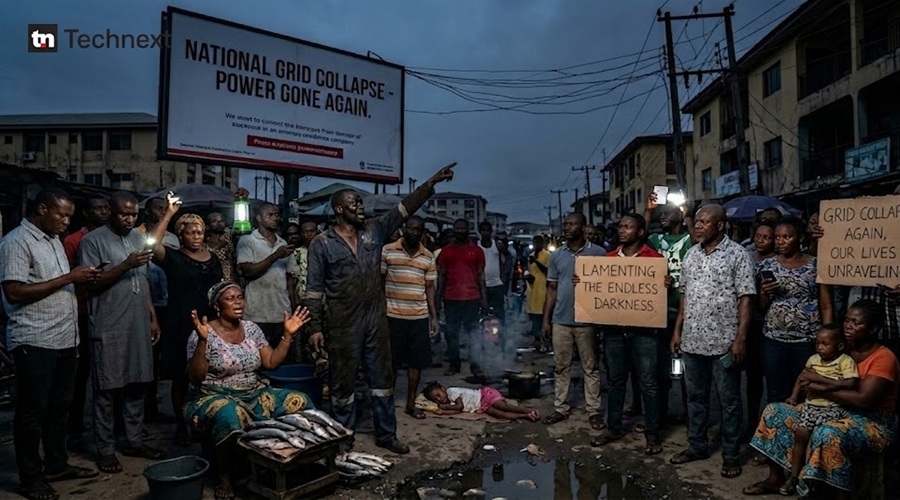
The Nigerian Independent System Operator (NISO) marked its first anniversary on Wednesday with ambitious plans: IoT sensors, telemetry systems, and grid segmentation technology to prevent nationwide blackouts. The announcements sounded like progress. And in some ways, they are.
But here is the uncomfortable truth sitting underneath all of it: Nigeria is trying to solve a 19th-century infrastructure problem with 21st-century software.
The numbers make that clear. Nigeria’s national grid has already collapsed twice in 2026, on January 23 and January 27, less than a month into the year. That followed four major collapses in 2025 and roughly 12 in 2024, according to data from the Nigerian Electricity Regulatory Commission.
Between 2010 and 2022 alone, the country suffered at least 222 partial and total collapses. A study by researchers at Covenant University documented 564 collapses between 2000 and 2022, nearly two every month for over two decades.
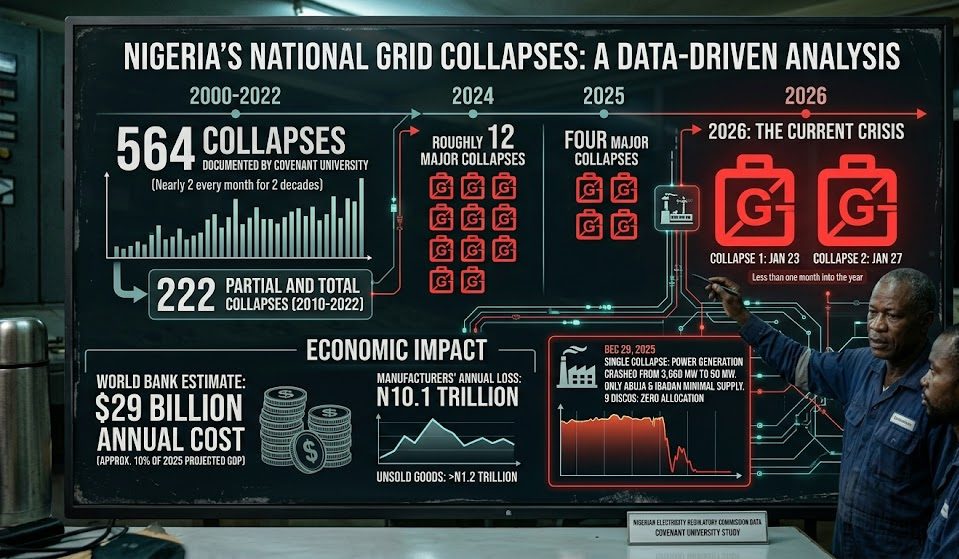
On December 29, 2025, power generation crashed from 3,660 megawatts to just 50 megawatts in a single collapse, leaving only Abuja and Ibadan with minimal supply while nine distribution companies recorded zero allocation.
The World Bank estimates that power outages cost Nigeria approximately $29 billion each year. This is about 10% of Nigeria’s projected GDP for 2025. Manufacturers in Nigeria lose an estimated N10.1 trillion annually, including over N1.2 trillion in unsold goods, due to these repeated disruptions in production.
Digital tools on a broken foundation
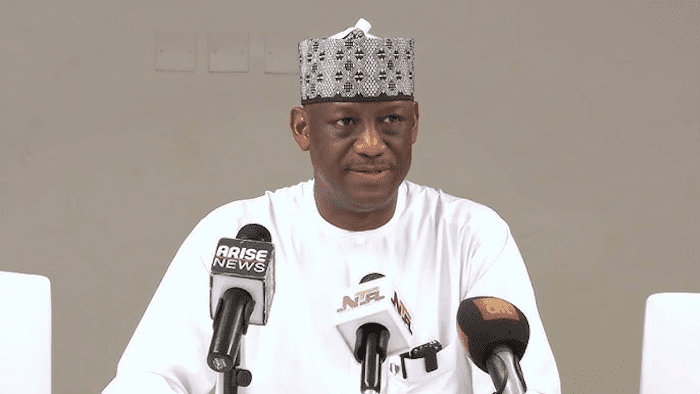
NISO’s Managing Director, Mohammed Bello, announced that transmission losses have dropped from 10 per cent to 7 per cent, with a target of 5 to 6 per cent. The agency has successfully synchronised its trial operations with the West African Power Pool. It is also focused on ensuring that power generation companies improve their frequency response.
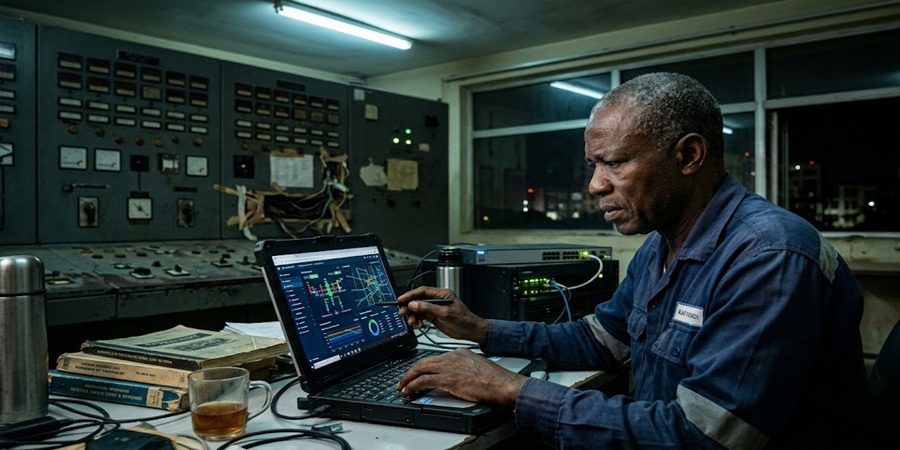
Grid islanding, a way to divide the power network to prevent widespread failures, is being developed. A real-time monitoring system using Supervisory Control and Data Acquisition (SCADA) and Energy Management technology is being implemented.
These are real improvements. Nobody should dismiss them.
But they are digital fixes being applied to physical problems that require physical solutions. Nigeria’s transmission infrastructure is built on technology that is decades old. Some transmission lines date back to the early 1960s when the Electricity Corporation of Nigeria first linked Lagos to Ibadan. Much of the equipment is over 50 years old and poorly maintained.
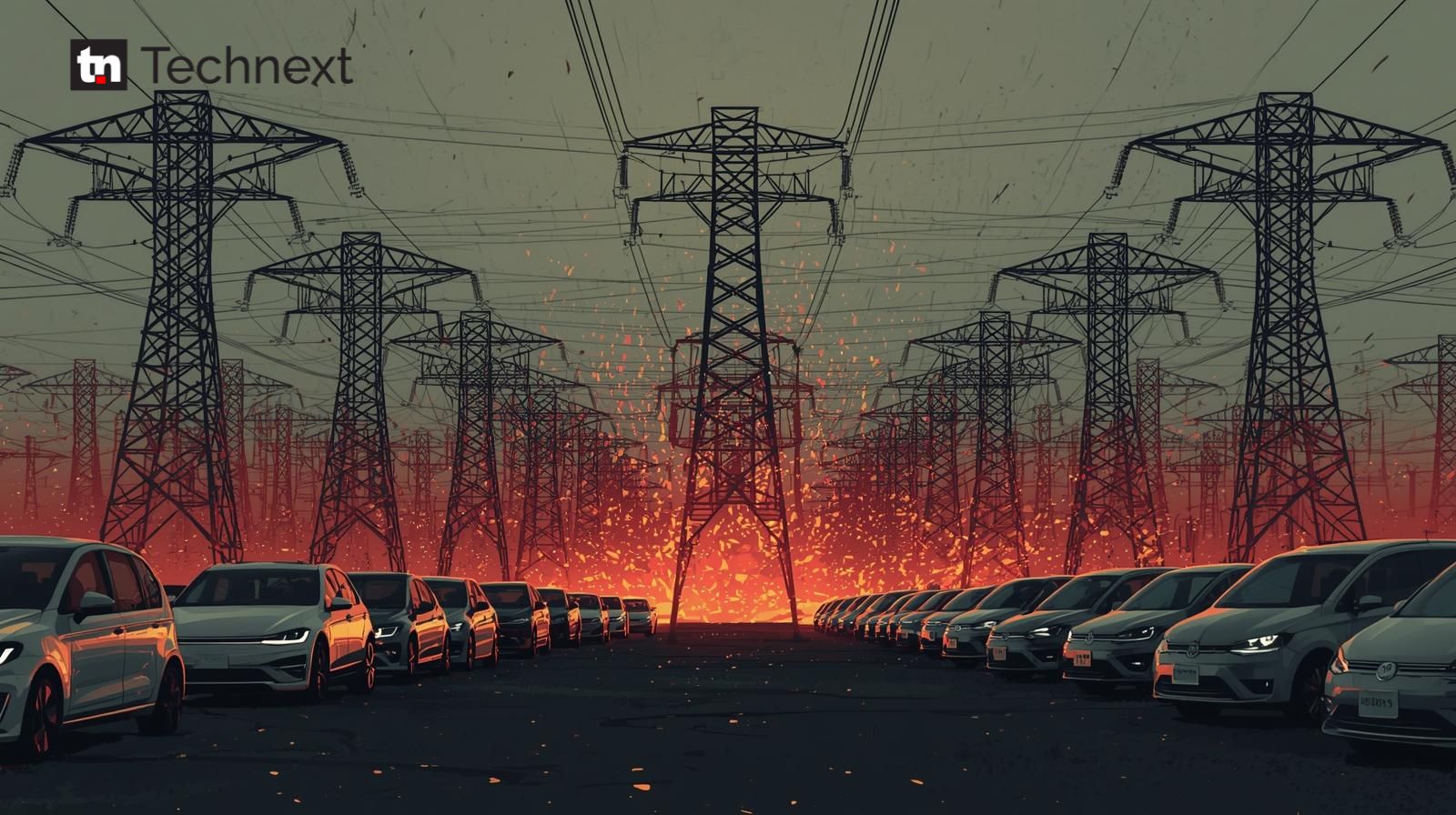
The power grid is structured in a way that lacks backup systems. If one component fails, everything connected to it is at risk. Grid islanding aims to reduce this risk by isolating problems. However, dividing a fundamentally weak system doesn’t improve its overall strength.
Nigeria’s transmission network spans over 20,000 kilometres with a theoretical capacity of 7,500 megawatts. But actual capacity stands at only 5,300 megawatts, while installed generation capacity is 12,522 megawatts. The grid simply cannot carry the power that exists, even when everything is working.
Similar read: Electricity DisCos lost ₦51 billion in December 2025
Transmission and distribution losses in Nigeria have been as high as 40 per cent, compared to a global standard of 8 to 12 per cent.
Energy experts estimate that modernizing the transmission and distribution system requires approximately $1.5 billion annually for 10 years. However, this investment has not taken place, despite the system being partially privatized in 2013.
Power expert Dr Idowu Oyebanjo, speaking on Arise News earlier this year, called the situation “a national disgrace,” noting that the country inherited its power infrastructure from the British and has significantly underinvested in it for over six decades.
What NISO’s upgrades can do and can not do
Can NISO’s digital initiatives reduce blackouts? Yes, marginally. Real-time monitoring, grid segmentation, and improved data help operators respond faster, limit fault propagation, and plan more effectively.
These are tools to improve how well a working system performs. Nigeria’s issue is not simply a lack of visibility into the power grid’s operations. The problem is that the grid relies on outdated equipment, such as transformers from the 1970s and transmission lines from the 1960s.
Furthermore, the grid was not designed with backup systems in place.
Adding a GPS navigation system to a car with a broken engine is like addressing the symptoms instead of the root cause. Improved navigation can help you plan your journey, but it won’t repair the engine problem.
Nigeria’s digital upgrades to its power grid will only be temporary fixes unless the country invests in rebuilding its transmission infrastructure. This includes replacing old equipment, adding backup systems, modernizing substations, and addressing a structural problem that has been growing for more than 60 years.
.
