




The high-profile decentralised finance (DeFi) project linked to the Trump family, World Liberty Financial (WLFI), has escalated a public feud with its largest early backer, Justin Sun. The clash over a controversial $75 million lending manoeuvre and frozen assets has now spilled into open legal threats, raising concerns over the project’s governance, market stability, and political ties.
Tensions boiled over this past weekend following a financial manoeuvre by the WLFI treasury. The project deposited 5 billion of its own WLFI tokens as collateral onto the decentralised lending platform Dolomite. Against this collateral, WLFI borrowed about $75 million in stablecoins, dominating the protocol’s liquidity pools and pushing its utilisation rate to near-maximum capacity. This effectively locked ordinary retail depositors out of their funds. Notably, on-chain data revealed that $40 million of this was subsequently transferred to Coinbase Prime.
The situation is further complicated by the fact that Dolomite’s co-founder, Cory Caplan, also serves as World Liberty Financial’s chief technology officer. This internal dynamic, combined with the massive loan, alarmed investors. Critics argued the manoeuvre could allow insiders to extract cash before a wave of tokens unlocked, flooding the market.
Sun, who poured tens of millions of dollars into WLFI to salvage its initially sluggish launch in late 2024, condemned the move. He accused the project’s leadership of exploiting the ecosystem and running roughshod over basic decentralised finance principles.
Sun Alleges Hidden ‘Trap Doors’ in WLFI Smart Contract
The dispute runs far deeper than a single loan. Sun has alleged that the WLFI team deliberately concealed a blacklisting backdoor within their token’s smart contract. According to the Tron founder, this mechanism acts as a “trap door masquerading as an open door”, granting developers the unilateral authority to freeze or confiscate token holder assets without warning or due process.
Sun claims he is the primary victim of this hidden function. In September 2025, WLFI froze a wallet containing 595 million of Sun’s unlocked WLFI tokens, worth an estimated $107 million at the time. The project’s leadership cited a breach of his investor agreement, alleging Sun had attempted to covertly use retail users’ locked tokens as liquidity to cash out early on his own exchange.
“Every action taken by the WLFI team to extract fees from users, to secretly implant backdoor controls over user assets, and to freeze investor funds without disclosure or due process is illegitimate,” Sun declared in a lengthy public statement on X.
World Liberty Financial has roundly rejected Sun’s characterisation. Representatives claim that Sun’s accusations of a centralising backdoor are defamatory, alleging instead that the Tron founder systematically breached his investor agreement.
“Does anyone still believe @justinsuntron?” The official WLFI account fired back on X late Sunday.
“Justin’s favourite move is playing the victim while making baseless allegations to cover up his own misconduct. We have the contracts. We have the evidence. We have the truth. See you in court, pal.”
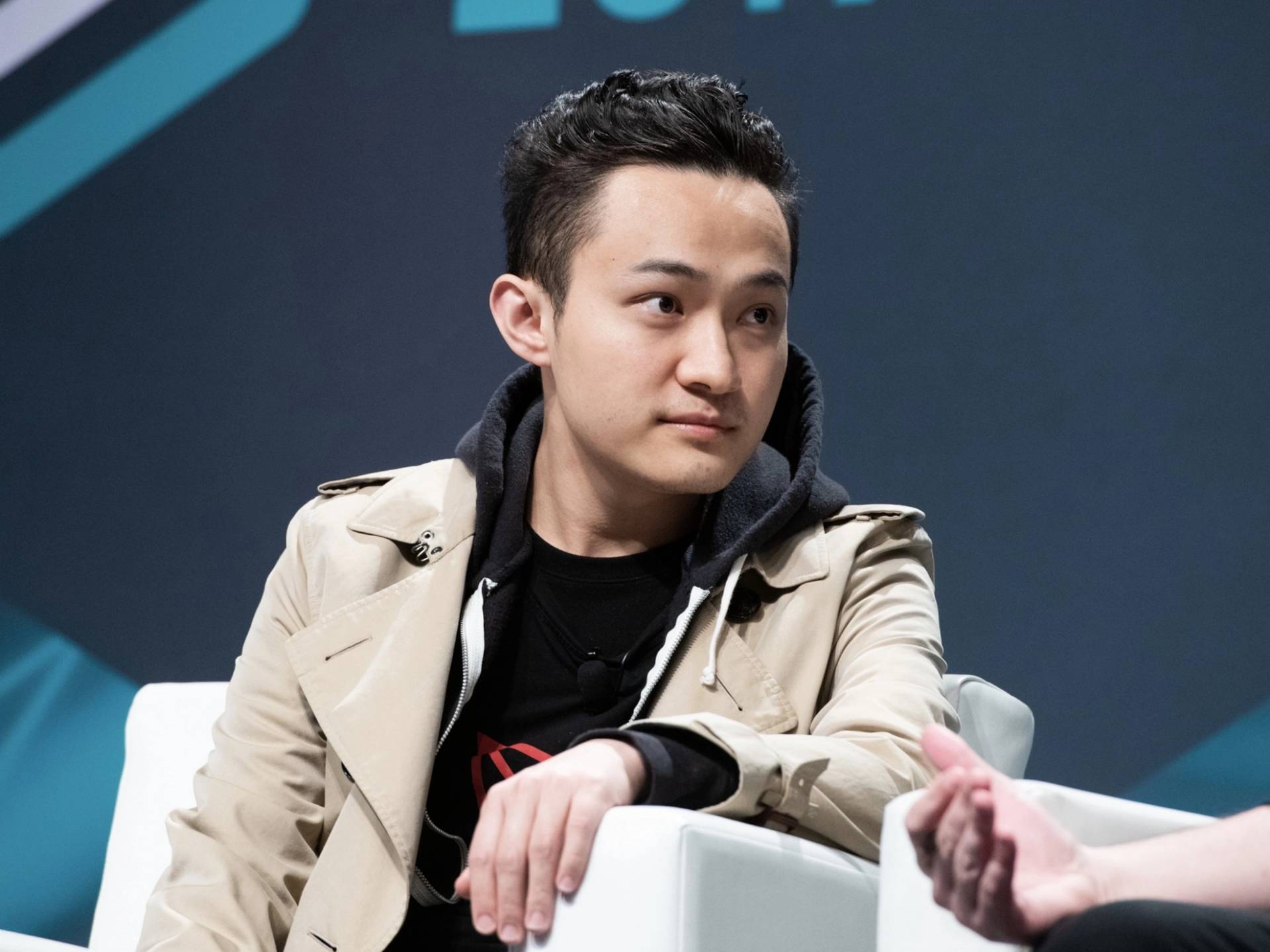
According to WLFI, Sun attempted to covertly sell off tokens using the back end of his HTX exchange, prompting the platform to freeze his assets to protect the broader ecosystem.
David Wachsman, a spokesperson for WLFI, denied that the project was dumping its holdings via the Dolomite loan.
“It would be completely false to suggest that World Liberty is ‘exiting’ any positions: instead, we’re doubling down based on our roadmap,” Wachsman said. He noted the project is committed to sound risk management and has already repaid 33% of the $75 million debt.
This dispute provides a jarring contrast to the mutually beneficial relationship the two parties enjoyed just last year. During the Consensus Hong Kong conference in 2025, WLFI co-founder Zak Folkman publicly heaped praise upon Sun, crediting his capital injection with rescuing the Trump-linked project from an underwhelming presale.
It also unfolds against a highly charged political backdrop. Sun’s immense financial support for Trump-linked crypto ventures recently drew fierce scrutiny in Washington. Just last month, the US Securities and Exchange Commission (SEC) dropped market manipulation charges against Sun following a $10 million settlement. The SEC’s retreat drew immediate fire from Senator Elizabeth Warren, who publicly linked the regulatory leniency directly to Sun’s capital injections into Trump-affiliated digital assets.
Following the public controversy, the market has reacted mercilessly. The WLFI token recently plunged to an all-time low of roughly $0.079, marking a staggering 76% dip from its all-time high.
As the rhetoric hardens and the prospect of a high-profile courtroom battle looms, ordinary token holders are left caught in the crossfire of a feud that highlights the ongoing tension between the promises of decentralised finance and the harsh realities of centralised control.
