


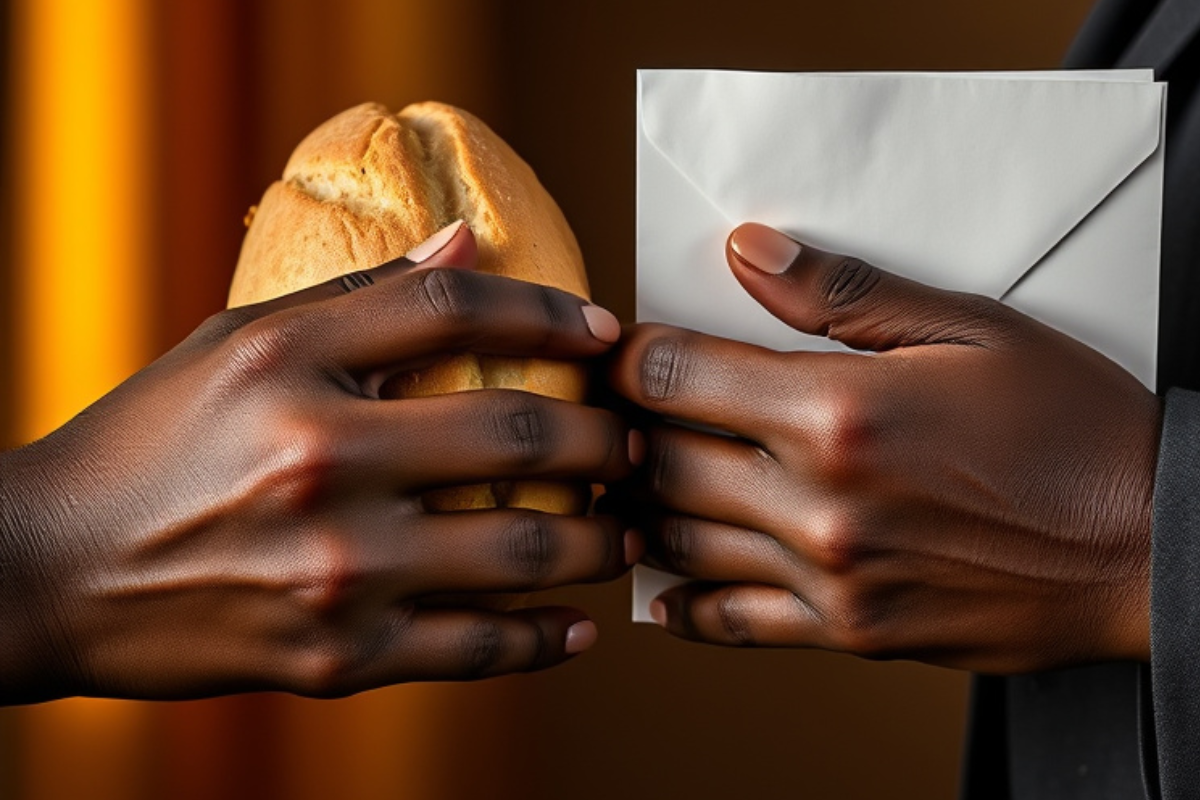
53-year-old Love Dooshimaa runs a provision store. In mid-April 2026, she picked up a loaf of bread that had been sitting on her shelf for two months, held it to the camera, smelled it, pressed it, and told her TikTok followers that something was wrong. The bread looked fresh. It smelled fresh. It had not grown any mould in eight weeks. Bread, in her experience, goes bad in two days.
She did not name a brand. She showed no logo. She showed no packaging. She told her followers to pay attention to what they eat, put the bread down, and ended the video.
What happened next is why you are reading this story.
BON Bread, an Abuja-based bakery, reached out to Love privately. The company’s CEO, Maria Abdulkadir, says she called to understand how the bread had allegedly stayed fresh for that long. Love says she ended the call. Shortly after, a letter arrived from BON Bread’s solicitors. It demanded that Love take down the video, issue a public retraction, present herself at the solicitor’s office, and pay ₦50 million in damages, representing what the company says it lost in the three days after the video went viral.
Read also: Outrage over poor JAMB results sparks class action suit led by edutech founder Alex Onyia
@lovedooshimaa You bread could be poisoning you😭
♬ original sound – Love
Love posted the letter on TikTok. That video has also gone viral. BON Bread was reached for comment on this story and has not responded as of the time of publishing.
@lovedooshimaa Let me be clear : I did not call out any brand, show any label, or associate any company with the bread in my video. It was a general observation about shelf life, nothing more. Any brand attaching themselves to that conversation is doing so on their own.
♬ original sound – Love
The detail that changes the story
The public framing of this case has largely been that Love never named anyone and therefore has nothing to answer. That framing is not entirely accurate, and a closer look at the video suggests the picture is more complicated.
Temitayo Sonuyi, Esq., Head of Dispute Resolution at CrestHall, reviewed the original video for Technext. His assessment introduced a detail that most of the public commentary has missed.
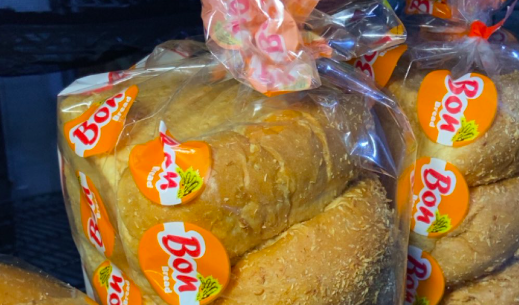
“She was careful not to mention any names, or show the name of the bread or its manufacturers. However, a monumental error or lapse in concentration made her show, albeit briefly, the colour of the branding or wrapper of the bread.
“This critical mistake, in my view, served as the catalyst in the identification of the product by the general public, which allowed the public to immediately ascertain that she was talking about the Bread Company. Although she technically did not mention or show the name of the bread in full, by showing the colour of the packaging of the bread, she instantly put a spotlight on that particular product. It is immaterial whether this was done deliberately or inadvertently.”
Sonuyi drew an analogy to make the point concrete. He recalled a caramel candy from his primary school days, identifiable by its orange wrapper with yellow markings, a product he had not seen in over 25 years.
“If you were to show me a small part of its wrapper for just one second, even without showing me the name, I would instantly identify it by name without hesitation, due to years of consuming the product,” he said. The principle applies here: brand recognition does not require a logo.
Then there are the liked comments. Under Love’s original video, users began naming BON Bread in the comments. Love liked some of those comments. The CEO cited this in her own public statement. Sonuyi’s legal read on it is direct.
“Ms. Dooshimaa’s liking of the comments specifically identifying and mentioning that particular Bread Company can very well be construed as a tacit confirmation of her intention to direct her accusations towards the Company. I believe this act entirely negates any notion of inadvertence or mistake on her part.”
@bon.bread Please note that all ingredients are clearly listed on every single pack of Bon Bread, so you can always see exactly what goes into your bread. We believe in freedom of speech and respect everyone's right to share their views. However, we stand firmly behind the safety and quality of our product. We eat this bread ourselves, every day, with our own families and friends. We know that it never lasts beyond 7 days at most, as is natural for freshly baked bread made without harmful additives. We simply ask the public not to accept everything seen on social media as fact. Behind this brand are real people, real families, and real livelihoods that have been deeply affected by these claims. To the Bon Bread community who has stood by us for nearly 20 years, thank you. We have done nothing wrong, and we remain proud of every loaf we bake. We will always be the family choice. 🍞🌾 #bonbread ♬ original sound – Bon Bread
Whether that assessment holds in court depends on what BON Bread can prove and how a judge weighs the evidence. But the liked comments are not a minor footnote. They are part of the record.
What the law requires BON Bread to prove
The ₦50 million figure has attracted the most public attention, and for good reason. Sonuyi explained how Nigerian law categorises that kind of claim and what it demands of the company asserting it.
The claim, he said, falls under special damages, meaning losses that must be specifically pleaded and strictly proved, not merely asserted. General damages, by contrast, can be inferred by a court from the nature of the defamation itself. BON Bread’s ₦50 million claim sits in the harder category.
Read also: Nigerian subscriber withdraws lawsuit against MultiChoice’s 21% price increase
“The Company bears the burden of placing before the court concrete documentary evidence sufficient to establish, on the balance of probabilities, that they would have earned revenue in the region of ₦50 million but for the reputational injury.
“Such evidence would ordinarily include audited financial statements from preceding years, management accounts, inventory and sales records, and any other material capable of demonstrating a discernible and causally-linked decline in revenue traceable to the alleged defamation. It is insufficient for the Bakery to merely assert that they suffered losses of that magnitude. They must prove it.”
He also offered a caution against reading a failed special damages claim as a complete win for Love.
Even if BON Bread cannot substantiate the ₦50 million figure, a court that finds defamation occurred retains the discretion to award general damages. The quantum of any award, he noted, would be determined by the totality of the evidence, guided by the principle of restitutio in integrum, which holds that a damaged party should be restored, as nearly as possible, to the position they held before the injury.
“The court is not Father Christmas,” Sonuyi said. “It will not make an award that goes beyond what is reasonably necessary to compensate the claimant for the loss actually suffered and established before it.”
Freedom of speech has limits
Love’s defence rests significantly on her constitutional right to free expression. Section 39(1) of the Nigerian Constitution guarantees every person the right to freedom of expression, including the freedom to hold opinions and to impart ideas and information without interference. Sonuyi acknowledged that right but drew its boundary precisely.
“The right to freedom of expression does not confer a licence to make false statements that are injurious to the character or reputation of another. The law draws a firm distinction between the free expression of opinion and the reckless publication of falsehoods, and it is in that space that the law of defamation operates.”
The complete defence, he said, is truth. “Where a statement is true in substance, and in fact, no action in defamation can succeed against the maker of it.”
That places the evidentiary question at the centre of this case: was the bread actually on Love’s shelf for two months without spoiling, and can she demonstrate that? The answer to that question will matter as much in court as any legal argument about identification or damages.
On whether Nigeria has a legal framework equivalent to a SLAPP suit, which stands for Strategic Lawsuit Against Public Participation, a mechanism critics use to characterise litigation intended primarily to silence rather than to seek a genuine remedy, Sonuyi said he was not personally aware of an equivalent concept in Nigerian law.
He acknowledged that large corporations and political figures frequently use lawsuits to intimidate critics, and noted that criminal defamation has been deployed in that manner in recent cases. Whether this lawsuit fits that pattern, he said, “time and manner of approach will tell.”

What Love should do
Sonuyi’s advice to Love was unambiguous. She should retain a competent legal practitioner immediately and maintain one going forward.
“This is precisely the kind of situation for which lawyers are retained,” he said. “Access to standing legal advice ensures a far quicker and considered response to legal developments as they arise, rather than resorting to social media for professional legal advice.”
That last line lands with some weight in the context of a case that has played out almost entirely on social media, on both sides.
BON Bread identified itself by reaching out. It drew significantly wider attention to the situation by filing a lawsuit. The CEO has now made a public video statement. Love has posted the legal letter for hundreds of thousands of people to read. Whatever the legal merits of the claim, the reputational damage BON Bread says it suffered from a video that never named it has almost certainly been compounded by every step it has taken since.
The case has not been concluded. BON Bread has not responded to Technext‘s inquiries. Love Dooshimaa has not made any further public statements beyond the follow-up video. What happens next will be decided in a courtroom, not a comment section, and on the evidence, not the optics.
BON Bread was contacted for comment via Instagram and via email. The company has not responded as of the time of publishing.
