




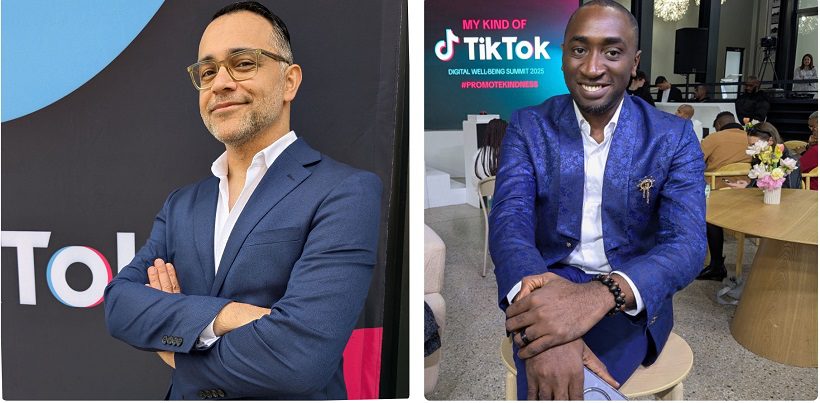
Up-and-coming content creators should not be obsessed with their numbers. This was part of the wisdom dished out by two of Africa’s top content creators, South Africa’s Dr Siyamak Saleh and Nigeria’s Dr Wales, during a chat with Technext.
Giving tips on what to expect as a young creator, Dr Siyamak advised that it is important for beginners to manage their expectations, especially regarding impressions and views. According to him, whether they get 100 or 500,000 views, they should always imagine speaking to a theatre full of people when making their videos.
“Whether you get 100 views or 500 views, have you ever spoken in front of an audience of like 20 or even 50? So when you get 100 or 500,000, just imagine having a whole theatre of people watching you do this. So never get obsessed with the numbers. Continue what you’re doing, and success will come,” Dr Siyamak said.
On his part, Dr Wales concurred using a perspective he describes as “the one-person syndrome.” Breaking it down, he advised that getting one view or one comment on one’s first contents should be considered as success. This is because it gives the creator something to build on.
Read also: Nigerian content creator Dr Wales shines on TikTok’s 50 most influential list
But consistency in creating is what will always move the needle. The way social media algorithms work these days is such that no content creator knows which content will blow up until it actually does. Therefore, it is the creator who consistently puts out content who stands a higher chance of going viral.
“Even if the first video that you make fails, you still have to make the next one. You don’t know the one that will go viral. The way the social algorithms work, it is only those who are in the constant game of consistency that make the breakaway eventually,” Dr Wales said.
Content creation is arguably one of the fastest-growing digital endeavours today. It has been so democratised that a social platform like Facebook is working assiduously to categorise all its users as content creators.
And true to that categorisation, many social media users are already acting as such. This has been enhanced by the advert-sharing and content monetisation systems of social media companies, enticing users to hustle for their share of the billions of advert dollars.
But both Siyamak and Wales began their journey into content creation when it didn’t even have a name, and there weren’t so many dollars to be had. Doctor Olawale Ogunlana (Dr Wales), a Lagos-based medical doctor, delved into medical content creation during the boring months of the COVID-19 lockdown.
At that time, there wasn’t any pathway to growth, nobody was paying content creators, and there were no partnerships. Thus, the motivating factor was passion and because there was a gap that needed to be filled and value to be created. There was also no real support, as there was nobody who had travelled that road before to provide mentorship.
“One of the biggest challenges at the very beginning was that there was no pathway to growth that once you’re done with this training, you work in this place for a few months, then you can begin to create content, and you know this agency will support you, and from there you’ll be able to grow and then be your own person. There was nothing like that,” he said.

Siyamak, a Cape Town-based medical doctor who began content creation at about the same time, concurs, stating that there was no blueprint to follow and they simply had to create it themselves.
“There was nobody to teach us all these things. I had to learn these things through trial and error. Like one video, I put too much information, doesn’t do well. One video, I have the picture not clear, doesn’t do well. So I’ve learned how to understand the audience and their psychology and what they’re looking for,” he said.
Prospective content creators should start with what they have
Dishing out more tips to prospective content creators, both Siyamak and Wales agreed that the first step towards becoming a content creator is to start. That is probably the most difficult and the most important part.
“Start with what you have and make it better. Your first video isn’t going to be your most amazing video, so why worry too much? Go ahead and get it done. Create it. It’s going to be rough. It’s going to look bad. But post it anyway. Because one thing about growth is that it has to be measured. And if you start at a high level, it means that you need to go up a higher level again,” Dr Wales said.
For content ideas, Wales advised upcoming creators to start by producing content around topics they are knowledgeable about and comfortable talking about. The knowledge is what would drive deep research into the content that would lead to
“I always recommend what you can talk about when they wake you up from sleep. So if someone wakes you up from bed and asks you a particular question regarding that, anything you can talk about for over one minute without breaking a sweat, is something you should create content about,” he said.
He also advocated leveraging AI tools, as there are many tools that can create scripts, proofread them and create amazing hooks that would resonate with audiences.
Speaking about equipment, they both agreed that high-quality gadgets can be quite expensive. However, beginners do not need to go for the expensive stuff for now unless they can afford it.
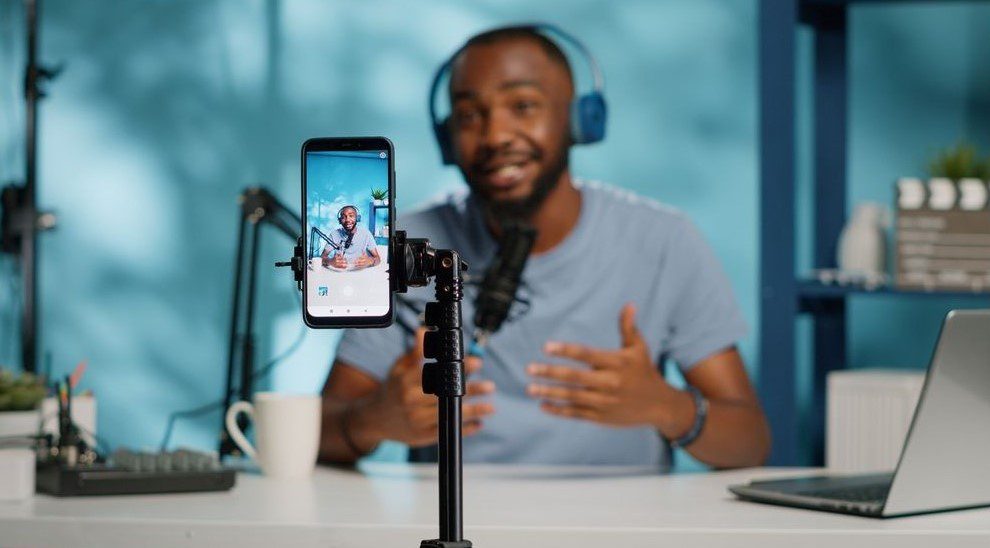
“If you’re using your cell phone, make sure you clean the lens so your pictures are clear. If you are speaking in your videos, make sure your voice is clear, or at least have some kind of microphone. You can buy microphones for like $5 or whatever it is. Or even a tripod, because nobody wants to watch a video where they cannot see clearly, where they cannot hear clearly, or when the picture keeps moving left and right,” Dr Siyamak said.

He also spoke of the need for enough light, noting that it is best to record in front of a window to provide natural light, which is the best. He also encouraged the use of simple language because people do not come to social media to rack their brains to digest information. Thus, information must be very simple and easily digestible.
Finally, it is important to grab the attention of your audience in the first two or three seconds of the video.
“Don’t start your videos with, ‘Hello everyone, my name is this, today is Tuesday.’ Whatever, nobody cares. You can do these things once you have a huge community where people know you.”
Otherwise, start a video with a hook. And you can Google hooks, and there are thousands of hooks online. You can use any of them to start your video,” he said.
Putting it all together
Many successful content creators had more failed videos than successful ones at the start. But creators are not just actors; they are also knowledge banks, and people come to them not only for trending videos but also for knowledge and information.
It is important to understand the need to create, regardless of whether it trends.
This brings us to the element of resilience, which is the fuel that drives a creator to keep creating even without trending. Describing the lesson on resilience as a big personal lesson, Dr Wales recalled that when he started, there were other creators doing well in his field. This left him feeling discouraged with a sense of imposter syndrome.
“Most times, I would second-guess myself. I would think that I’m not creating the best content and all that. But I had to beat through that mental block and say, you know what? I’m still going to create. I will create my videos. I will find my niche. I will stumble. Even though I stumble, I will know I’m going to get better the next time, right? So you need to be resilient to have a mindset that it is either 100 or nothing,” he said.
