


New data from Google reveals a sharp shift in how Nigerians are using Search and AI tools, not just to find information, but to actively learn creative skills, pick up new hobbies, and prepare for a more competitive global economy.
Google’s March 2026 trends show that searches related to painting and learning grew by 90% over the past year, while guitar learning queries rose by 80%. Calligraphy and embroidery have both emerged as breakout trends, and interest in AI music tools like Lyria 3 has surged significantly.
The data paints a picture of a population using their phones and laptops as personal tutors, learning at their own pace, on their own terms.
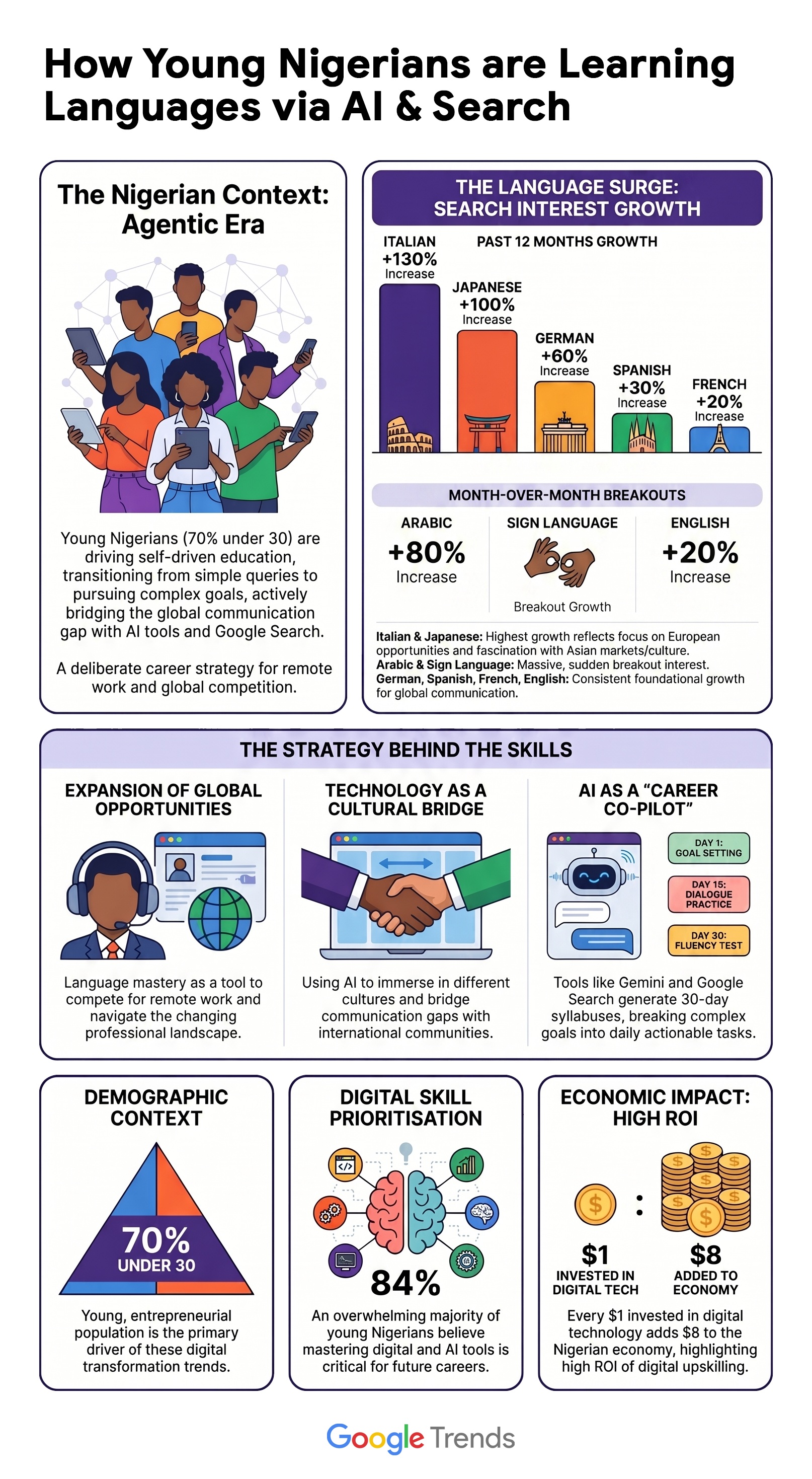
Language learning is equally telling. Interest in Italian has grown by 130%, Japanese has doubled, Arabic searches have jumped 80% month-on-month, and German, Spanish, and French are all seeing consistent growth.
Seventy per cent of Nigeria’s population is under 30, and the data suggests that the demographic is actively using language mastery as a strategy for remote work and global competition, not just casual curiosity.
Similar read: Nigerians can now use Google AI in Yorùbá and Hausa
Taiwo Kola-Ogunlade, Head of Communications and Public Affairs for West Africa at Google, said the trends reflect something deliberate.
“Nigerians are using Search and AI as 24/7 tutors to master high-demand skills and connect with the world,” he said. “This everyday resourcefulness is helping our entrepreneurial population achieve their highest ambitions.”

AI literacy is the biggest story in the Google data
While creative skills are growing fast, the most dramatic number in Google’s data is AI literacy, up 84% over the past 12 months. Searches combining AI with school, university, homework, and chemistry have all surged, with AI tutors emerging as a breakout trend. Searches for AI and business hit an all-time high in March 2026.
The implication is significant. Young Nigerians are not just consuming AI tools passively, they are actively trying to understand and use them as career assets. An overwhelming 84% of young Nigerians, according to the data, believe mastering digital and AI tools is critical for their future careers.
The economic case is also clear. Industry research cited by Google estimates that every dollar invested in digital technology generates eight dollars in economic value for Nigeria.

The country’s ICT sector already contributes over 16% to real GDP, and infrastructure like the Equiano subsea cable, which expanded Nigeria’s connectivity capacity by 20 times, is providing the backbone that makes intensive online learning viable at scale.
Google said it remains committed to providing tools that turn these ambitions into everyday skills for Nigerians across the country.
