





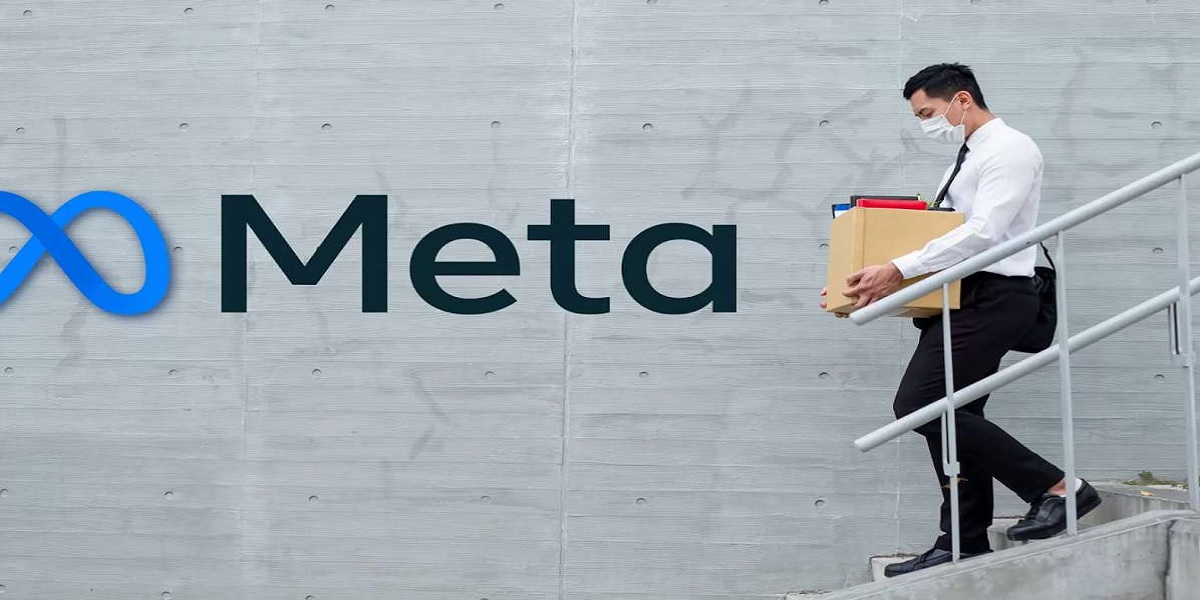
Meta Platforms, the parent company of Facebook, Instagram and WhatsApp, has announced a fresh round of job cuts. The layoffs due to commence 20 May targets about 8,000 staff members as the company steps up spending on artificial intelligence and pares back other parts of the business, as first reported by Bloomberg.
The job cuts, affecting roughly a tenth of its workforce, will take place alongside a hiring freeze affecting around 6,000 open roles, according to an internal memo sent to staff. Affected employees are expected to be notified on the same day.
The decision points to a change in priorities rather than a sudden downturn. Meta remains profitable but is funnelling increasing amounts of cash into AI infrastructure, an effort that is beginning to reshape how the company is staffed.
It has told investors to expect capital expenditure of between $115 billion and $135 billion in 2026, with total costs rising further. Much of that spending is tied to data centres, advanced chips and the engineers needed to run large-scale AI systems.

In the memo, chief people officer Janelle Gale said the cuts were intended to make the company “more efficient” as it increases investment elsewhere. She added that recent reports had left staff unsettled.
US employees affected will receive 16 weeks of base pay, plus two additional weeks for each year of service, as well as extended healthcare.
Meta prefers fewer people, more machines
Inside Meta, the direction has been signposted for some time. Chief executive Mark Zuckerberg has argued that advances in AI mean smaller teams can deliver work that once required far larger groups. That view is now feeding directly into staffing decisions.
Teams are being merged, management layers reduced and engineers reassigned to projects linked to AI development, including the company’s Llama models. The effect is gradual but clear: less reliance on traditional corporate functions, more on automated systems and computing power.
For many employees, the announcement will feel familiar. Meta cut more than 11,000 jobs in 2022 after a sharp slowdown in digital advertising. Another 10,000 roles went in 2023 during what Mark Zuckerberg called the “year of efficiency”.
There have been smaller reductions this year, including around 2,000 workers in two smaller rounds of layoffs in Reality Labs and parts of the company’s hiring and sales operations. But this round is not driven by the same pressures. Advertising has recovered, and the company is still generating strong profits. The cuts are instead about freeing up resources.

In practical terms, that means spending less on headcount and more on the systems expected to drive the next phase of growth.
A wider shift across the sector
The same calculation is being made elsewhere in the industry. Microsoft has begun offering buyouts to thousands of US employees. Amazon continues to trim its corporate workforce. Oracle and Block have also cut roles while increasing spending on AI.
In each case, the pattern is similar: rising investment in infrastructure, paired with tighter control of staffing.
Tasks once handled by junior developers, support staff or analysts are increasingly being automated. As those tools improve, companies are reassessing what roles they actually need.
That transition is beginning to weigh on employees. Some jobs are disappearing outright. Others are being redefined in ways that demand new skills. Reports that internal company data may be used to train AI systems have added to concerns, particularly among staff already facing redundancy.

For those affected, the immediate issue is practical, severance, job searches, and uncertainty. But the broader concern is harder to ignore. This does not look like a temporary cycle.
Meta’s latest cuts reflect a deeper change in how large technology companies are organised. The race to build advanced AI systems is expensive, and companies are choosing to fund it by shrinking other parts of the business. The trade-off is becoming clearer: fewer people, more machines.
With further reductions under consideration and rivals moving in the same direction, the shift is unlikely to stop here.
