




Nigeria has solidified its position as Africa’s premier Web3 talent powerhouse and a rising global force in the Solana ecosystem. According to SuperteamNG’s Q1 2026 Impact Report, the country now ranks #1 in Africa and #6 globally in Solana developer share. Nigerian builders represent a staggering 67% of all active Solana developers across the continent. This achievement stands out amid economic headwinds, signaling a maturing crypto scene that is shifting from consumption to creation and export of technology.
Beyond bragging rights, the numbers are translating into real money on the ground. In just the first three months of 2026, SuperteamNG, the most active Solana community chapter in Nigeria, channelled over $162,000 directly into the local economy through grants and bounties. This injection includes $88,500 from Solana Foundation Grants and $65,779 in ecosystem bounties, offering much-needed high-value income streams for young Nigerian talent at a time when traditional job opportunities remain scarce.
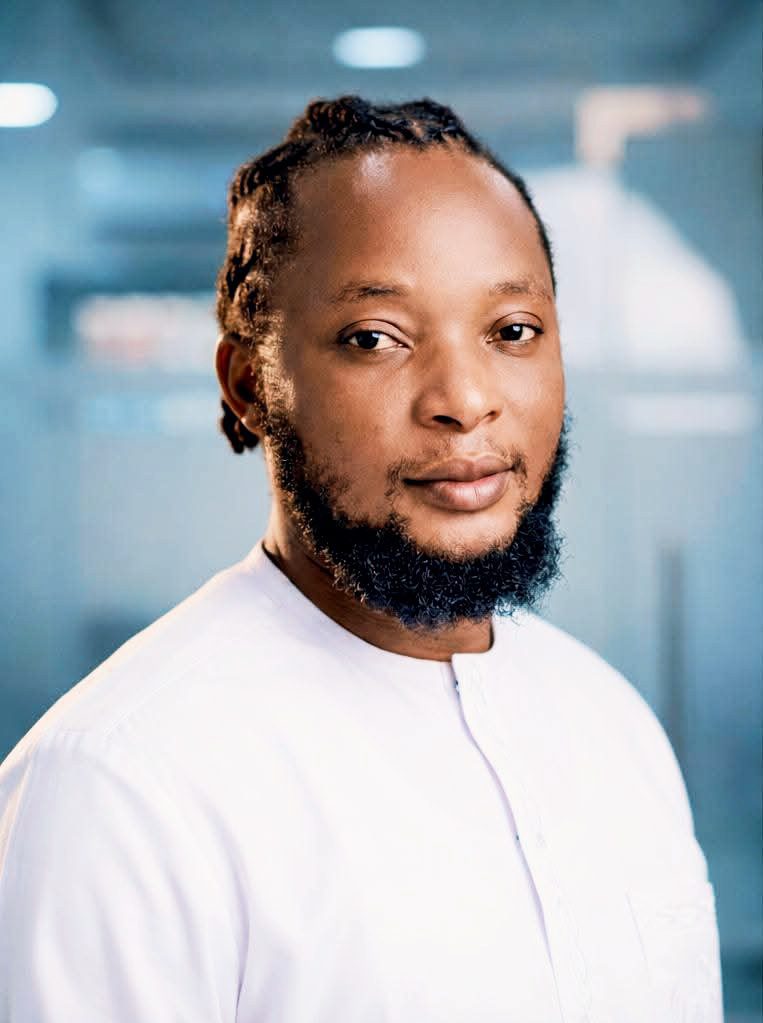
Harrison Obiefule, who leads the community, says, “Nigeria is no longer just a consumer of global technology; we are now a growing factory for it. Ranking first in Africa and sixth in the world by Solana developer share, amidst a challenging local economy, proves that our ‘Internet Capital Markets’ thesis is working. We are seeing a transition where Solana is no longer just an ‘option’ for Nigerian fintechs; it has become the default infrastructure for payments, savings, and global trade. This Q1 performance is a clear signal to the world that the future of decentralised finance is being written in Lagos, Enugu, Abuja, and across 30 Nigerian states.”
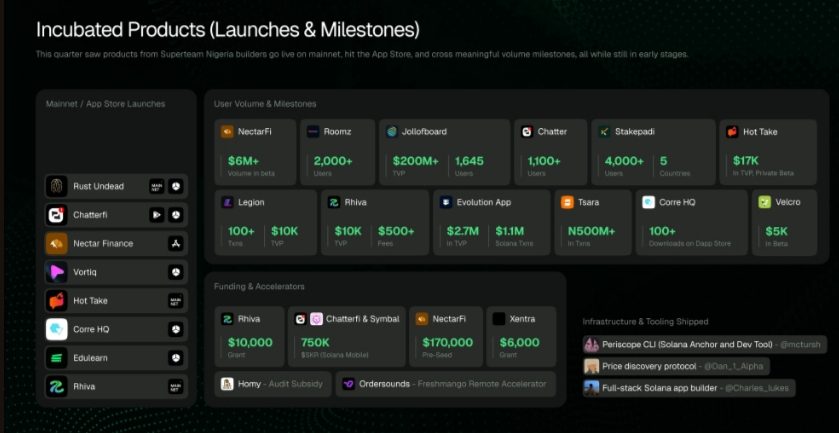
It’s one thing to claim talent dominance and another to see it show up in actual products that people are using. Two projects backed by the community, Evolution and NectarFi are already posting real numbers. Evolution crossed $4 million in total value processed, while NectarFi racked up over $6 million in volume during its beta run. These aren’t just testnet experiments; they’re handling stablecoin settlements and savings tools that speak directly to Nigerian realities like inflation and expensive remittances.
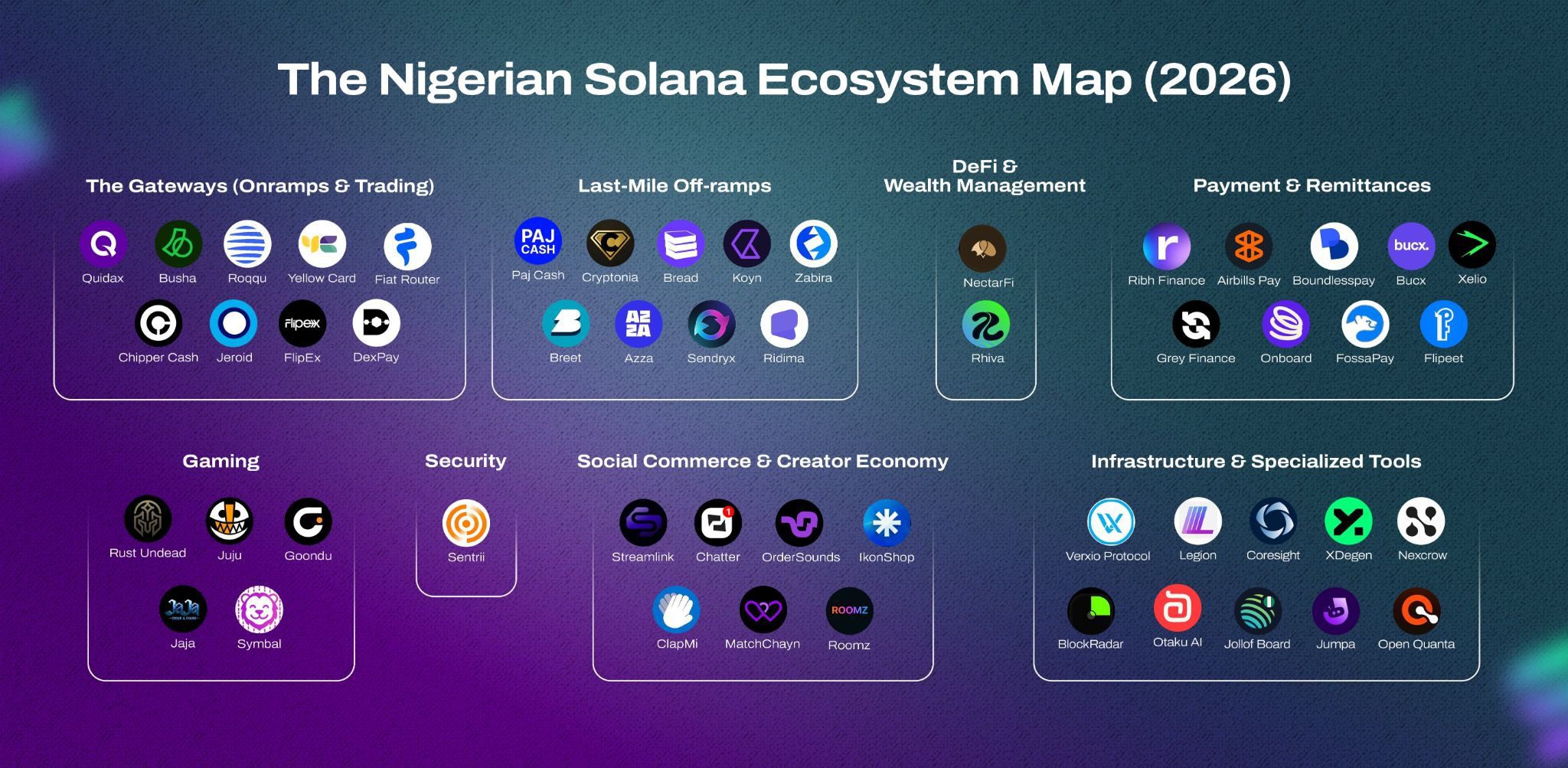
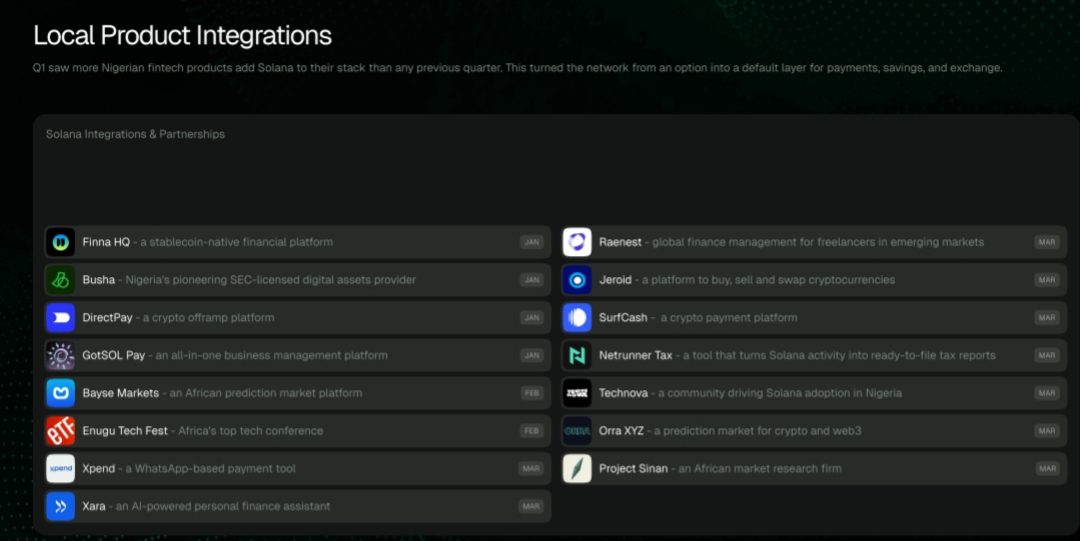
Fifteen existing fintech players, including names like Busha, Raenest, and Jeroid, also jumped in during Q1. They integrated Solana features for faster, cheaper transactions and even SOL-backed lending. In a market where every kobo counts, the combination of low fees and quick finality is proving attractive.
SuperteamNG didn’t stop at Lagos and Abuja either. They pushed into 30 states, running 186 events, a mix of physical meetups and virtual sessions. That level of reach matters in a country as large and diverse as Nigeria. They also kicked off a fresh 16-week developer bootcamp and set up guilds for writers and designers, trying to widen the talent pool beyond just coders.
What ranking top in Solana developer share actually means for the ecosystem
For Nigeria’s crypto scene, this Q1 snapshot points to a slow but important shift. For years, the conversation has been about adoption, how many people are buying Bitcoin or using USDT to beat inflation. Developer numbers are different. They suggest Nigerians aren’t just using the technology; they’re shaping it.
That 67% share of African Solana developers gives the country serious leverage. It makes it easier to attract more grants, more partnerships, and potentially more serious investment. It also creates a flywheel: successful local projects bring in money, which funds more builders, who ship more products.
The $162,000 injected in Q1 is small compared to what traditional sectors move, but context is everything. These are high-skill earnings going to young people who can work remotely for global opportunities while living in Nigeria. When you compound that over time, it starts adding up to real economic leverage for the beneficiaries.
SuperteamNG’s Q1 2026 Impact Report is more than a scorecard; it is evidence of a paradigm shift. Nigeria is harnessing blockchain not merely to navigate economic difficulties but to engineer solutions with global relevance. From developer dominance and capital inflows to real transactional scale and nationwide expansion, the pieces are aligning for a more self-sustaining, innovative crypto ecosystem.
