


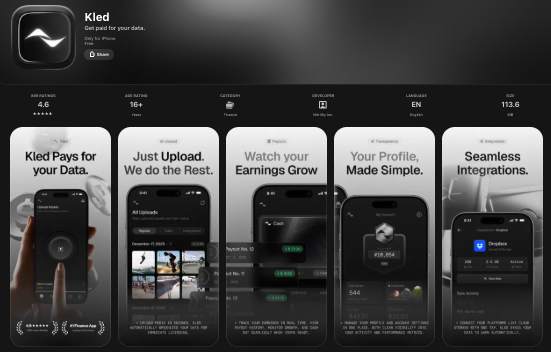
The post was framed as an apology. Avi Patel, founder of Kled, a data marketplace that pays users to upload photos and personal data for AI training, announced on May 4 that the company had removed its app from the Nigerian App Store and IP-banned the entire country.
The stated reason was a 95% fraud rate among Nigerian uploads, an extraordinary figure that Patel presented without methodology, without audit, and without any external verification.
That number is now travelling.

Kled is four months old. It secured a spot among the top 100 apps on the Nigerian App Store during that period, meaning Nigerian users were not a marginal cohort. They were among the platform’s most active early adopters, the kind of traction a seed-stage startup typically celebrates.
The company raised a $5.5 million seed round backed by investors including Sebastian Thrun, founder of Waymo, and Aglaé, the venture fund of Bernard Arnault. It was, by its own account, one of the fastest-growing human data marketplaces in the world. Nigeria was part of that story until it became a liability.
The mechanics of the product matter here. Kled operates as a two-sided marketplace connecting data sellers with data buyers. Individual users upload personal data through the mobile application and receive ongoing payouts as their data is licensed or sold to AI labs.
The Upload Handbook, which the company publishes, guides users toward content that displays “genuine emotion, natural human behaviour, and clear context,” with the platform emphasising that “older footage is valuable as temporal variety improves AI models.”
The incentive structure is cash for data, with payouts tied to upload volume and quality. Kled designed a system that rewarded scale, opened it to a market of over 200 million people facing real economic pressure, and then expressed surprise at the behaviour that followed.
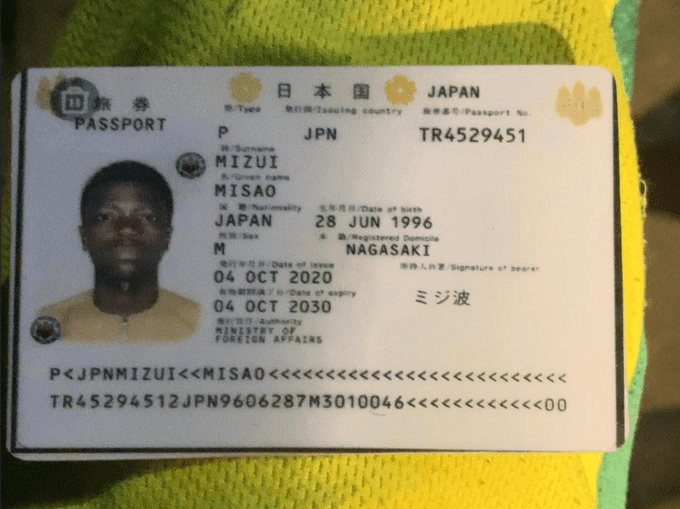
Patel’s post described a weekend in which Kled was “flooded with thousands of fake Japanese passports and identity cards with Nigerians photoshopped onto them” in the KYC system, which he called the final straw.
What he did not explain is how a company with self-described fast fraud detection, one that had collected over one billion assets and processed millions of daily uploads, arrived at a crisis point that required a full country ban rather than a targeted enforcement action.
If the fraud detection was working, it should have been filtering bad actors continuously. If it was not working well enough to do that, the company’s infrastructure, not its Nigerian user base, is the more accurate locus of failure.
Kled founder compares Nigeria to other countries in fraud claim
The comparison Patel offered compounds the problem. He noted that Malaysia, Indonesia, and the Philippines have a fraud rate below 10% across ten times the user base.
The contrast is meant to isolate Nigeria as the variable. But fraud rates in data marketplace contexts are not simply a function of user intent. They reflect incentive design, onboarding quality, KYC robustness, upload validation systems, and how clearly the platform communicates what constitutes acceptable data.
A platform that produces wildly divergent fraud rates across markets has a platform design question to answer, alongside whatever user behaviour question it is raising.
None of this exonerates fraud. Bad uploads, fake identity documents, and coordinated gaming of payout systems are real and costly, and Kled’s position as a seed-stage startup absorbing that overhead is genuinely difficult. But the decision to announce a 95% fraud rate publicly, by name, attached to an entire country, carries consequences that extend far beyond Kled’s operational problem.
Other data economy platforms will read that figure. Investors considering African market entry will read it. The number will be cited in future coverage of Nigerian users on emerging platforms, almost certainly without the context of a four-month-old startup’s unverified internal audit.
Kled’s own website, until recently, featured a Nigerian user named Daniel as a face of the platform, documenting everyday moments from a small village to earn through the app. The marketing positioned that story as proof of concept. The ban positions it as a problem to be managed. Both cannot be true at once, and the company has not reconciled them.
What Kled appeared to have done is make a product decision and frame it as a market failure. Those are different things, and the distinction matters to the 200 million people who will continue to seek access to global digital platforms long after Kled has moved on.
Read also: Coverage gap: Only 30% of 5G-enabled smartphones connects to 5G network in Nigeria
