


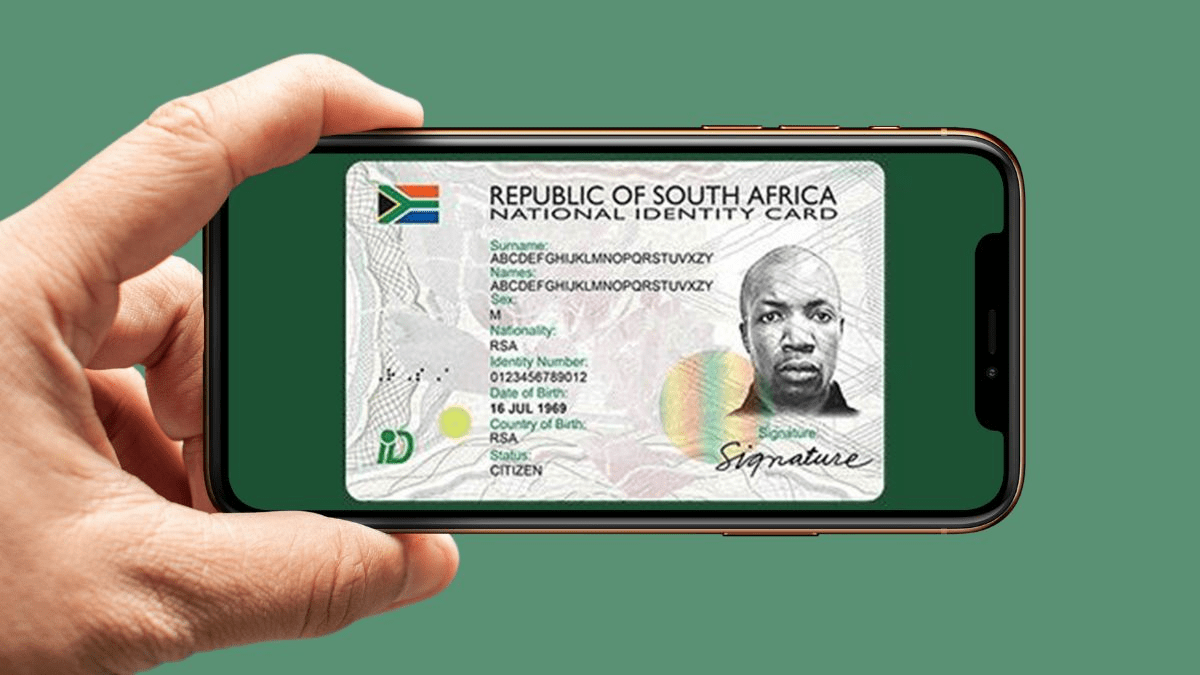
South Africa is making an important move to modernise the way its citizens verify their identity. Home Affairs Minister Leon Schreiber has released draft regulations for a new smartphone-based digital identity system. This system will allow South Africans to authenticate their identity using a mobile app, either instead of or in addition to their current smart ID card.
The proposed system, centred on an app called MyMzansi, was announced on Monday and is open for public feedback until June 6, 2026. Participation is completely optional, people can choose to use the app or continue with their physical ID cards without any changes.
For example, just as one can board a domestic flight using either a printed boarding pass or a QR code on a phone, South Africans would be able to prove their identity using either a physical card or a verified digital credential on their device. The digital option simply adds convenience, especially for everyday tasks like opening a bank account or registering for a service.

To obtain a digital ID, South African citizens aged 16 and older can go to an authorised enrollment location, such as a Home Affairs office, South African embassy, port of entry, or an accredited bank branch. The enrollment process includes verifying documents, capturing fingerprints and a facial scan, and confirming a phone number and email address.
The digital ID will be linked to a specific device for security. Once issued, it is valid for five years and can be renewed easily through the MyMzansi app using facial recognition, eliminating the need for a physical visit.
To prove identity, citizens can present the credential via QR code, Bluetooth, or near-field communication (similar to contactless payment technology).
South African banks and telcos may receive automatic digital ID updates
The proposal highlights that banks and mobile operators, referred to as “trusted entities,” would be able to quickly verify a person’s identity using South Africa’s national population register. They would also receive automatic updates if a person’s registered details change.
If you update your address in the national population register, your bank could be informed automatically. You won’t need to log into an app, call customer service, or visit a branch. This is a big change from how identity data has traditionally been managed.
The draft regulations impose strict limits on the use of this data. Trusted entities are specifically prohibited from using identity information for profiling, commercial purposes, or open-ended intelligence gathering.
Law enforcement agencies can only access population register data through established legal channels, such as warrants and court orders, and not directly through this system. Additionally, audit logs must be maintained for every access to the register for a minimum of seven years.

Penalties for misuse are included. Enrolling under a false identity, presenting someone else’s credentials, or attempting to bypass the liveness detection system could lead to a fine or a prison sentence of up to two years.
The minister stated that the goal is to provide “Home Affairs at home.” This will reduce the need for physical visits to government offices for routine tasks related to identity. The government must also make sure there are enrollment points in every municipality. The regulations clearly say that the system must include everyone, even those without smartphones or reliable internet access.
If the public supports the draft, the regulations will start on a date set by the minister.
Also read: GSMA to launch ₦55,000 4G smartphones in Nigeria and other African countries
