




There is a moment in almost every serious conversation about Nigeria’s security crisis when the weight of it becomes undeniable.
Professor Freedom Onuoha, Coordinator of the Security, Violence and Conflict Research Group at the University of Nigeria, Nsukka, sat down on Channels Television’s BEAM programme this morning to discuss a question that has become impossible to ignore: is technology expanding the dangers Nigeria faces, and can indigenous startups genuinely change the outcome of a war that has lasted nearly two decades?
The conversation was one of the most substantive discussions on Nigerian security aired in recent memory. It deserves a proper engagement.
The numbers first because they matter
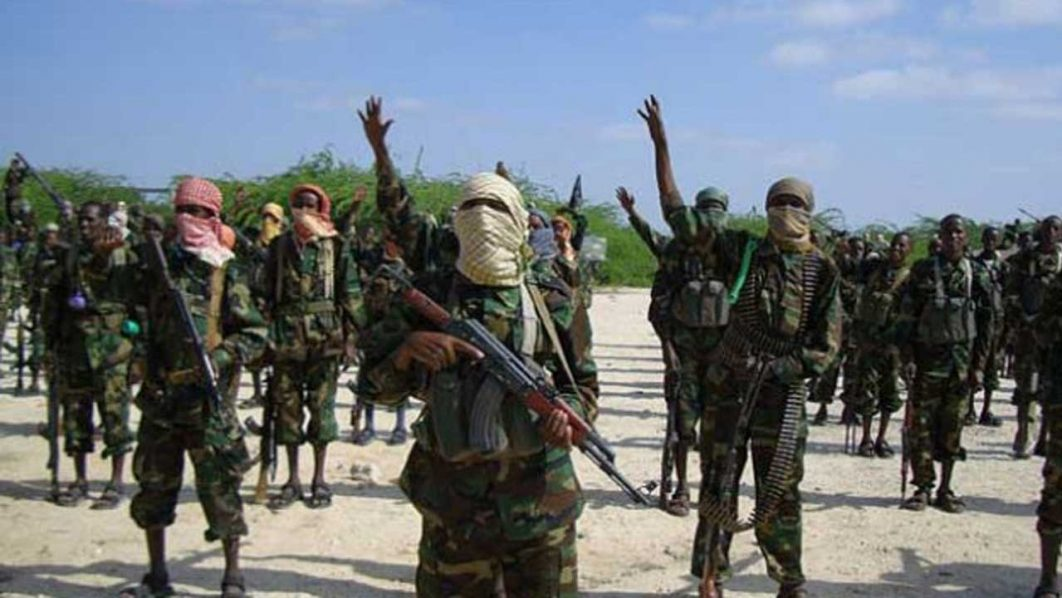
Before debating solutions, it is worth establishing what Nigeria is actually dealing with. Boko Haram, founded by Mohammed Yusuf in 2002 and launched into full insurgency in 2009, has produced one of the most sustained campaigns of violence in African history.
According to data compiled by the Armed Conflict Location and Event Data Project (ACLED), just under 53,000 civilians had been killed in targeted political violence in Nigeria since 2009 as of 2025. The Council on Foreign Relations‘ Nigeria Security Tracker puts the figure even higher: from June 2011 through June 2018 alone, 37,530 people were killed across 2,021 documented incidents, nearly double the commonly cited estimate of 20,000.
At its peak between 2014 and 2015, Boko Haram was considered the world’s deadliest terrorist organisation by number of people killed, with approximately 11,500 fatalities recorded in 2015 alone. Violence has declined from that peak, with approximately 2,700 Boko Haram-related fatalities recorded in 2018, but the threat has not gone away.
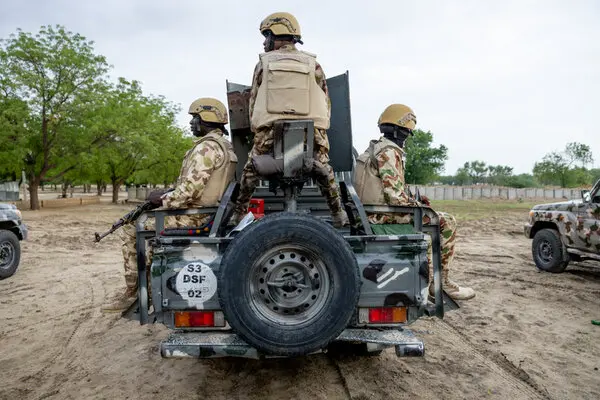
In March 2025, ISWAP began a renewed offensive in Borno State, carrying out sophisticated assaults on military installations, towns, and roadways and seizing control of strategic sites.
More alarmingly, the nature of the threat has evolved. In 2025, ISWAP began deploying weaponised drones in its attacks against military targets, including a March 24 attack on a Nigerian military forward operating base in Borno state. This marked a worrying development, as the group had previously used drones only for surveillance and propaganda. The insurgency has also spread well beyond Nigeria’s borders, drawing in Cameroon, Chad, and Niger into what is now effectively a regional conflict across the Lake Chad Basin.
Over two million people have been displaced since 2009, and more than seven million remain in need of humanitarian assistance. These are not abstract statistics. This is according to the Global Centre for the Responsibility to Protect. They represent communities erased, children abducted, over 2,000 children have been abducted or kidnapped since 2014 alone, and an entire generation in Nigeria’s northeast is growing up knowing little else.
The missed opportunity Professor Onuoha named, and why it still matters
One of the most provocative arguments Professor Onuoha made on BEAM was about historical amnesia. He pointed to the Nigerian Civil War of 1967 to 1970, and specifically to the Biafran side’s remarkable capacity for indigenous innovation under siege, from improvised weapons production to local petroleum refining.
When the war ended, Nigeria declared “no victor, no vanquished,” but quietly discarded the engineering talent and institutional knowledge that had been assembled. A potential hub for indigenous security defence technology, perhaps among the most advanced on the continent at that time, was simply abandoned.
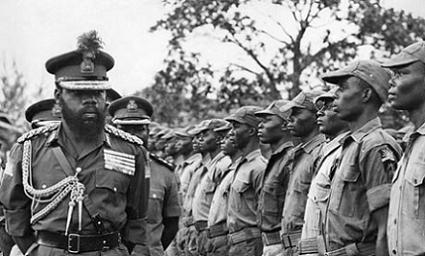
The parallel he was drawing is sharp. Nigeria is now fighting a different kind of war, not against a secessionist movement, but against a decentralised insurgency that has killed tens of thousands, displaced millions, and is now flying weaponized drones. And from the ashes of that tragedy, something is emerging. The question is whether Nigeria will seize this moment or repeat the mistake of 1970.
Terra Industries and what indigenous defence tech actually looks like now
This is where the conversation gets genuinely interesting, because the startups Professor Onuoha referenced are no longer hypothetical.
Terra Industries, a Nigerian defence-technology startup that builds drones and monitors locations using proprietary software, has signed a memorandum of understanding with the Defence Industries Corporation of Nigeria (DICON) to establish a joint venture company focused on localising the production of advanced security systems.
The partnership, signed in February 2026, provides for the creation of a joint venture company jointly owned by DICON and Terra, aimed at establishing advanced production and assembly lines within Nigeria for unmanned aerial vehicles, cybersecurity solutions, robotics platforms, and related software and hardware systems.
The startup has also unveiled interceptor drones, mine-clearing unmanned vehicles, and battlefield intelligence software designed for counter-insurgency operations. The company’s chief executive, Nathan Nwachuku, said the systems were built to respond to evolving threats, including improvised explosive devices and drone-based attacks that have become more common in Nigeria’s conflict zones.
Similar read: Terra Industries to supply high tech security equipment and training to Nigerian defence forces
Terra is now building a 34,000-square-foot manufacturing facility in Accra, Ghana, designated Pax-2, which the company says will be the largest drone manufacturing plant in Africa when it becomes operational in June 2026. The facility targets a combined annual output of 50,000 units by 2028 and is expected to create 120 engineering jobs in Ghana.
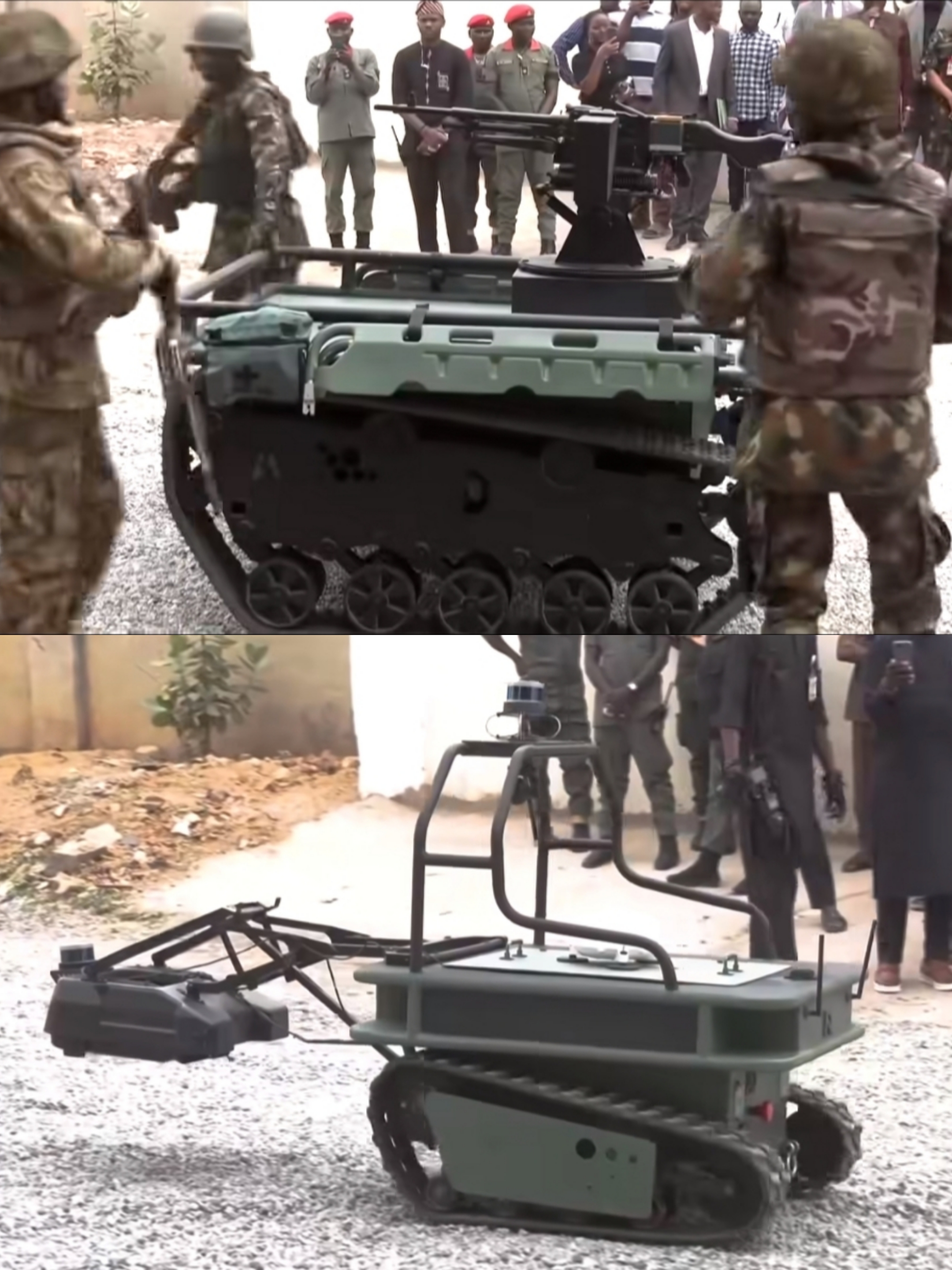
This is not a concept company. It is building, deploying, and already generating revenue. And it is being driven by Nigerian founders, which matters enormously for the argument Professor Onuoha was making.
The surveillance concern is real and should not be dismissed
Professor Onuoha’s response to questions about mass surveillance, security and political control was revealing. His argument, essentially, was that Nigeria should prioritise building the technology first and deal with the legal and civil liberties framework afterwards. He reasoned that even without these indigenous security systems, Nigerian security agencies already have the capacity to monitor organisations and citizens, so the real gain from building locally is strategic and economic, not a new threat to freedom.
This is a partially defensible argument. He is right that surveillance infrastructure already exists, and that waiting for a perfect regulatory framework before developing any technology is a luxury that countries under active insurgent attack cannot easily afford. But it underestimates a critical risk.

The moment a government has domestically produced, scalable surveillance technology, the political incentive to deploy it against dissent, press freedom, and opposition increases significantly. The history of states acquiring such technology, from Ethiopia’s use of spyware against journalists to the documented misuse of Pegasus across multiple African governments, suggests this is not a hypothetical concern.
On the question of whether future wars will be won by soldiers or algorithms, Professor Onuoha gave the most grounded answer of the conversation. His position was that technology will reduce the physical footprint required on the battlefield, fewer soldiers exposed, more security operations conducted remotely, but that human judgment will remain irreplaceable, particularly in complex, ambiguous environments.
He cited a striking example from a Pentagon simulation, where soldiers who disguised themselves as slowly moving Christmas trees and others who hid beneath cattle successfully evaded AI detection systems that were operating on pattern recognition. The AI, trained to identify human movement signatures, could not detect threats that broke its expected parameters.
The lesson is not that AI is useless in warfare, but that it is brittle in ways that experienced human operators are not.

Professor Onuoha highlights what needs to be done to establish safe security
Professor Onuoha identified three systemic obstacles that consistently undermine Nigerian strategic security ambitions: corruption, poor elite cohesion, and the failure of the government to consistently support critical industries over the long term. He did not dress them up. He called them what they are.
Terra Industries is impressive. The DICON partnership is a genuine institutional step. But the graveyard of Nigerian government technology initiatives, well-funded at launch and quietly abandoned over time, is long.
For the Terra partnership to succeed, it requires consistent procurement commitments, not just symbolic MoUs. A reliable regulatory and procurement pipeline is crucial to protect defence technology contracts from political interference, which has historically hampered Nigeria’s defence spending. Furthermore, a national dialogue on civilian oversight of surveillance systems is essential.
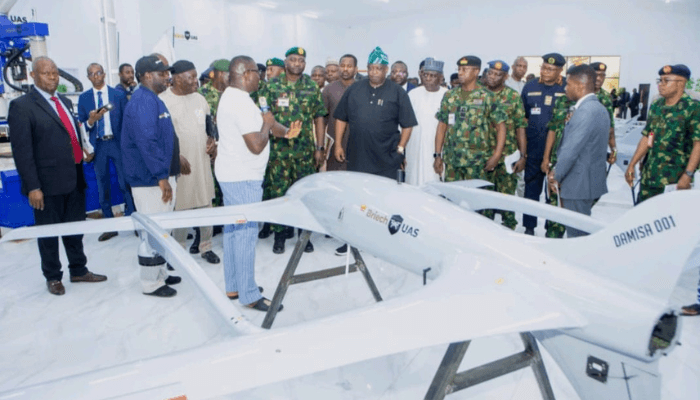
Nigeria spent decades importing its security solutions from Turkey, China, the United States, and Pakistan, sometimes waiting years for deliveries, facing foreign exchange pressures, and building no local expertise in the process. The insurgency that emerged from that gap has cost over 53,000 lives and displaced over two million people.
The argument for building indigenous capacity is no longer theoretical. The cost of not building it has already been paid. Nigeria’s ability to learn from its history will be determined by whether it seizes this opportunity or repeats past failures.
