



African telecommunications giant, Safaricom Plc, reported a 67% increase in net income for the year ending March 2026, with profits reaching 99.7 billion Kenyan shillings (approximately $772.3 million). This result surpassed analyst expectations of 92.4 billion shillings, marking the company’s third straight year of profit growth.
A key factor behind the performance was the reduction in losses from its Ethiopian operations, where startup losses were cut by half.
The performance of the Vodacom-owned telecom company shows two main stories in its markets. First, its business in Kenya is doing very well. Second, its operations in Ethiopia have finally grown enough to benefit from its size.

Safaricom Kenya hits its strongest numbers yet
Kenya continues to be the backbone of the company, delivering its best results ever. Service revenue in Kenya increased by 10% year-over-year, reaching Ksh400.8 billion. Key operating profitability, measured by EBITDA, rose by 13.7% to Ksh233.9 billion. Operating income also grew by 15.3% to Ksh182.3 billion, and net income saw a notable increase of 24.7%, totalling Ksh119.1 billion.
M-Pesa, Safaricom’s mobile money service, is a key driver of its success. In Kenya, where many people lack traditional bank accounts, M-Pesa acts as a wallet, payment terminal, and savings tool. For example, a market trader in Nairobi can receive payments, pay suppliers, and save daily earnings without visiting a bank. Each transaction generates revenue for Safaricom.
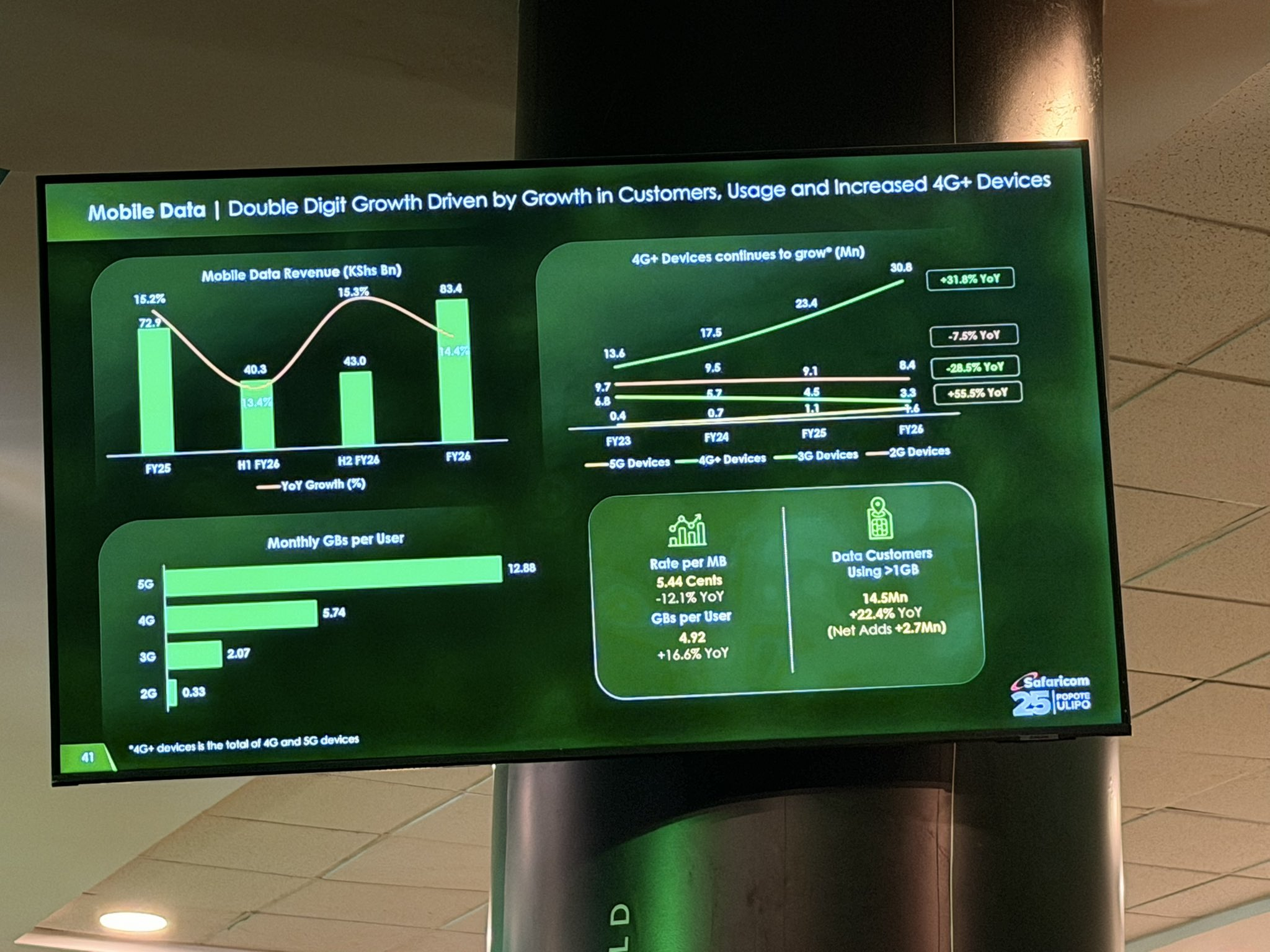
As more Kenyans use mobile money and data services, that revenue continues to grow. Additionally, the rise in smartphone use and increased data consumption are boosting revenue even further.
Safaricom Ethiopia finds its footing after years of startup losses
The situation in Ethiopia has been challenging, but there has been a positive shift. When Safaricom entered the market about four years ago, it faced significant obstacles: no brand recognition, a lack of infrastructure, and uncertain customer demand.
The company had to invest heavily in building towers, hiring staff, and navigating regulations, all while trying to convince users to switch from established providers. This significant investment took a toll on group earnings for several years.
Similar read: Safaricom’s M-PESA hits 40 million active customers in Kenya after 19 years of operation
That picture is changing. Safaricom Ethiopia has grown to 13.6 million active customers over 90 days, 10.7 million monthly active users, and 5.2 million M-Pesa customers, with data usage, voice traffic, and mobile money adoption all posting significant year-on-year growth.
As the customer base grows, fixed costs like towers and licences are spread across more users, making each customer incrementally cheaper to serve. Ethiopia is now crossing that threshold.

Safaricom’s brand strength is also holding firm. Brand Finance recently ranked it 5th globally among the world’s strongest telecom brands, with a Brand Strength Index score of 88.1, reflecting how trusted, liked, and recommended the operator is among its users.
The company also secured regulatory approval to raise Ksh40 billion ($308 million) through a corporate bond to upgrade infrastructure across Kenya and Ethiopia, signalling confidence that the Ethiopian market will continue to mature and that the Kenyan business remains strong enough to support continued expansion.
