






The Nigeria Revenue Service, in collaboration with the Joint Revenue Board (JRB), has announced the implementation of a unified Taxpayer Identification (Tax ID) system that will make it mandatory for every taxable individual and business in Nigeria to obtain a single tax identity number.
This means Nigerian workers, entrepreneurs, freelancers, companies, and small business owners will now operate under a centralised digital tax framework designed to unify taxpayer records, improve compliance, and strengthen the government’s ability to track tax-related activities at the federal and state levels.
However, this was disclosed in a public notice issued by the NRS and JRB on Monday, in which both agencies stated that the new Tax ID system will replace the existing Tax Identification Number (TIN) validation structure.
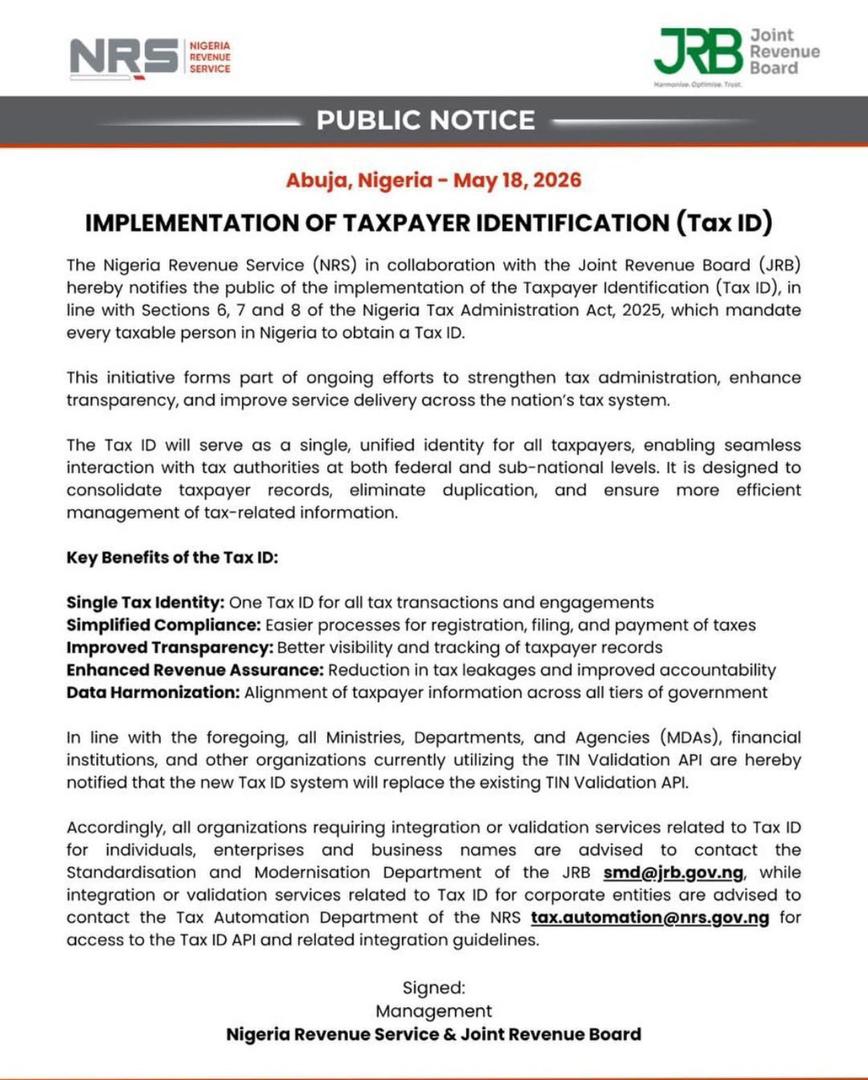
According to the NRS, the initiative is in line with Sections 6, 7 and 8 of the Nigeria Tax Administration Act, 2025, which mandate every taxable person in Nigeria to obtain a Tax ID.
As a taxpayer in Nigeria, the new policy could affect how you register taxes, verify financial records, access certain services and interact with government agencies, especially as the country moves towards a more digitally connected tax administration system.
Read also: NRS to launch new digital platform to enhance tax transparency
Key benefits of having a unified tax ID
According to the NRS, the new unified tax policy is expected to simplify tax administration and create a more coordinated system for managing taxpayer information across the country.
The agency explained that the Tax ID will serve as a single identity for all tax-related transactions and engagements, eliminating the need for multiple taxpayer records across different agencies and levels of government.
The policy is also expected to make tax compliance easier for individuals and businesses through simplified processes for tax registration, filing and payment. In addition, the unified system is designed to improve transparency by giving tax authorities better visibility into taxpayer records and activities.
The NRS further stated that the initiative would strengthen revenue assurance by reducing tax leakages, improving accountability and ensuring that taxpayer information is harmonised across federal, state and local government systems.
As part of the transition, the agency noted that the new Tax ID system will replace the existing TIN Validation API currently used by Ministries, Departments and Agencies (MDAs), financial institutions and other organisations for taxpayer verification and validation services.
Consequently, organisations that require integration or validation services for individuals, enterprises and business names have been directed to contact the Standardisation and Modernisation Department of the JRB, while companies seeking integration services for corporate entities are expected to contact the Tax Automation Department of the NRS for access to the new Tax ID API and implementation guidelines.
How Nigerians can adjust to the new tax ID system
Ever since the announcement of Nigeria’s new tax reforms and the implementation of a unified Tax ID system, many Nigerians have expressed concerns about what the changes could mean for workers, entrepreneurs, freelancers and businesses operating in an increasingly digital economy.
Between the rollout of the mandatory Tax ID policy and the transition to a fully digital tax administration structure, taxpayers are now expected to align with a system that centralises registration, filing, verification and payment processes under a single digital identity.
For many Nigerians, especially those in the informal sector, the shift may initially appear overwhelming due to growing concerns around digital literacy, compliance requirements and financial transparency.
Although obtaining a Tax Identification Number (TIN) has largely been digital in recent years, the new reform goes beyond registration by integrating taxpayer records into a unified national database that connects individuals, businesses, financial institutions and government agencies under one tax framework.
To adjust to the new system, Nigerians may need to become more intentional about maintaining proper financial records, separating personal and business transactions, updating taxpayer information and understanding their tax obligations.
Small business owners, freelancers and digital entrepreneurs may also need to adopt digital payment and bookkeeping systems that make tax filing and verification easier.
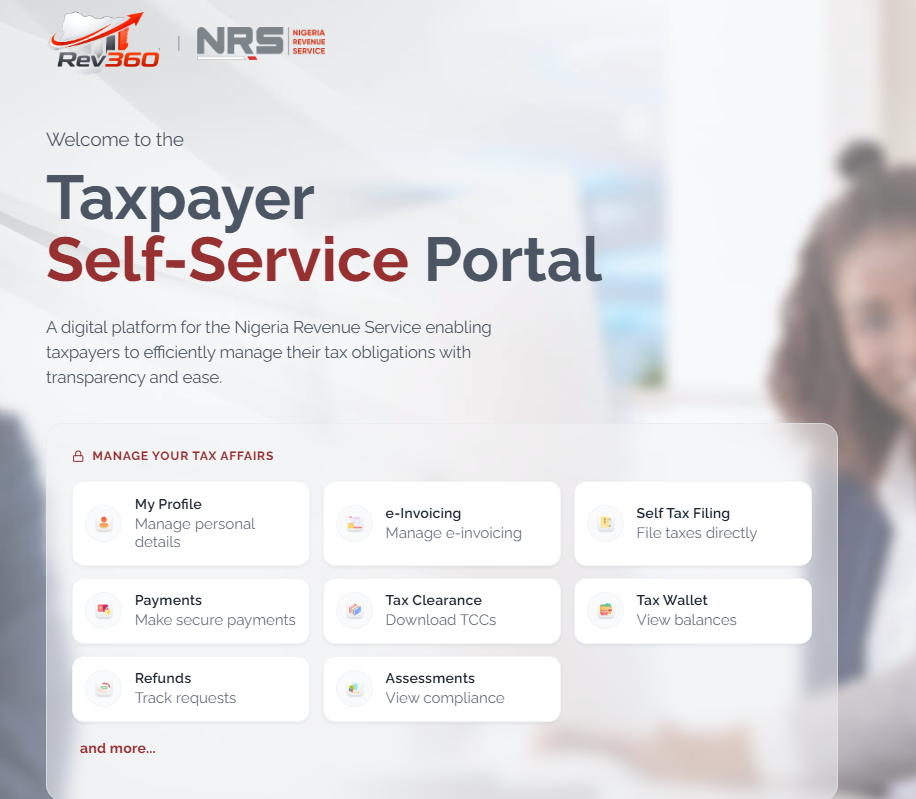
The transition is also being supported by the new digital infrastructure introduced by the Nigeria Revenue Service. On Wednesday, April 15, 2026, the NRS announced plans to launch Rev360, a next-generation digital tax administration and payment platform aimed at improving efficiency, transparency and taxpayer experience across the country. The platform officially went live on Thursday, April 30, 2026.
According to the revenue agency, Rev360 was developed as a more advanced and integrated ecosystem designed to support faster processing, improved compliance, smarter decision-making and seamless interaction between taxpayers and the agency. The platform is also expected to provide users with more flexible options for tax registration, payment and monitoring.
This means Rev360 could become a major tool in helping Nigerians transition into the new digital tax era by simplifying tax processes, reducing paperwork and creating easier access to tax-related services through a centralised online platform.
Read also: NRS debunks viral claims of new tax on vehicles
