





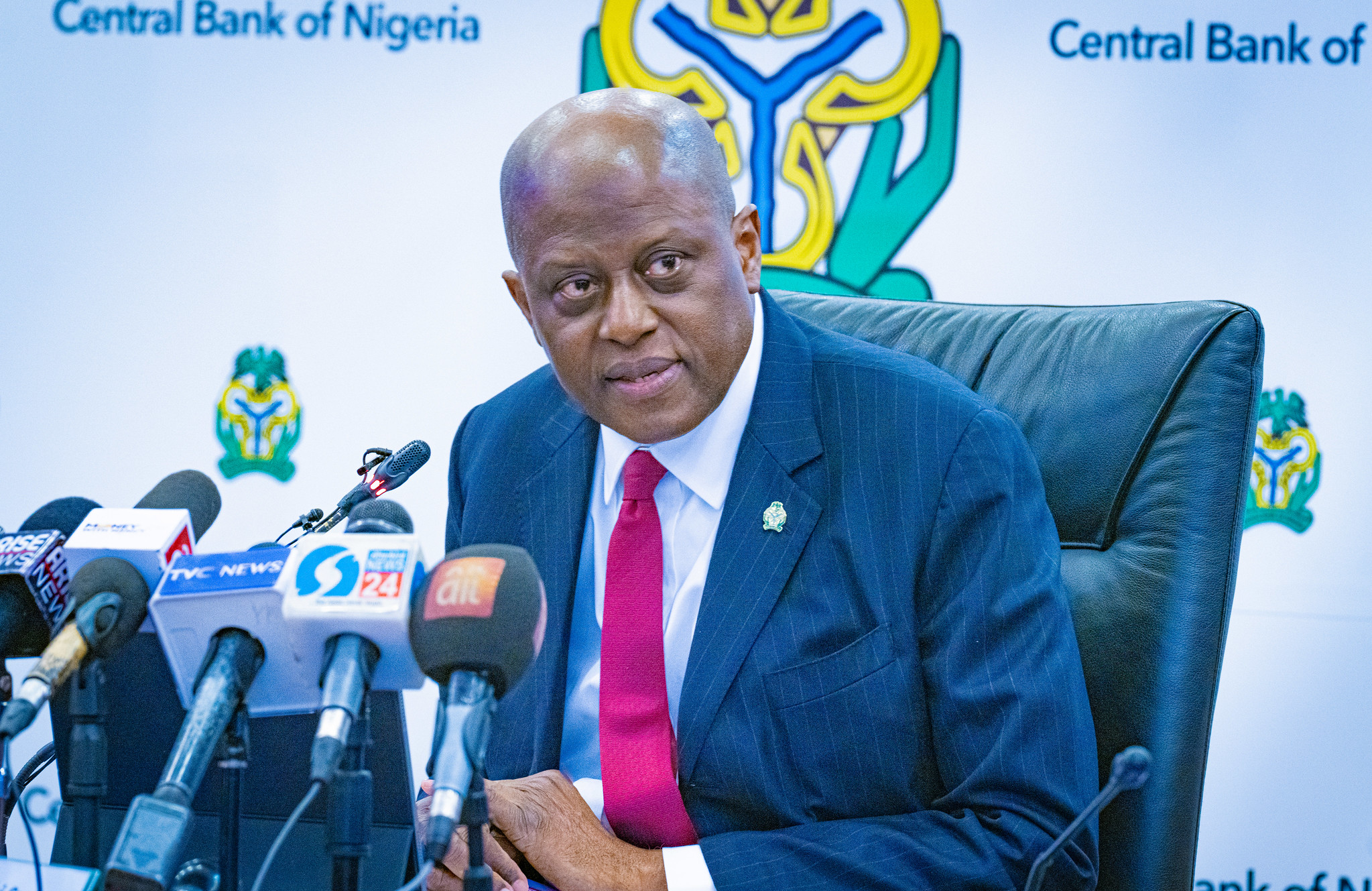
Every two months or so, a group of economists and financial experts gather at the CBN headquarters in Abuja to make a decision that quietly touches almost every Nigerian’s life, from the interest rate on your loan to the price of bread in your market.
The Monetary Policy Committee (MPC) of the Central Bank of Nigeria met for the 305th time on Wednesday, May 20, 2026, and its decision to hold the benchmark interest rate at 26.5% is worth understanding properly.
MPR stands for Monetary Policy Rate. Think of it as the CBN’s master dial, the one lever it turns to either slow down or speed up the Nigerian economy, depending on what the country needs at any given time.
Here is the simplest way to understand it. The CBN is the bank for all other banks in Nigeria. When Access Bank, GTBank, or any other commercial bank needs to borrow money, they borrow from the CBN. The MPR is the interest rate the CBN charges those banks for that borrowing. And here is where it connects to you: when the CBN charges banks more to borrow, those banks turn around and charge you more to borrow, too. When the CBN charges banks less, loans for businesses and individuals become cheaper.

So the MPR is essentially the price of money in Nigeria. When it goes up, borrowing becomes more expensive across the entire economy. When it goes down, it becomes cheaper.
But why would the CBN ever want to make borrowing expensive? Because of inflation.
Inflation is what happens when too much money is chasing too few goods. Prices rise because people have more cash to spend than there are things to buy. One of the CBN’s primary jobs is to prevent inflation from running out of control. Its main tool for doing that is the MPR.
Raise the rate, and borrowing becomes more expensive, meaning people and businesses spend less money, which in turn stabilises prices. Lower the rate, and more money flows into the economy, businesses grow, but prices can also rise if things get out of hand. It is a constant balancing act.
Picture it this way. Imagine the economy is a car and inflation is the speed. The MPR is the brake pedal. When the car is going too fast, meaning inflation is rising dangerously, the CBN presses the brake by raising the MPR. When the car is going too slow, meaning the economy is sluggish, and businesses are not growing, the CBN eases off the brake by cutting the rate.

What CBN’s decision on Wednesday actually means
At its 305th meeting, the MPC voted to hold the MPR at 26.5%. CBN Governor Olayemi Cardoso announced the decision simply: “Retain the monetary policy rate at 26.5 per cent.”
To understand why that matters, you need to know where Nigeria has been. The CBN spent much of 2024 and early 2025 aggressively raising interest rates in an effort to tame some of the worst inflation Nigeria had seen in decades. At its peak, the MPR reached 27.5%.
In February 2026, the committee made its first rate cut in years, reducing the MPR by 50 basis points from 27% to 26.5%, signalling that inflationary pressures were beginning to ease. Before that, the committee had held the rate at 27% in November 2025. It has now retained the 26.5% rate again at its latest meeting.
The hold on Wednesday tells you two things. First, the CBN is not yet confident enough to cut rates further. Second, it is not alarmed enough to raise them again either. It is a wait-and-see position.

Why the caution? Because Nigeria’s inflation has not finished moving. The National Bureau of Statistics reported that headline inflation rose marginally to 15.69% in April 2026, up from 15.38% in March 2026. That is a small move, 0.31 percentage points, but it is a move in the wrong direction. Cutting rates now would risk pumping money back into an economy where prices are still creeping upward. So the CBN holds.
How does this affect the common man?
If you have a loan, a mortgage, a business loan, or a personal loan, the interest rate on that loan is tied directly or indirectly to the MPR. Banks typically price their loans at a spread above the MPR, meaning that at 26.5%, commercial lending rates are sitting somewhere between 28% and 35% for most Nigerians.
At those rates, borrowing ₦10 million for a business means paying back significantly more than ₦13 million over a year in interest alone. For small businesses that depend on credit to buy stock, pay staff, or expand operations, that cost is crushing.
For the average salaried worker, the impact is more indirect but still real. When businesses cannot borrow cheaply, they grow more slowly. When they grow more slowly, they hire fewer. When they hire fewer and spend less, economic activity slows, and the pressures on your income increase even if your salary does not change.
Read also: CBN ends ATM maintenance charges, raises ATM card fee to ₦1,500 in new rules
On the other hand, high rates are good news if you have savings. Banks competing to attract deposits will offer higher returns on fixed deposits and savings products when the MPR is elevated. If you have money sitting in a high-yield savings account or a fixed deposit, your return today is better than it would be in a low-rate environment.

For the broader economy, the CBN is threading a needle. Inflation is not yet under control enough to justify aggressive rate cuts. But rates high enough to choke off business investment and consumer borrowing for too long will slow growth in an economy that needs to expand. Wednesday’s hold reflects that tension, the CBN is not ready to press on the accelerator, but it is not pressing harder on the brake either.
The next MPC meeting will be one to watch out for. If inflation continues to ease in May and June, a further rate cut before the end of the year becomes more likely. If prices pick up again, the CBN may hold even longer, or in a worst-case scenario, reverse course. For now, at 26.5%, the price of money in Nigeria stays exactly where it was.
