





In 2017, Jephte Ioudom Foubi was running JuuBots AI in Cameroon, building chatbots for beauty brands and entertainment companies. The work was exciting; the learning curve was steep, but something was missing: accountability.
At the time, Cameroon’s AI ecosystem was still in its infancy. Clients were not asking about uptime guarantees, data governance, security frameworks, or regulatory compliance. If a system failed at 2 am, there were few real consequences.
“The truth is the Cameroonian market in 2017 was not mature for AI and cloud projects,” Jephte says. That realisation shaped the rest of his career. It pushed him from Central Africa’s fast-moving but loosely regulated startup ecosystem into the demanding world of European enterprise engineering.
Today, as founder of FOUBSLABS, Jephte believes African founders can compete globally in deep tech, but only if they focus on the often-overlooked foundations of infrastructure, reliability, and governance.
His transition began at Nova Information Management School in Portugal before a pivotal role as a data engineering consultant at Accenture.
The difference in expectations was immediate.
Working with European financial institutions meant every system failure carried serious consequences. A bug was no longer a minor inconvenience. It could become a regulatory issue. The environment forced him to think differently about system design, uptime, and operational resilience.
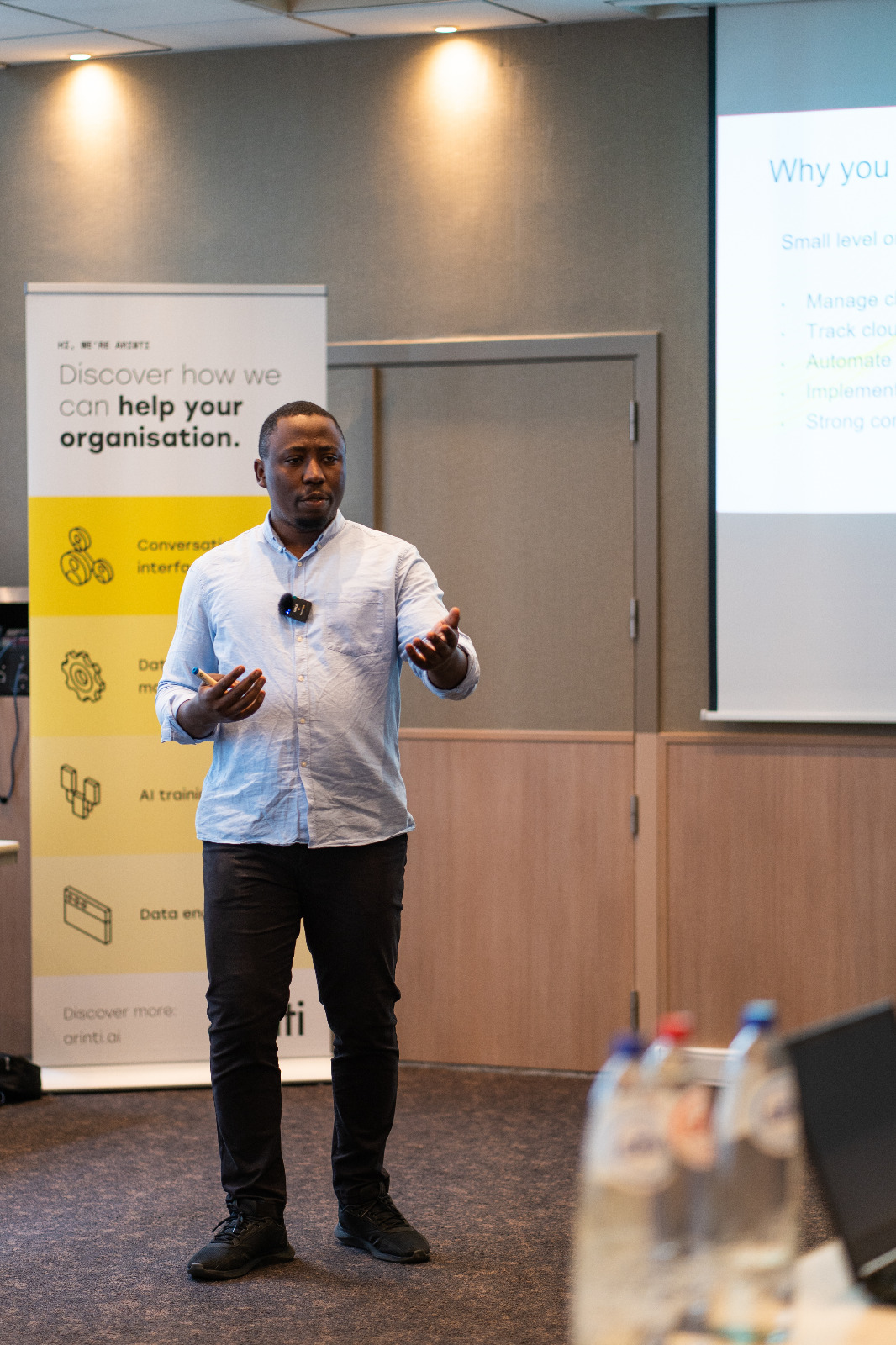
Later, while deploying AI systems at organisations including BASF SE and the World Bank Group, he discovered that the hardest problems were not always technical.
“I went into the BASF engagement thinking the hard part would be building multi-agent systems that could coordinate procurement workflows,” he explains. “Instead, the real challenge was navigating IT security, legal reviews, and data privacy assessments across multiple countries.”
That experience changed how he viewed enterprise AI.
In startups, speed and experimentation are often prioritised. Inside large enterprises, however, that mindset can quickly become a liability.
“When a system serves thousands of professionals across multiple countries, the cost of getting it wrong is enormous,” he says.
For Jephte, enterprise AI deployment is as much about governance and organisational change as it is about engineering.
The Cameroonian engineer: Building the “boring” foundations
As the AI industry races towards foundation models, GPU infrastructure, and sovereign AI ambitions, Jephte argues that many organisations are ignoring the most important layer of the stack: data infrastructure.
That means investing in data collection, labelling, storage, and domain-specific datasets.
“Building data infrastructure in Africa can be challenging and boring, which is why most people do not focus on it,” he says. Without strong data foundations, AI systems become unreliable. Poor-quality or fragmented data can make even advanced models ineffective.
He points to companies like Amini AI as examples of organisations doing the difficult but necessary work required to strengthen Africa’s AI ecosystem.
Jephte is also sceptical of businesses built entirely around wrappers for large language models (LLMs). In his view, most lack long-term defensibility.
He believes sustainable AI businesses are built on two things: proprietary data and genuine domain expertise. Proprietary data, he explains, is not scraped from the internet. It is generated internally through an organisation’s operations and workflows, making it difficult to replicate.
“If you don’t have proprietary data and you’re not a domain expert, you’re building something anyone with a bigger budget can replicate easily,” he says.

His career reflects that philosophy.
At Euroclear, he managed data pipelines processing millions of financial transactions with 99.9% uptime. At GSK, he developed a compliance reporting platform that reduced reporting timelines from weeks to minutes, saving more than 500 hours of manual work every month.
For him, those operational outcomes matter more than hype.
Lessons on designing around people, not systems
One of the most important lessons of Jephte’s career came during a World Bank project in the Republic of Benin.
He had designed an AI tutor for mathematics teachers in under-resourced schools and initially believed the technical architecture was sound. That changed once he began speaking directly with the teachers and professors who expected to use the platform daily.
“The features they said were non-negotiable weren’t the ones I had prioritised,” he admits.
Many of his assumptions about how users would access the system and what they needed most turned out to be wrong.
The lesson was costly in terms of time, but it dramatically improved adoption.
Today, that experience shapes every FOUBSLABS engagement.
“The user doesn’t adapt to your architecture,” he says. “Your architecture adapts to the user, no matter where you are.”
Unlike the private sector, where projects are typically judged by return on investment, his development work focuses on long-term societal impact and sustainability. The goal is to create systems that local institutions can maintain long after the initial deployment ends.
As businesses increasingly shift towards AI agents, Jephte remains pragmatic.
He believes the industry has moved beyond “glorified chatbotting”, but many organisations are still struggling with the basics. In many cases, businesses lack structured, high-quality data needed to train systems capable of handling real-world complexity.
Sometimes, he says, companies need better automation rather than advanced AI agents.
That reality also shapes his view on job displacement.

Jephte acknowledges that concerns about layoffs are valid, especially for repetitive administrative work involving manual data entry and document processing.
“Humans shouldn’t be doing that work,” he says.
At the same time, he believes automation will increase demand for workers capable of interpreting AI outputs, making judgment calls, and handling more complex decision-making tasks.
The repetitive parts of jobs may disappear, but human judgment becomes even more valuable.
“You have to ask yourself whether AI can handle the value you currently provide,” he says. “If so, you have to look for new ways to innovate in your work.”
