




In March 2025, Akusionwu Ogechukwu Pascaline, after a late shift, booked a ride from ShopRite Lekki to her residence at Greenland Estate. The trip turned out to be a nightmare: the driver took her to a lonely spot and robbed her of her iPhone 13 Pro Max, Samsung A20, Apple watch, wig, handbag, slippers, AirPods, cash and an ATM card using a knife.
Then the driver stabbed her in the face and thigh before throwing her out of the vehicle and driving away. A bike man eventually rescued her.
Paschaline’s case is one of many documented instances where female passengers were assaulted and robbed by their male drivers during an online trip. This is aside from the numerous complaints of sexual innuendos and, sometimes, outright assault.
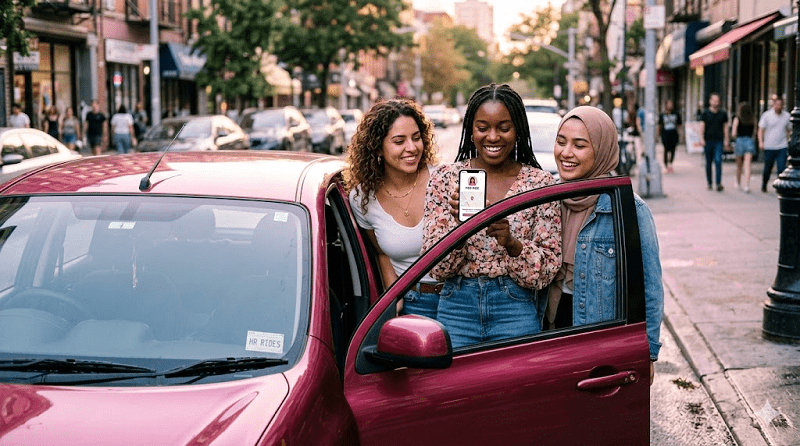
Naturally, this led to calls for women-only ride-hailing apps as a solution to the problem of constant attacks and the safety of female passengers.

Read also: Meet Chidinma, the female Uber driver who dropped her aviation degree to embrace the road
And the concept won’t be new by any stretch. In South Africa, which has one of the highest rates of gender-based violence in the world, a woman took it upon herself to launch SheGo Rides, a women-only ride-hailing platform.
In Pakistan, where violence against women is widespread, a ride-hailing app called Hailz offers female riders the option of choosing female drivers for their trips.
In Nigeria, there have been calls for women-only ride-hailing apps. Indeed, at least one is already in the works, with Omotoyosi Bamgboye, a product designer, already building the Naaba app.
But what do women e-hailing drivers expected to power such a drive think about the idea?
What women e-hailing drivers are saying
Technext spoke with female drivers with years of experience operating on the Uber, Bolt and inDrive apps.
They all agreed that a women-only platform is a welcome development because it will improve users’ safety and comfort and encourage more women to take on professional driving.
However, as drivers, safety would not be the only reason why they would sign up with a women’s app.
“I would consider safety features, earnings potential, commission rate, ease of use, customer support, and whether there is enough demand to make a steady income,” Chidinma said.
She noted that while safety is important, it is not enough on its own for an app developer to base economic decisions on. She noted that the app also needs strong demand, sustainable earnings for drivers, fair pricing, and a sustainable business model to succeed long-term.
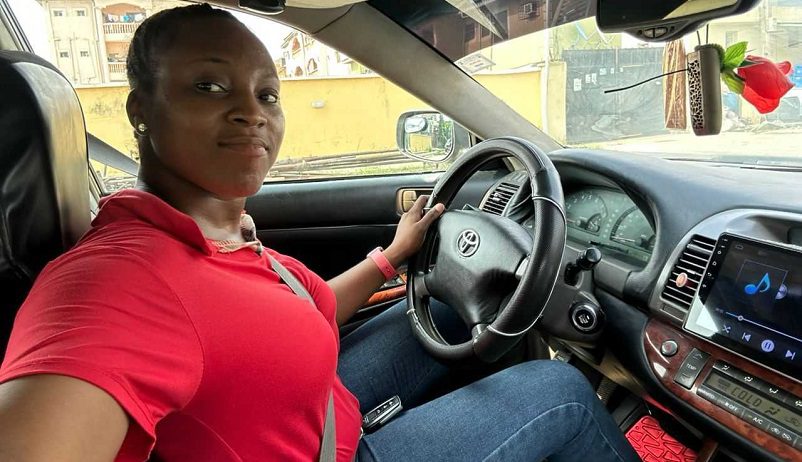
While focus has been on passenger safety, little thought is given to the safety of drivers. Speaking on safety for drivers, Ayobami Lawal noted that a women-only app will not really guarantee total safety but will only provide some assurance for a driver knowing she is going to pick up a woman.
“Anyone can be a threat. Having a woman passenger gives you some kind of peace of mind and a relaxed atmosphere, until we start hearing the crimes some of them commit. For example, A colleague has been robbed before by a gang of women on Ogbombo Road with a gun,” she said.
She said the only difference is that women’s crimes don’t happen as frequently as those committed by men.
Majority female passengers for majority male drivers: A market in waiting?
A Bolt study showed that up to 70% of e-hailing passengers are female, fueling the belief that a female-only e-hailing platform will quickly steal a major chunk of the ride-hailing market share. But do female passengers really mind being driven by men rather than their fellow women, or is it just the same?
Chidinma believes it is quite mixed.
“Some women passengers feel more comfortable and relaxed being driven by a female driver, especially for safety and privacy reasons. But many others are just focused on getting a safe, fast, and affordable ride, regardless of the driver’s gender. So while there is a real market, it may not be exclusive. Preference depends on the individual,” she said.
Ayobami admitted the dominance of female passengers, noting that for every 7 rides she picks in a day, there’s a possibility of having 5 as women. However, that does not necessarily guarantee a ready market for a woman-only app.
“From experience, some women don’t like a fellow woman driver. Most of the cancellations I got always come from my gender, and they always have this to say: ‘I don’t want woman wahala o’. Or they give excuses like ‘she was driving too slow,’ ‘she was giving attitude,’ etc. I think we need to embrace ourselves more,” she said.
Conversely, only 4 per cent of e-hailing drivers in Nigeria are women. This gives rise to a critical concern about whether there are enough drivers to operate a women-only app. And even if there eventually are, there would be major concerns about operating a 24/7 app, given that most women drivers close shop at nightfall and do not open until daybreak.
Ayobami outright believes a women-only app cannot provide adequate 24-hour service.
“First of all, we don’t have enough women drivers yet. Also, a lot of us have other things we do aside from driving. Some are married women who go back to family responsibilities. Some are single parents, and they need to take care of their kids. Lastly, some simply don’t like driving at night. Therefore, providing 24-hour service is not possible,” she said.

While admitting that there are women who prefer to work at night, they can’t compare to the number of men who grind in the dead of night.
Chidinma offers a different viewpoint, though, insisting that it’s possible if there are enough trained female drivers, strong safety support, and incentives for night shifts.
“It’s possible, but it may be challenging at the start. There are women drivers, but not as many as men, so supply could be limited. Getting enough drivers for late-night hours may be challenging because of safety concerns and fatigue. So it can work, but only with proper planning, good pay, and strong security systems to support drivers,” she said.
Summing it all up
A female-only ride-hailing app is a welcome development for women drivers. However, some factors need to be in place to make it viable. These include getting more women drivers, especially those willing to work in the dark. There also needs to be good earning structures, low commissions and a great welfare package to attract drivers.
There is also a scalability problem, especially with giants like Bolt, inDrive and Uber currently dominating the market. Finally, the concept of safety is only as solid as the platform makes it, and bad safety incidents could quickly lead to a breakdown of trust.
“Like I said before, the major issues I have had on this job were from my fellow women. Some women are naturally problematic, and there’s nothing you can do right to satisfy them, so people should be ready to settle fights on the road,” Ayobami joked.
For Chidimma, a women-only app should not only focus on gender but also on affordability, driver earnings, trust, and reliability.
“If these are balanced well, it can become a strong and sustainable platform in the market,” she said.
