





The battle lines in modern financial crime have shifted. As transactions accelerate to near-instantaneous speeds, traditional rules-based anti-fraud mechanisms are failing. In their place, a highly sophisticated, AI-weaponised network of bad actors is exploiting the structural gaps between financial institutions.
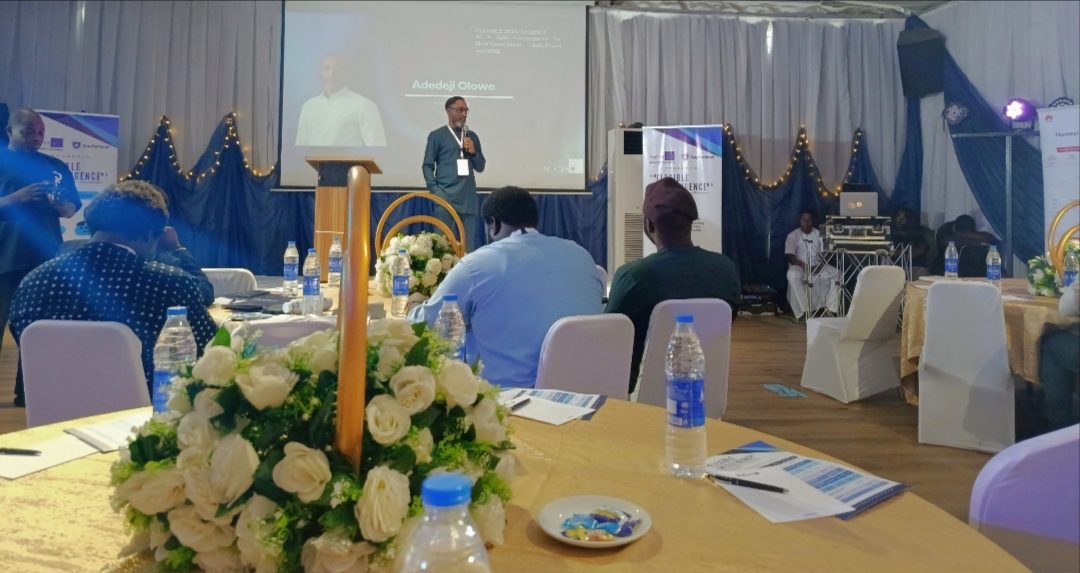
This was the core message at the Flexible Intelligence: AI & Data Convergence for Next-Generation Anti-Fraud & AML summit held at the Radisson Blu in Victoria Island, Lagos on Wednesday, June 3rd. Industry leaders gathered to confront a harsh reality: in a world of ecosystem-scale threats, individual institutional silos are no longer enough to protect the consumer.
Opening the discourse, Adeola Oladeji, MD and CEO of Masterplan Consulting, underscored the sheer velocity of the threat. Over the last five years, digital transaction volumes in Nigeria have surged by over 300%. But this rapid adoption has birthed an equally aggressive wave of cyber attacks.
“If we said in 2024, the fraud attempts or losses were around 54 billion, between then and now, the figure has increased,” Oladeji warned. “Preexisting operational systems that we have are not able to move fast enough to counter that.”
According to Oladeji, a critical shift occurred when regulatory bodies like the Central Bank of Nigeria (CBN) updated liability guidelines. It is no longer enough for banks to monitor outward transactions; they are now held strictly accountable for fraudulent inflows entering their systems.
“Now, you are going to be held liable for every transaction that hits your bank that’s actually fraudulent. You are going to be held liable to be the one to pay back,” Oladeji noted, highlighting the urgent need for real-time inbound surveillance.
Financial fraud: Exploiting the gaps between silos
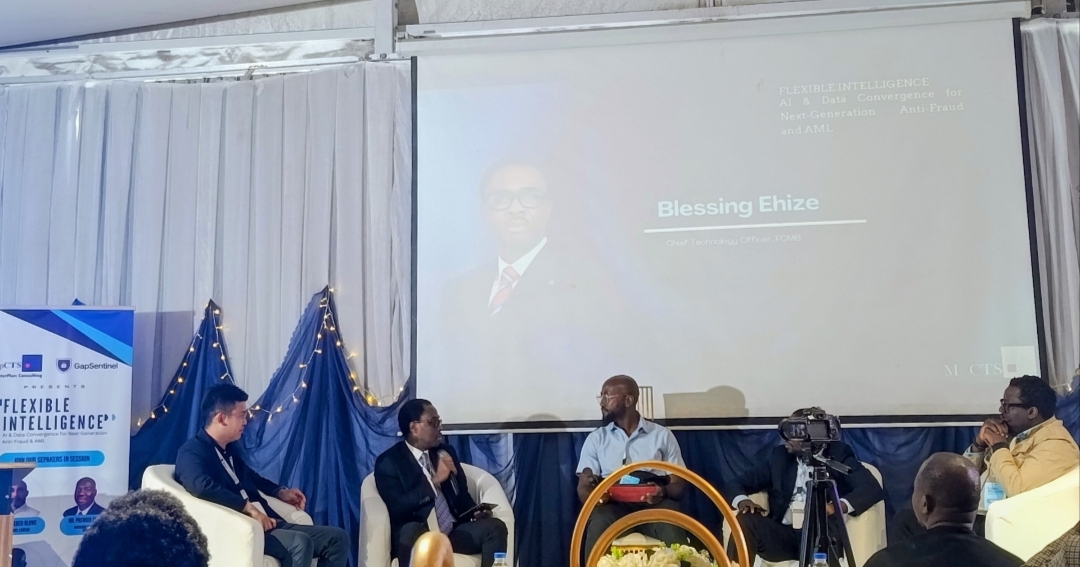
Representing Premier Oiwoh, MD, Nigeria Inter-Bank Settlement System (NIBSS), Akin Ogunsola expanded on how modern fraudsters operate. They do not target heavily fortified bank vaults from the front; they exploit the friction and fragmentation between disconnected platforms.
“Today, a fraudster may wake up in our country. He does not need a gun. He does not need to enter a bank. All he needs is to take advantage of fragmentation,” Ogunsola asserted. “What we see is that fraud succeeds because sophisticated patterns are no longer just attacking systems; they’re exploiting the gaps between systems.”
Ogunsola emphasised that because individual banks, telecommunications operators, and switches only see isolated signals, such as device anomalies or SIM swaps, the broader fraudulent patterns may go undetected until it is too late. The solution lies in converging these data streams into what he terms “ecosystem memory”.
“Artificial intelligence without ecosystem intelligence to some degree simply gives artificial confidence,” Ogunsola stated bluntly. “Fraudsters collaborate extremely well; institutions, historically, we’ve not done so well. We need flexible, real-time intelligence, not static controls, not rigid rulebooks.”
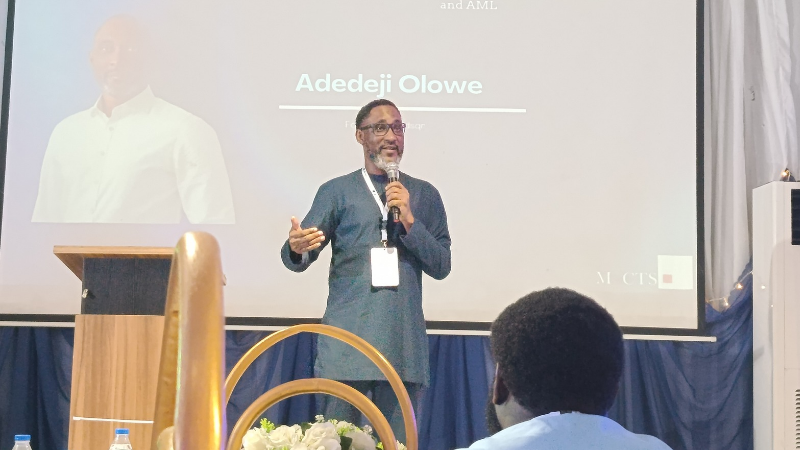
Adedeji Olowe, the founder of Lendsqr, brought a bracingly realistic and execution-biased view to the stage, pointing out that technology has democratised financial crime. Historically, sophisticated cybercrime required elite technical expertise. Today, generative AI has lowered the barrier to entry.
“Up till recently, it was only the smart bad people that did fraud, but now, AI has lowered the bar. Now, dumb bad people are also doing fraud,” Olowe observed. “It’s so easy right now to just turn on an AI model and go do something stupid.”
Olowe argued that the classic “rule-based velocity” approach, where a bank blocks a card or account simply because a metric crosses an arbitrary threshold, is entirely obsolete. It penalises legitimate high-value customers while doing nothing to stop sophisticated fraud sequences that mimic natural human behaviour.
He praised the regulatory mandate to merge fraud management tightly with anti-money laundering (AML) and know your customer (KYC) frameworks. By tracking behavioural demographics over time, AI can instantly flag anomalies, such as an account registered to a student or low-wage earner suddenly processing hundreds of millions of Naira.
“The rule is now matching fraud management with AML and also with KYC,” Olowe explained. “AI is so crazy right now that every single tool that every single bank has up to this time is not useful and is not able to fight the fraud that is going to come. It’s like bringing a knife to a gun battle.”
Also read: Flutterwave promotes 25% of workforce, expands employee benefits as it celebrates 10 years
Beyond the technical matrices and corporate liability lies a deeper, human crisis. Olowe recalled a viral video of a woman rolling on the floor of a financial institution, weeping over her stolen savings. For the vulnerable at the bottom of the economic pyramid, fraud is not an operational loss; it is catastrophic. This fear ultimately erodes national trust and stifles true financial inclusion.
The consensus from the summit is clear: Nigeria’s financial ecosystem cannot defend itself with the tools of yesterday. To safeguard the digital economy, the industry must transition away from static defences and build a unified, collaborative network powered by adaptive, real-time intelligence.
