






In the unforgiving African financial technology ecosystem, failure is rarely a quiet affair. For most founders, it arrives in a wave of depleted runways and public post-mortems. For Achigonye JohnPaul, however, the stalling of his viral crypto protocol, Coinazer, didn’t happen because of a lack of market fit or engineering talent. It happened because he ran headfirst into the usual Nigerian regulatory brick wall.
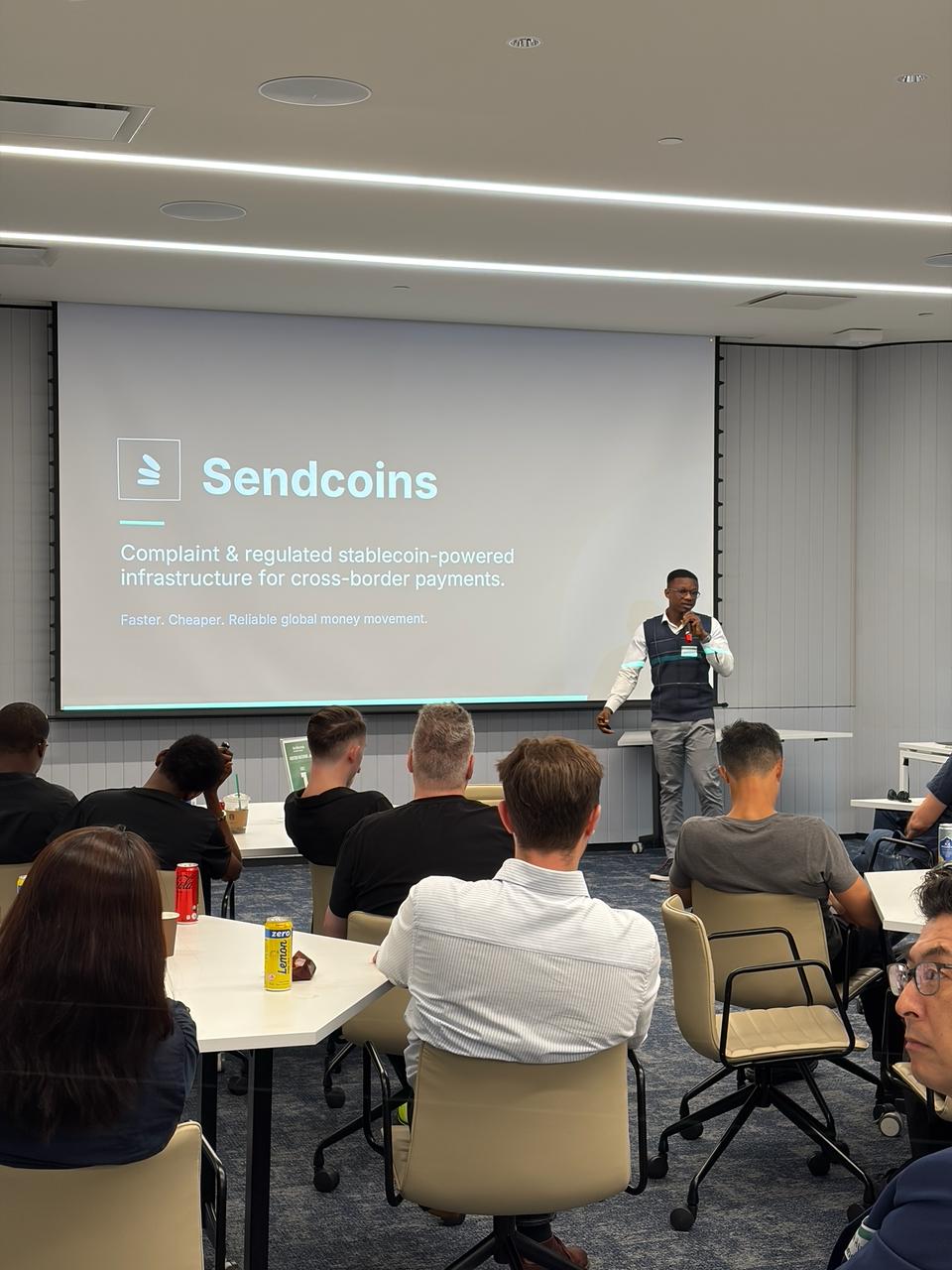
Today, operating as the founder and CEO of Sendcoins, JohnPaul is building a cross-border remittance corridor that is quietly moving millions of dollars between Canada and Nigeria. But the architecture of his current success was paid for by the hard lessons of structural collapse. To understand where SendCoins is going, one must first look at the ashes from which it climbed.
Seven years ago, JohnPaul’s entry into tech was shaped by a grassroots opportunity. A computer science diploma from Atlantic International University in the United States was left incomplete, but the real catalyst was closer to home: Code for Lagos, a deliberate government-backed tech empowerment initiative. It was here that he transitioned from native Android development to web infrastructure, eventually landing a formative internship with Polygon Technologies.
His first attempt at building in the Nigerian crypto space ended in a bitter lesson. He soon realised that operating a crypto platform in Nigeria means building on structural quicksand, a reality that ultimately spelt the end for Coinazer. Despite its early promise, the startup ran headlong into an unforgiving, rapidly shifting regulatory regime that choked its daily operations. It wasn’t a failure of code or product-market fit; rather, the weight of hostile government policies stalled their momentum, making it virtually impossible to operate sustainably and forcing the business into an early, unfortunate grave.
“If you want to build to scale, Nigeria’s compliance landscape makes it incredibly difficult,” JohnPaul reflects. “To even sit at the table under the current framework, an early-stage startup is confronted with a 1.2 billion Naira asset-holding requirement just as proof of funds. Then you need a flat licensing fee of $500,000.”
For a young ecosystem, this is a devastating barrier to entry. Imagine a brilliant team securing $2 million in seed capital, only to watch three-quarters of their runway vanish into state vaults before a single transaction is even processed. It is a frustrating reality that holding a standard crypto licence in Nigeria costs significantly more than it does in global financial capitals across Europe and North America.
“You can’t compare a $1.5 million entry ticket to a diaspora market like Canada, where you need less than 25,000 Canadian dollars to get your licensing sorted and connect directly to the Bank of Canada,” JohnPaul says. “Our local compliance regime is a bit foggy. The acts they have passed aren’t fully functional or active, which ironically creates more loopholes for bad actors while punishing legitimate builders. Running a crypto platform in Nigeria requires exceptionally deep pockets.”
Building Sendcoins from the lessons
Coinazer was not the only scar and lesson that shaped JohnPaul. Before that, he had built a tokenised music streaming platform designed to reward users for listening and artists for creating. It was a sleek, forward-thinking architecture that collapsed instantly when Apple and iTunes rolled out a single software update that absorbed its core value proposition.
“I learnt the hard way about platform risk, distribution bottlenecks, and the thin line of partnership,” he admits.

These repeated failures shifted his mindset from product-first to compliance-first and user acquisition. When the regulatory climate in Nigeria stalled his crypto startup, JohnPaul took the ultimate calculated gamble by incorporating SendCoins in Canada.
The startup discovered its sweet spot by tracking macro-migration patterns. Over the last few years, Western borders have tightened fundamentally. Shifting political landscapes and aggressive anti-immigration rhetoric in the United States and the United Kingdom have turned Canada into the primary destination for the premium Nigerian diaspora, skilled healthcare professionals, IT experts, and international students.
JohnPaul saw the wave coming and built the bridge before the crowd arrived.
For a non-crypto user, SendCoins operates seamlessly behind the scenes. It handles the cross-border remittance realities faced by immigrant workers and freelancers without requiring them to understand the underlying blockchain infrastructure. It simply solves the two things that matter: speed and cost.
“Traditional channels are broken,” JohnPaul explains. “If you try to send £3,000 to the UK right now through legacy banks, you can easily be charged over £100 in hidden fees, and the transaction can take up to five business days to clear. If you have an urgent tuition payment or a business deadline, that delay can ruin you. With SendCoins, we get the payment across in minutes, and we charge less than £10. We are doing exactly what the traditional guys do, but we are 90% cheaper and significantly faster.”
The numbers validate the pivot. Working quietly without mainstream PR fanfare, SendCoins has already processed between $5 million and $8 million on record along the Nigerian-Canadian corridor within its first year of operation.

JohnPaul’s journey from a founder of startups that died before they saw their twilight to a thriving, regulated Canadian MSB operator is a masterclass in founder resilience. He has transformed compliance from a frustrating bureaucratic hurdle into his primary defensive moat.
“Every experience is a lesson, and every failure counts,” he says. “Being a Black founder in a global market means your compliance needs to be airtight. You need investors who are close to the regulatory machinery so you can navigate shifts cleanly.”
As SendCoins positions itself to eventually expand its compliant stablecoin infrastructure into the UK and continental Europe, JohnPaul’s five-year target remains unblinkingly ambitious: scaling past 100,000 active users, processing over $50 billion in volume, and driving monthly recurring revenue past $1 million on the road to an eventual IPO.
