


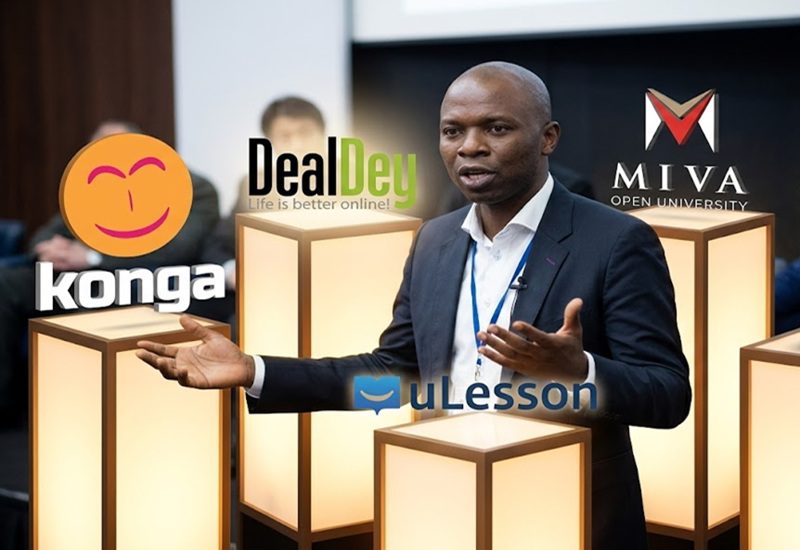
There is a particular kind of entrepreneur that Nigeria’s tech ecosystem has been quietly producing for two decades, one like Sim Shagaya, who does not just build companies but builds markets. He is perhaps the clearest example of that type.
Before most Nigerians had heard the word fintech, before the startup ecosystem was a phrase anyone used in Lagos, and before venture capital was a concept familiar to more than a handful of people on the continent, Shagaya was already failing, learning, and building again.
He attended the Nigerian Military School, earned degrees from George Washington University and Dartmouth College, and completed an MBA at Harvard Business School. He worked briefly as a banker at Rand Merchant Bank in South Africa before Google came calling, making him the company’s Head of Africa operations.
When he left to go build his own things, the decision looked either brave or reckless depending on who you asked. Twenty years later, the answer is clear.
His company, Konga, transformed Nigeria’s online commerce by improving logistics and payments. Many former Konga employees now contribute to Nigeria’s tech scene. His other ventures, uLesson and Miva Open University, have made strides in online education, offering quality content and accredited degrees to Nigerian students.
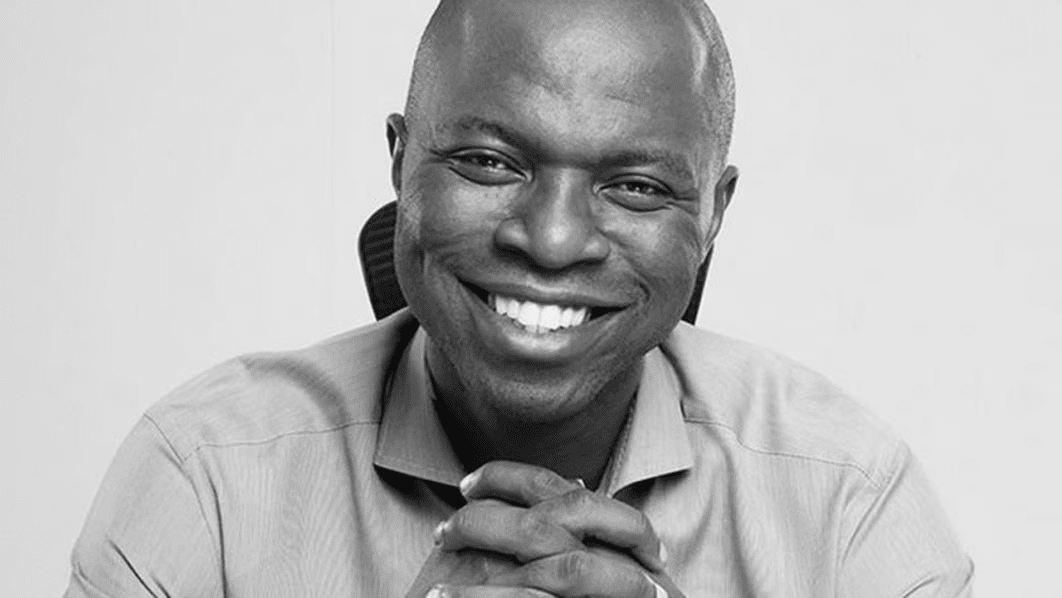
What makes Shagaya distinct is not just the number of companies, but the honesty with which he has spoken about those that did not work. He has publicly reflected on Konga’s growth-at-all-costs approach and what he would do differently. That kind of transparency in a space where founders rarely discuss failure is itself a contribution to the ecosystem. Here is every company he has built, in order.
The early failures for Sim Shagaya and the companies he founded
Before any of the successes, four early digital ventures collapsed: a dating site called Alarena.com, a job board called Jobclan.com, a classifieds platform called Gbogbo.com, and a media streaming service called iNollywood.com. All four failed because they were ahead of their time. Nigeria’s internet penetration was around 3% at the time, meaning there simply were not enough users online to sustain them.
Shagaya has since described these as formative rather than defining. They were the tuition fees for everything that followed, and the fact that he did not stop after four consecutive failures says something important about the man.
1. E-Motion Outdoor Advertising (2005)
Shagaya’s first successful company and his first clean exit. He founded E-Motion in Lagos in November 2005 after leaving Google, building it into one of Nigeria’s leading out-of-home advertising companies. The business placed billboards and media assets across the country, serving major national and international brands at a time when Lagos’s advertising landscape was still largely fragmented.

The company was later acquired by Loatsad Promomedia. The proceeds helped seed what came next, and the experience of scaling a physical infrastructure business across Nigeria would prove formative for the challenges ahead.
2. DealDey (2011)
Before Konga, there was DealDey, Nigeria’s first major group-buying platform, modelled on Groupon, which had just exploded in the United States. It was launched in March 2011 after Shagaya convinced the board of his billboard company to invest in it.
The platform lets users purchase discounted vouchers for restaurants, services, and experiences in bulk, introducing many Nigerians to the concept of transacting online for tangible goods and services.

DealDey was one of the earliest proofs that Nigerians would pay for things on the internet if the value proposition was compelling enough. That insight went directly into Konga’s DNA.
3. Konga (2012)
The company that made Shagaya a name across the continent. Konga.com was founded in July 2012 with capital from Swedish investment firm Kinnevik, built to create an e-commerce platform designed specifically for African realities, not a copy-paste of Amazon, but a system that accounted for Nigeria’s logistics gaps, low card penetration, and deep consumer distrust of online payments.
At its peak, Konga went head-to-head with Jumia in one of the most competitive and expensive rivalries Nigerian tech had ever seen, with both companies burning through capital to acquire customers in a market that was still learning what e-commerce meant.
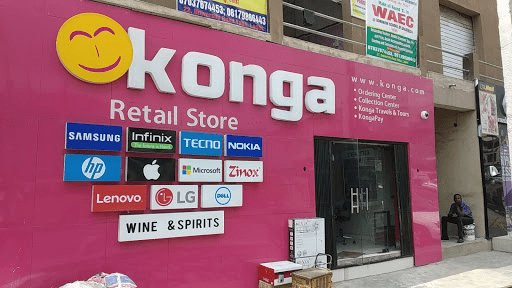
The rivalry pushed both companies to build real infrastructure, last-mile logistics, payment systems, and customer service operations that did not exist before them. Konga was acquired by Zinox Technologies in 2018 in a transaction widely described as distressed.
Shagaya has since reflected openly on the experience, acknowledging that the focus on rapid customer acquisition came at the expense of unit economics. But the legacy of Konga is not in how it ended. It is in the infrastructure it helped create and the operators it produced. The Nigerian e-commerce ecosystem today owes a structural debt to what Konga proved was possible.
4. uLesson (2019)
After the Konga chapter, Shagaya stepped back. When he returned, it was with a different kind of problem to solve. uLesson was founded in 2019, launching initially with SD cards and USB drives pre-recorded with curriculum-aligned video lessons for secondary school students across West Africa, an offline-first design for students without reliable internet access, built in a production studio in Jos, creating content specifically for Nigerian and West African syllabuses.
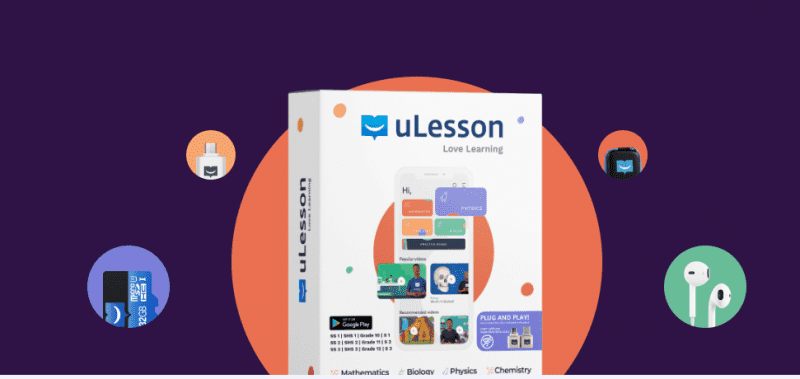
It raised a $3.1 million seed round led by TLcom Capital at launch, followed by $7.5 million in a Series A. By 2023, uLesson had served over one million students across the region. The pivot from e-commerce to education was not accidental; Shagaya had identified the same pattern in a different sector: a massive, underserved population and an infrastructure too broken to serve them.
5. Miva Open University (2023)
The most ambitious thing Shagaya has attempted. Miva is Nigeria’s first fully licensed online university, founded as a subsidiary of the uLesson Group and built to address a gap with no easy fix: Nigeria’s approximately 170 universities can admit only around 1.8 million students annually, even though millions qualify.
The university received its operating licence from the National Universities Commission in May 2023. It offers degree programmes in computer science, public health, and business management, requires no UTME score, and accepts students on the basis of their WAEC results.
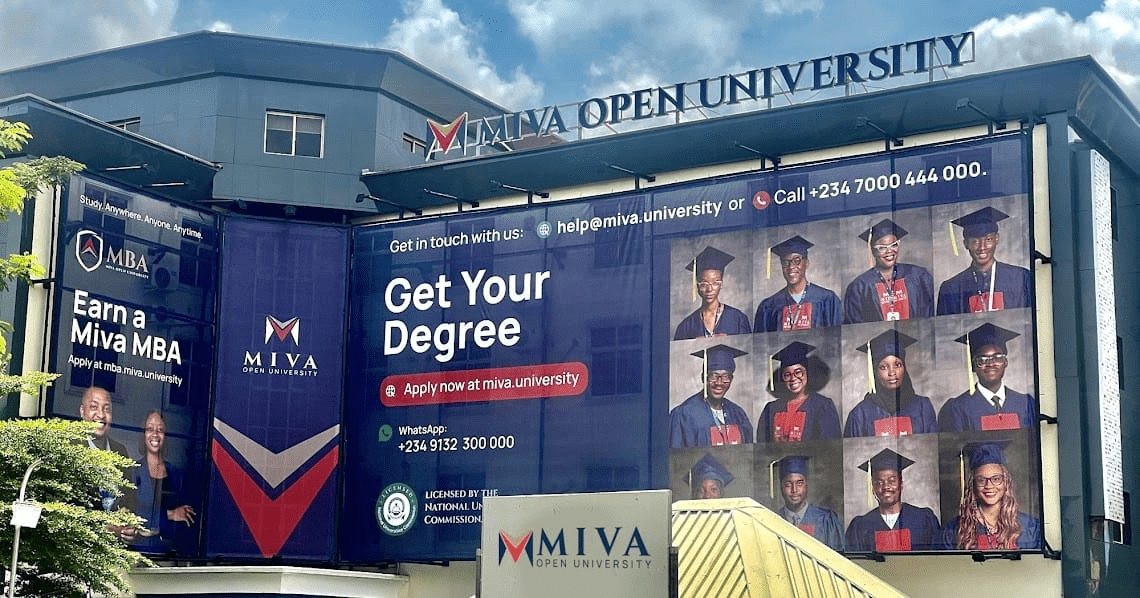
By 2025, Miva had enrolled over 2,700 students and built a faculty of more than 200 members. They launched an AI learning companion called MIND, with Shagaya serving as Chancellor. Miva is attempting to provide accredited university education on a large scale, online, specifically designed for Nigerians who do not fit into the traditional admissions pipeline. This initiative is unprecedented among Nigerian institutions.
6. Myka (2026)
Shagaya’s new insurance company, Myka, launched in March 2026, aims to revolutionise Nigeria’s underinsured market, where less than 5% have coverage. Myka seeks to fundamentally rethink Nigerian insurance, following Shagaya’s pattern of disrupting failing systems across various sectors over two decades.
The thread connecting everything Shagaya has built across two decades is consistent: find a system that is failing Nigerians at scale and try to replace it. Out-of-home advertising. Online commerce. Secondary education. University access. Insurance.
The companies have changed with each decade. The logic has not. And for a technology ecosystem that was barely breathing when he started, that consistency has mattered more than any single company he has built.
Similar read: Sim Shagaya’s Miva Open University unveils Yaba centre and AI learning companion for students
