






Five years ago, the Central Bank of Nigeria (CBN) effectively ostracised cryptocurrency from the country’s formal financial system, citing severe risks to monetary stability. Today, in a remarkable policy pivot, digital assets have become the cornerstone of the apex bank’s strategy to bring over 50 million unbanked and underbanked Nigerians into the formal economy.
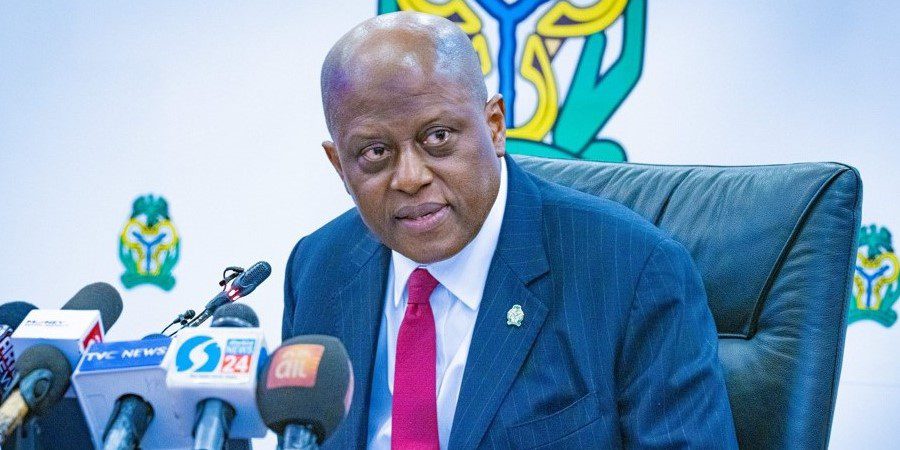
This structural shift is detailed in the newly released Payments System Vision 2028 (PSV 2028). Far from being just another policy document, PSV 2028 is a pragmatic blueprint that acknowledges a stark reality: traditional banking infrastructure alone cannot bridge Nigeria’s deep financial inclusion gap. To hit its ambitious target of 95% financial inclusion, the CBN is building what Governor Olayemi Cardoso aptly describes as the “invisible roads” of the digital economy. Just as physical infrastructure dictates the pace of commerce, digital payment rails dictate the scale of financial inclusion.
This comes about 3 months after the CBN launched a controlled pilot for virtual asset service providers in March. At the heart of this strategy are two distinct but complementary digital mechanisms: a repositioned eNaira and a newly regulated stablecoin framework. The strategy places the CBDC alongside initiatives such as open banking, digital identity, cross-border payments, and emerging financial technologies.
How the eNaira is driving programmable social inclusion
When Nigeria became the first African nation to launch a central bank digital currency (CBDC) in 2021, the initial rollout focused heavily on retail adoption. It naturally struggled to gain a foothold against an already robust, low-friction mobile money ecosystem, processing a modest ₦22 billion ($16.02 million) across its wallets.
The PSV 2028 roadmap changes tack completely. Instead of fighting for retail market share, the CBN is integrating the eNaira directly into the machinery of government. The digital currency is being repositioned as the foundational rail for public-sector disbursements, including civil servants’ salaries, pensions, and social welfare programmes.
By routing these massive capital flows through the eNaira, the government achieves systemic, top-down adoption. Crucially, the blockchain technology underpinning the eNaira allows for programmable payments and smart contracts that automatically execute when specific conditions are met.
Social intervention funds can be coded with specific spending parameters and expiration dates, drastically reducing administrative leakage and ensuring capital actually reaches targeted unbanked demographics in rural areas. It is a calculated move to force inclusion by making the CBDC the default medium for government value transfer.
If the eNaira is engineered to handle domestic government flows, stablecoins are the CBN’s answer to cross-border friction. The sheer volume of the market has made it impossible to ignore. Between mid-2024 and mid-2025, Nigeria recorded an astonishing $92.1 billion in crypto-asset value, with stablecoins driving the bulk of that activity.
Stablecoins have essentially become an unofficial parallel rail for remittances, freelance compensation, and corporate treasury management. The PSV 2028 report outlined a comprehensive framework to bring these instruments in-house.

The CBN’s objective is clear: to formalise this liquidity. The roadmap proposes a rigorous licensing regime for fiat-collateralised stablecoins, mandating 100% high-quality reserve requirements. The market is already responding; cNGN, Nigeria’s first regulated stablecoin, now boasts over ₦2.3 billion in tokens held by around 4,805 wallets and serves as a crucial proof of concept, demonstrating that domestic users have an appetite for fiat-backed digital tokens that offer the speed of crypto without the volatility.
Furthermore, the CBN explicitly targets reducing the cost of international remittances from the current Sub-Saharan average of 8.78% down to a ceiling of 5%. By moving remittances to regulated blockchain networks, the central bank bypasses the correspondent banking intermediaries that make cross-border transactions painfully slow and expensive.
Stablecoins: Fixing cross-border friction and remittances
Historically, the dollars backing stablecoins used by Nigerians sat in foreign jurisdictions, completely invisible to the local financial system. Under the PSV 2028 framework, the CBN intends to mandate that a portion of the reserves for foreign currency-backed stablecoins be held domestically with approved commercial banks. This effectively captures a new pool of regulated FX liquidity that can be utilised to support international trade and ease ongoing pressure on the naira.
To monitor this ecosystem, the central bank is abandoning slow, paper-based audits in favour of “RegTech” (Regulatory Technology) nodes. By embedding central bank smart-contract observer nodes directly into verified blockchain networks, the CBN gains real-time, tamper-evident visibility into stablecoin supply, transaction flows, and reserve adequacy. It marks a transition from retrospective auditing to proactive, on-chain supervision, aligning Nigeria with advanced regulatory frameworks currently emerging in the EU and Hong Kong.
While the technological ambitions of PSV 2028 are globally competitive, the true test lies in the economics of the last mile.
As Premier Oiwoh, Managing Director of the Nigeria Inter-Bank Settlement System (NIBSS), observed, technology will only account for roughly 20% of this vision’s success. The remaining 80% relies entirely on execution, collaboration, and behavioural change.

The unbanked are often excluded not out of ignorance, but because they are priced out. For a market trader moving small sums, data costs, smartphone affordability, and transaction fees remain prohibitive barriers. The CBN and commercial operators must now balance commercial sustainability with the absolute necessity of zero-rating digital financial applications to ensure true baseline access.
The Nigeria Payments System Vision 2028 is a watershed moment for African fintech. By embracing programmable CBDCs for government disbursements and bringing stablecoins into the regulatory fold, the CBN has transitioned from defensive prohibition to offensive innovation.
If executed correctly, this framework will not only bank the remaining 50 million excluded Nigerians but also transform the country from a mere adopter of digital assets into a dominant producer and exporter of digital financial infrastructure. The invisible roads are being laid; the next challenge is ensuring every Nigerian can afford the toll.
