


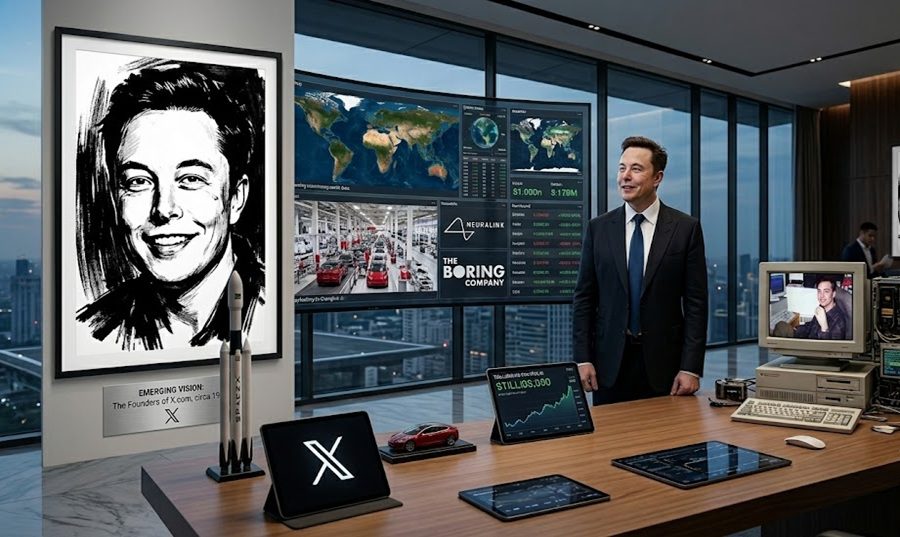
In 2008, there was a reality in which Elon Musk’s life could have failed. That year, amid the global financial crisis wreaking havoc on the markets, both SpaceX and Tesla, the two companies he had invested his future in, were just days away from bankruptcy.
His third rocket had just exploded. Tesla was burning cash it did not have. Elon Musk had already spent the $180 million he made from selling PayPal, and what remained was not enough to save both companies. He did the only thing left to do: he split his last $20 million down the middle and gave each company half, knowing that if either one failed, the other probably would too.
Both survived. And on June 12, 2026, the bill for that bet came due.
SpaceX went public on the Nasdaq, completed the largest IPO in financial history, and made Elon Musk, in a single afternoon, the first human being to hold a personal net worth of $1 trillion. He is now worth more than the entire GDP of Nigeria, South Africa, and Kenya combined.
The second richest person in the world, Google co-founder Larry Page, is worth $290 billion. The gap between them is not a gap anymore. It is a canyon.

To understand how this happened, how a South African boy who was bullied so badly at school that classmates once threw him down a flight of stairs became the wealthiest person in the history of civilisation, you have to go back to the beginning. Not to SpaceX. Not to Tesla. To a small internet startup in 1995 that most people have never heard of.
Here is every step Elon Musk took to get from $0 to $1.1 trillion.
1. Zip2 (1995–1999): The $22 million starting gun
Elon Musk arrived at Stanford University in 1995 to begin a physics PhD. He lasted two days. The internet was just becoming real, and he could not sit in a classroom while the world was changing outside it. He dropped out and co-founded Zip2 with his brother Kimbal, a company that built digital city guides and maps for newspaper companies, years before Google Maps existed.
Think of it this way: in 1995, if you wanted to find a restaurant in a new city, you needed either a printed directory or someone who knew the area. Zip2 built the software that let newspapers put that information online. It was basic by today’s standards, but at the time, it was genuinely useful infrastructure.
Compaq acquired Zip2 in 1999 for $307 million. Elon Musk’s personal share: approximately $22 million. He was 27 years old and had never had that kind of money. Most people at that point stop. They buy a house, invest conservatively, and live comfortably. Musk spent almost all of it on his next idea.
2. X.com / PayPal (1999–2002): The $180 million leap
With his Zip2 proceeds, Musk founded X.com in 1999, an online financial services company at a time when most people were still nervous about typing their credit card number into a website. X.com later merged with a competitor called Confinity, which had a product called PayPal. The combined company rebranded as PayPal.
PayPal did something that seems obvious now but was radical then: it let people send money to each other using just an email address. No bank branch. No cheque. No waiting three days for a transfer to clear. For a generation of people buying and selling on eBay, it was a revelation. Within two years, PayPal had become so dominant on eBay that eBay bought it for $1.5 billion in 2002.
Musk’s share: $180 million. He now had enough money to retire ten times over. He used it to found two companies in the same year.
3. SpaceX (2002 – present): The $100 million bet on Mars
Most people who make $180 million at 31 do not immediately decide to build rockets. Musk did. He invested $100 million of his own money into founding SpaceX in May 2002, with a stated goal of reducing the cost of space travel enough to eventually colonise Mars. People in the aerospace industry thought he was delusional. NASA had spent decades and billions of dollars on rocket technology. A private company funded by a dotcom millionaire seemed like a punchline.
The first three SpaceX rocket launches failed. All of them. Each failure costs millions of dollars and months of work. The fourth launch, in September 2008, the one Musk funded with the last of his reserves after splitting $20 million with Tesla, was successful. It became the first privately developed liquid-fueled rocket to reach orbit. NASA noticed. Contracts followed. And the rest of the aerospace industry had to start taking SpaceX seriously.
Today, SpaceX launches more rockets per year than every other company and government in the world combined. In 2025, it launched 404 missions. Its Starlink satellite network serves customers in over 100 countries, including Nigeria. And on June 12, 2026, it went public at a $1.77 trillion valuation, becoming the sixth most valuable company on earth on its first day of trading.
4. Tesla (2004 – present): The car company that became a tech company
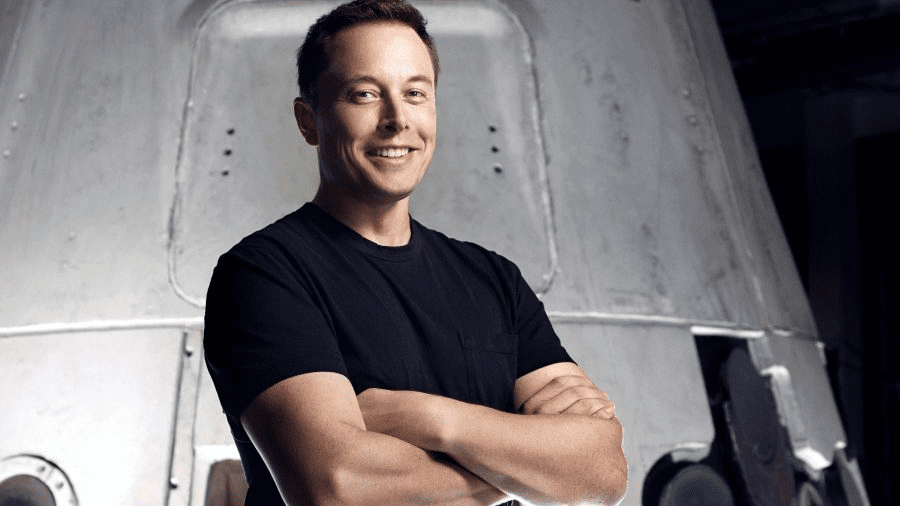
Musk did not found Tesla; he joined it. The company was started in 2003 by Martin Eberhard and Marc Tarpenning. Musk led the Series A funding round in 2004, personally investing $6.35 million and becoming chairman of the board. By 2008, with Tesla burning through cash and its first car still not in production, the original CEO was pushed out, and Musk took over.
What followed is one of the most improbable corporate turnarounds in history. Tesla was nearly bankrupt in 2008. By 2020, it was the most valuable car company in the world, worth more than Toyota, Volkswagen, Ford, and General Motors combined. Today, Elon Musk owns roughly 15% of Tesla, a stake worth approximately $276 billion, more than the entire fortune of Jeff Bezos.
The reason Tesla matters beyond cars is that it demonstrated something investors had not believed: that a technology company could successfully manufacture physical products at scale and dominate an industry that legacy players had controlled for a century. It also provided Musk with the financial credibility and personal wealth to keep funding everything else.
5. The rest of the empire: X, xAI, Neuralink, The Boring Company
In 2022, Elon Musk acquired Twitter for $44 billion, a deal he initially tried to walk away from and was legally forced to complete. He renamed it X, cut roughly 80% of the staff, and restructured it as a platform for open political discourse. It has not been profitable, but it gave Musk a megaphone with hundreds of millions of users.
He also founded Neuralink, a brain-computer interface company that has now implanted its chip in multiple human patients, allowing people with paralysis to control devices using only their thoughts. And The Boring Company, which builds underground tunnels for high-speed transport, operates a loop system beneath Las Vegas.
His AI company, xAI, merged with X in 2025 and was subsequently acquired by SpaceX. Its Grok AI assistant is now directly integrated into the SpaceX ecosystem.
Elon Musk is now worth $1.1 trillion. The second richest person, Larry Page, is worth $290 billion. The gap between them, $810 billion, is larger than the GDP of Switzerland. It is larger than the combined fortunes of the next five richest people on earth. It is, in the most literal sense, unprecedented.
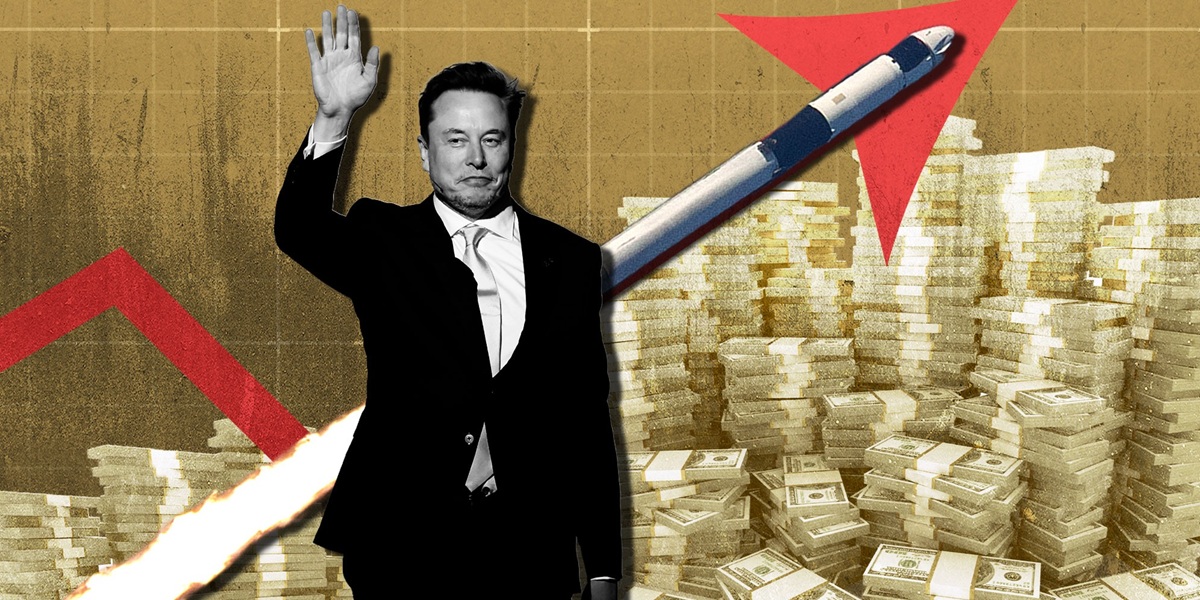
A billion naira is enough to build a small hospital, a university building, or a decent road. A trillion naira would fund Nigeria’s entire federal budget for years. Elon Musk has $1.1 trillion in dollars, not naira.
He made his first $22 million by building a digital map for newspaper companies. He turned that into $180 million by letting people send money via email. He spent most of that time building rockets and electric cars that people told him would never work. He split his last $20 million between two bankrupt companies and refused to let either die.
The money is a record. The story behind it is stranger than anything you could write.
Similar read: SpaceX becomes world’s 6th most valuable company as Elon Musk tops $1 trillion
